Can You Really Taste the Difference Between Expensive and Cheap Wine?
It’s one of the most common questions in wine — and one of the most misunderstood.
Can you really taste the difference between an expensive wine and a cheap one?
At first glance, the answer seems obvious. Higher price suggests higher quality. But once you move beyond assumptions, the question becomes more complex.
Because price in wine is not determined by flavour alone.
In the Bordeaux wine region, price reflects a combination of factors:
terroir
vineyard management
yield
ageing potential
reputation
time
Taste is part of the equation — but not the whole story.
To understand whether price translates into a noticeable difference, it helps to first understand how Bordeaux wines are constructed. If you’ve explored From Vineyard to Glass: The Journey of Bordeaux Wine , you’ll already see that every stage — from vineyard decisions to blending — contributes to the final structure.
But even with that knowledge, the real answer depends on how you taste, what you expect, and what the wine is designed to do.
To connect these ideas to real-world conditions, experiencing wines across different vineyard contexts provides clarity that theory alone cannot. Observing how structure develops across parcels and styles during a Saint Emilion Wine Tour reveals why some wines are built for immediate enjoyment, while others are built for time.
What Determines the Price of Wine?
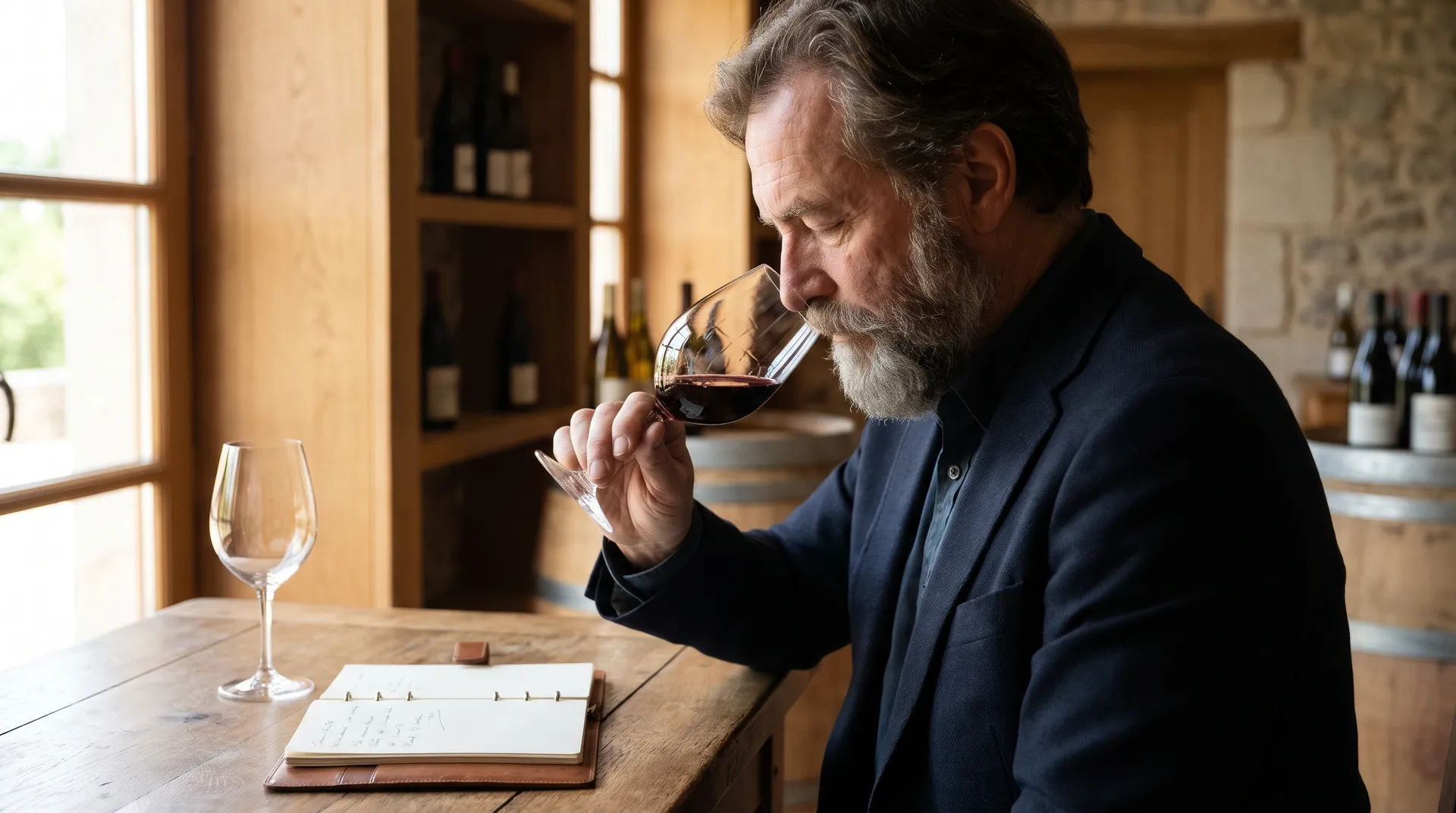
Before asking whether you can taste the difference, you need to understand what you are comparing.
An expensive wine is not simply a “better-tasting” version of a cheaper one.
Its price often reflects:
lower yields
more selective harvesting
higher production costs
longer ageing
established reputation
In Bordeaux, this is particularly evident in regions such as Pauillac, where wines are built for longevity and often command higher prices due to their structure and ageing potential.
Cheaper wines, by contrast, are often designed for:
earlier consumption
higher production volumes
simpler structure
The difference begins long before the wine reaches the bottle.
Taste vs Structure
When people compare expensive and inexpensive wines, they often focus on flavour.
But the real difference lies in structure.
Expensive wines tend to have:
greater depth
more layered complexity
longer finish
balanced integration of tannin, acidity, and alcohol
Cheaper wines may feel:
more immediate
simpler
shorter in finish
This does not mean cheaper wines are bad. It means they are built differently.
Understanding this distinction is essential, and it connects closely to The Role of Acidity in Wine Balance , where structure determines how a wine feels rather than just how it tastes.
The Role of Experience
One of the most important variables is the drinker.
An experienced taster is more likely to notice:
subtle differences in structure
complexity in aroma
evolution over time
A less experienced drinker may focus on:
fruit intensity
immediate flavour
In blind tastings, it is not uncommon for cheaper wines to be preferred because they are more expressive early.
Expensive wines are often less obvious — especially when young.
The Timing Factor
Timing plays a crucial role.
Many expensive Bordeaux wines are designed to age.
When tasted too early, they may feel:
closed
structured
less expressive
Over time, they evolve:
tannins soften
aromas develop
balance becomes clearer
Cheaper wines, designed for immediate drinking, often show their full character early.
This creates a paradox:
young expensive wine may seem less impressive
ready-to-drink wine may seem more enjoyable
The difference emerges over time.
Complexity vs Simplicity
Expensive wines tend to offer complexity.
This includes:
multiple layers of aroma
gradual evolution in the glass
longer, more nuanced finish
Cheaper wines are often more direct.
They present:
clear fruit
straightforward structure
shorter development
Neither approach is inherently better. It depends on what the drinker is looking for.
The Influence of Terroir
Terroir plays a major role in price and perception.
Wines from highly regarded areas often command higher prices because of:
soil composition
drainage
microclimate
For example, wines from Saint-Émilion may show greater balance and depth due to limestone and clay soils that support both structure and approachability.
These differences are not always immediately obvious in a single tasting, but they become clearer over time.
Perception and Expectation

Price also influences perception.
Studies have shown that when people believe a wine is expensive, they are more likely to:
perceive it as higher quality
describe it in more complex terms
This psychological factor cannot be ignored.
Taste is not purely objective. It is shaped by expectation.
Can Everyone Taste the Difference?
The honest answer is: not always.
In certain conditions:
blind tastings
inexperienced tasters
young wines
the difference may not be obvious.
But in other conditions:
experienced tasting
properly aged wines
side-by-side comparison
the difference becomes clearer.
It is not just about detecting flavour — it is about recognising structure, balance, and evolution.
When the Difference Matters

The difference between expensive and cheap wine matters most when:
the wine is given time to develop
the drinker is attentive to structure
the context allows comparison
In casual settings, the distinction may feel less important.
In focused tasting, it becomes more apparent.
Experiencing the Difference in Context
Understanding the difference between wines is not only about tasting — it is about context.
Seeing how vineyards differ, how grapes are grown, and how decisions are made provides insight into why wines vary in structure and price.
To connect these ideas — from terroir to final expression — experiencing wines in their place of origin offers a deeper perspective. Walking through vineyard parcels and observing how structure develops across soils during a structured Saint Emilion Wine Tour helps explain why some wines are built for immediacy, while others are built for time.
A Closing Reflection
So, can you really taste the difference between expensive and cheap wine?
Sometimes, yes.
Sometimes, not immediately.
Because the difference is not always in flavour.
It is in structure, balance, and time.
Expensive wines are often built to reveal themselves slowly. Cheaper wines are built to be understood quickly.
Neither approach is inherently better.
But once you begin to recognise how wines evolve — how structure shapes experience — the difference becomes clearer.
Not as a dramatic contrast, but as a gradual realisation.
And that realisation changes the way you taste.
