Alcohol Levels in Bordeaux Wines: Why They’re Rising (or Falling)
If you drink Bordeaux regularly, you may have noticed something subtle but significant: alcohol levels on labels have changed. Bottles that once sat comfortably at 12.5% now read 13.5%, 14%, or even higher. At the same time, some producers are quietly moving in the opposite direction, deliberately crafting wines with less alcohol than before.
So what’s really happening?
The story of alcohol levels in Bordeaux wines is not a simple one. It is shaped by climate change in Bordeaux vineyards, vineyard management, grape varieties, harvest timing, yeast selection, and evolving ideas about balance.
This article explains why alcohol levels in Bordeaux are rising in some wines, falling in others, and what it means for how Bordeaux tastes today.
Alcohol in Wine: The Simple Chemistry Behind It
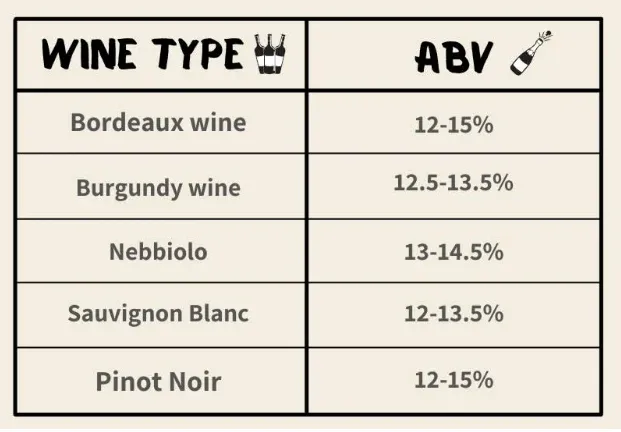
Alcohol in wine is produced during fermentation, when yeast converts sugar into ethanol and carbon dioxide. The more sugar present in the grapes at harvest, the higher the potential alcohol.
In Bordeaux, sugar accumulation is driven by:
- Sunlight
- Temperature
- Ripening speed
- Grape variety
- Harvest timing
This means alcohol is not just a winemaking choice. It begins in the vineyard.
Why Alcohol Levels in Bordeaux Rose for Decades
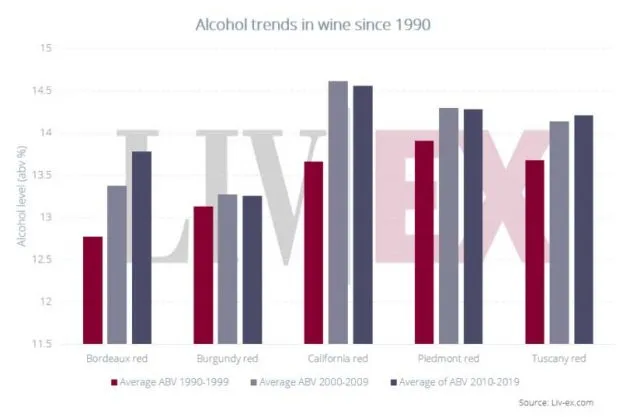
For much of the late 20th and early 21st centuries, alcohol levels in Bordeaux climbed steadily. Several factors contributed.
Warmer Growing Seasons
The most obvious driver is warming temperatures. Warmer summers accelerate sugar accumulation in grapes. Where once grapes reached phenolic ripeness at moderate sugar levels, today they often reach flavour maturity at much higher potential alcohol.
This effect has been particularly noticeable since the early 2000s.
Riper Fruit Preferences
For many years, global taste trends favoured:
- Riper fruit
- Softer tannins
- Fuller body
- Immediate appeal
To achieve this style, grapes were often harvested later, once sugars were high and tannins fully ripe. Alcohol rose as a natural consequence.
This shift affected both Left Bank Bordeaux (Cabernet Sauvignon-dominant) and Right Bank Bordeaux (Merlot-dominant), though in different ways.
Merlot’s Role on the Right Bank
Merlot ripens earlier than Cabernet Sauvignon and accumulates sugar quickly in warm conditions. On the Right Bank, this led to:
- Higher potential alcohol
- Richer mouthfeel
- Softer texture
In warm vintages, Merlot-heavy blends could easily exceed 14% alcohol if harvested late.
Why Alcohol Is Now Stabilising — or Falling — in Some Bordeaux Wines
Interestingly, the upward trend has not continued unchecked. In recent years, many Bordeaux producers have begun actively managing alcohol levels, sometimes reducing them.
Earlier Harvest Decisions
One of the most effective tools is harvesting earlier.
Producers are increasingly comfortable picking grapes:
- At slightly lower sugar levels
- With sufficient phenolic ripeness
- Preserving acidity and freshness
This results in wines that feel lighter, more precise, and often more age-worthy.
Vineyard Adaptation and Canopy Management
Modern vineyard practices allow growers to slow sugar accumulation:
- Adjusted canopy shading
- Higher leaf cover
- Different pruning strategies
- Altered row orientation
These techniques help grapes ripen flavour-wise without racing toward high alcohol.
New Grape Varieties in Bordeaux
In response to climate change, Bordeaux has approved several new grape varieties for blending, including those that:
- Ripen later
- Retain acidity
- Accumulate sugar more slowly
While still used cautiously, these varieties offer long-term tools to manage alcohol naturally, without technological intervention.
Yeast, Fermentation, and Alcohol Control
Winemaking choices also influence final alcohol levels.
Different yeast strains convert sugar with varying efficiency. Some produce:
- Slightly less alcohol
- More glycerol
- Different aromatic profiles
Fermentation temperature, duration, and oxygen exposure can also affect how alcohol integrates into the wine — even if the percentage stays the same.
Why Alcohol Perception Matters More Than the Number
A critical distinction must be made between alcohol level and alcohol perception.
Two Bordeaux wines at 14% can taste dramatically different:
- One feels hot and unbalanced
- The other feels smooth and harmonious
This depends on:
- Acidity
- Tannin structure
- Fruit concentration
- Oak integration
Balanced wines hide alcohol. Unbalanced wines advertise it.
This is why alcohol percentages alone do not tell the full story.
Left Bank vs Right Bank: Different Alcohol Dynamics
Left Bank Bordeaux
Cabernet Sauvignon:
- Ripens later
- Retains acidity
- Handles warmth better
As a result, Left Bank wines often show slower alcohol increases and maintain structure even in warm years.
Right Bank Bordeaux
Merlot:
- Ripens earlier
- Accumulates sugar quickly
Right Bank wines are more sensitive to harvest timing and can swing more dramatically in alcohol level between vintages.
White Bordeaux and Alcohol Trends
Dry white Bordeaux wines have also changed.
Warmer conditions can push alcohol higher in Sauvignon Blanc and Sémillon, but many producers now prioritise:
- Freshness
- Lower alcohol
- Precision
Earlier harvesting and cooler fermentation help preserve aromatic lift and moderate alcohol.
Sweet Bordeaux Wines: A Different Equation
For sweet wines, alcohol behaves differently.
Botrytised grapes have extremely high sugar levels, but fermentation is often stopped naturally, resulting in:
- High residual sugar
- Moderate alcohol
Here, balance depends less on alcohol percentage and more on acidity and botrytis concentration.
What This Means for Wine Travellers
For wine lovers visiting Bordeaux today, this evolution offers something fascinating: a region actively redefining balance.
Understanding why alcohol levels vary — and how producers manage them — adds depth to tastings and conversations.
This is something travellers often explore in depth during Bordeaux wine tasting tours, where vineyard practices, vintage conditions, and winemaking choices are discussed alongside what’s in the glass.
The Future of Alcohol in Bordeaux Wines
The future is not uniformly higher or lower alcohol.
Instead, Bordeaux is moving toward:
- Greater precision
- Site-specific decisions
- Style diversity
- Balance over power
Some wines will remain full and rich. Others will become lighter, fresher, and more restrained.
Both are valid expressions — when done intentionally.
Final Perspective: Alcohol as a Result, Not a Goal
Alcohol is not something Bordeaux producers chase. It is something they manage.
It reflects climate, choices, and philosophy. When you understand why alcohol levels change, you stop seeing the number as a judgment — and start seeing it as information.
Exploring these nuances is one of the great rewards of travelling through Bordeaux with a knowledgeable guide, and one reason many wine lovers choose Wine Tours Bordeaux region to experience the region beyond the label.
In Bordeaux, alcohol is not the headline.
Balance is.
