Blaye and Bourg: Bordeaux’s Forgotten Right Bank Wines Explained
When wine lovers think of Bordeaux’s Right Bank, their mental map usually stops at Saint-Émilion. Beyond it, the landscape is often treated as a blur — vaguely productive, historically secondary, and rarely essential to understand. This assumption has less to do with wine quality than with narrative dominance.
Blaye and Bourg sit just north of Bordeaux city, following the Gironde estuary as it widens toward the Atlantic. They have produced wine for centuries, shared the same commercial river system as Bordeaux’s most famous appellations, and yet remained largely outside the prestige conversation. Understanding Blaye and Bourg wines is not about uncovering a secret; it is about correcting an imbalance.
For wine travellers who want to understand Bordeaux as a system rather than a hierarchy, it helps to anchor their experience first in a well-defined reference point. Experiencing the Right Bank through a Saint Emilion Wine Tour establishes that benchmark clearly, making it far easier to recognise how Blaye and Bourg express the same Bordeaux logic in quieter, more understated ways.
Blaye and Bourg in the Structure of the Bordeaux Wine Region
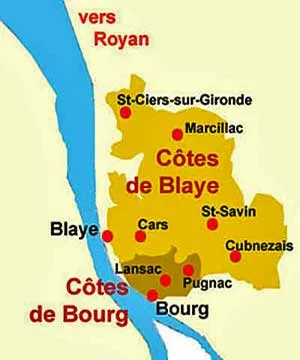
To understand Blaye and Bourg properly, they must be placed where they belong: not emotionally, but structurally.
Both areas are located on the Right Bank of Bordeaux, north of the city, overlooking the Gironde estuary. Unlike Saint-Émilion or Pomerol, they never benefited from early monastic concentration or later classification systems. What they did have — and still have — is geography that works.
The Gironde is the backbone of Bordeaux wine history. It moderated climate, enabled trade, and allowed wine to move outward efficiently. Blaye and Bourg were always part of this river economy. Their wines travelled. Their growers supplied markets. They simply did so without becoming symbols.
This distinction matters. Bordeaux prestige has always been shaped by who controlled narrative and access, not only by terroir. Blaye and Bourg participated in the same system but without controlling it.
Why Blaye and Bourg Were Built for Consistency, Not Status
One of the most persistent misunderstandings about Blaye and Bourg wines is the idea that their lower profile reflects lower ambition. In reality, it reflects a different historical function.
These regions were built to supply reliable, classically structured Bordeaux to a broad market. Their wines were not designed to impress collectors or age for decades in the cellars of the elite. They were designed to express Bordeaux character with balance, drinkability, and consistency.
That philosophy shaped everything:
- Vineyard choices favoured moderation
- Blending prioritised coherence
- Structure was present, but never exaggerated
Prestige in Bordeaux is not an automatic consequence of quality. It is the result of early market positioning. Blaye and Bourg were never positioned as luxury regions — and therefore never priced or perceived as such.
The Gironde Estuary and Its Influence on Style
The Gironde estuary is not a scenic detail; it is a climatic engine. In Blaye and Bourg, its influence is immediate.
Water moderates temperature, reducing frost risk and softening heat spikes. Ripening is steadier, less dramatic. This produces wines that feel balanced rather than forceful, with acidity and tannin integrated rather than dominant.
Soils here vary — clay-limestone, gravel, and mixed deposits — but the overriding impression is one of restraint. Wines rarely chase ripeness extremes. Alcohol remains controlled. Freshness is preserved.
For wine lovers, this creates wines that feel unmistakably Bordeaux, but without the density or pricing pressure often associated with better-known appellations.
Blaye vs Bourg: Reading Difference Through Nuance
Blaye and Bourg are often spoken of together, but they are not interchangeable.
Blaye tends to favour wines that feel more open in youth, often driven by Merlot-forward blends that emphasise approachability and softness. Bourg, by contrast, frequently delivers firmer structure and slightly greater ageing potential, reflecting subtle soil differences and stylistic heritage.
These are not headline contrasts. They do not announce themselves loudly. They reveal themselves through comparison, not isolation.
This is precisely why these regions matter for serious wine lovers. They train the palate to notice differences where drama is absent — a skill essential for understanding Bordeaux as a whole.
Grape Varieties and Classical Blending
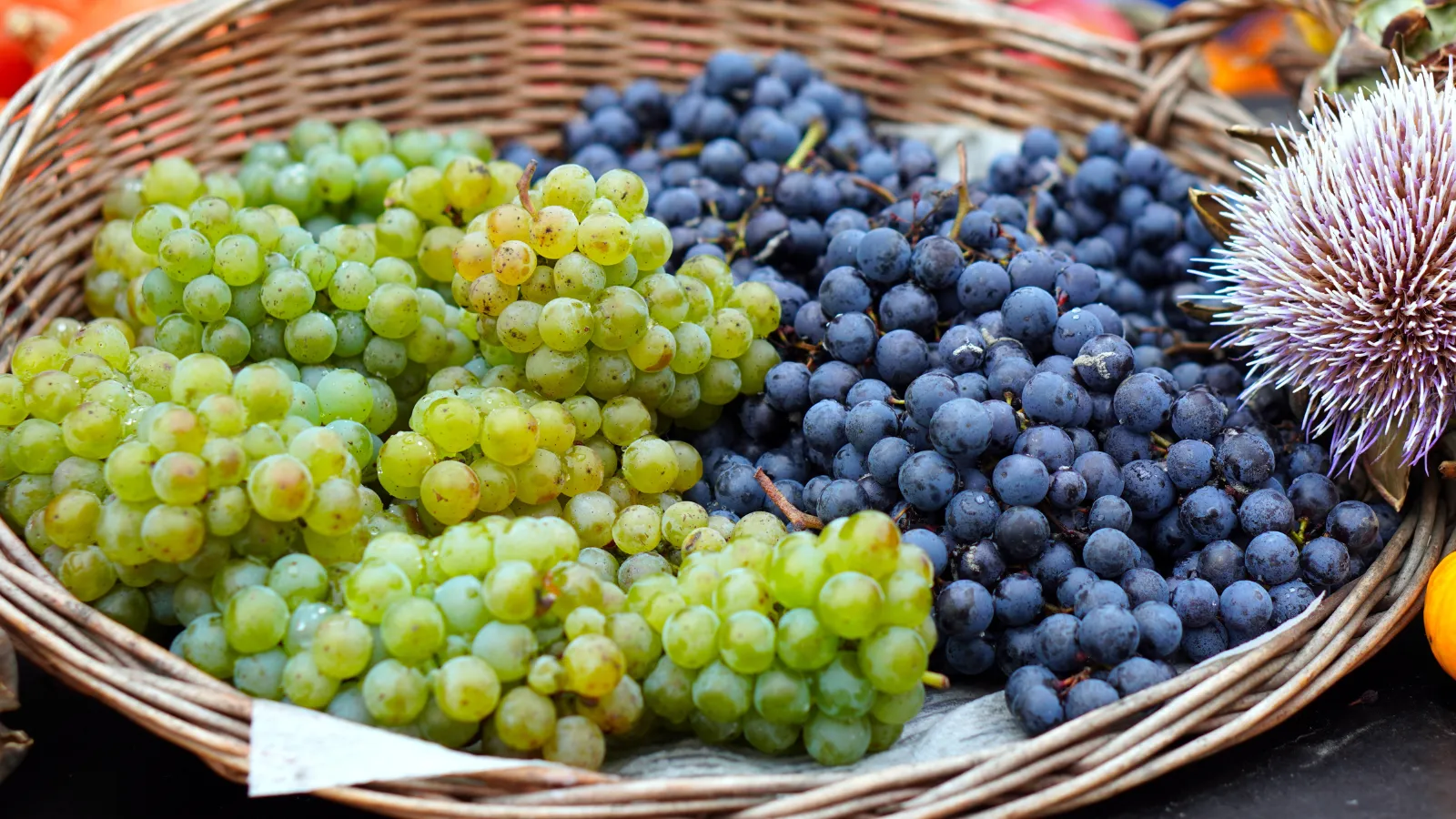
Like much of the Right Bank, Blaye and Bourg rely heavily on Merlot, supported by Cabernet Sauvignon and Cabernet Franc. There is nothing experimental here — and that is intentional.
Blends are built for:
- Balance rather than intensity
- Structure without aggression
- Drinkability without dilution
This blending philosophy reflects the region’s historical role: wines meant to be enjoyed regularly, not speculated upon. Modern vineyard practices have refined precision, but the underlying intent remains unchanged.
The result is wine that feels honest — expressive of place without performance.
Why Blaye and Bourg Matter More Today Than Ever
As Bordeaux has modernised, regions without rigid classification pressure have often adapted most fluidly. Blaye and Bourg are prime examples.
Without the burden of preserving prestige optics, growers have improved viticulture, refined extraction, and clarified expression. The wines have gained definition without losing their identity.
For wine lovers fatigued by status-driven tasting, these regions offer something increasingly rare: clarity without theatre.
They also recalibrate perception. After tasting Blaye and Bourg, Left Bank power feels more deliberate, and Saint-Émilion richness feels more intentional. Context sharpens appreciation.
Blaye and Bourg Within Wine Routes in France
Within broader wine routes in France, Blaye and Bourg are rarely promoted as destinations. Yet structurally, they are essential.
They represent the working backbone of Bordeaux — the wines that sustained trade, filled cellars, and built reliability long before Bordeaux became a symbol of luxury.
Visiting or understanding them is not about discovery. It is about comprehension.
Blaye and Bourg Compared to Saint-Émilion
To understand the role of Blaye and Bourg wines, it is impossible to avoid comparison with Saint-Émilion. Not because one is superior to the other, but because Saint-Émilion has become the dominant reference point for the Right Bank.
Saint-Émilion is defined by concentration: of history, of classification, of symbolic power. Its vineyards are tightly clustered, its identity reinforced by centuries of religious land ownership and later by formal hierarchies. This concentration created density — not only in wine style, but in reputation.
Blaye and Bourg evolved differently. Their vineyards spread outward along the estuary, less constrained by medieval boundaries or later classifications. As a result, their wines express Bordeaux through continuity rather than compression. Structure replaces density. Balance replaces intensity.
For wine lovers, this difference is instructive. Saint-Émilion teaches how richness and limestone interact. Blaye and Bourg teach how river influence and moderation shape the classical Bordeaux expression.
Neither replaces the other. Together, they complete the picture.
Ageing Potential and Evolution in a Bottle
A common misconception about Blaye and Bourg is that they produce wines only for early drinking. While approachability is a defining feature, it does not preclude development.
Well-made examples from both regions evolve gracefully over time. Tannins soften without collapsing. Fruit shifts from fresh to savoury. Structure remains intact longer than expected. The evolution is subtle rather than dramatic — but coherence persists.
This ageing profile reflects the region’s philosophy. Wines are built to remain stable, not to peak theatrically. For wine lovers who appreciate quiet evolution rather than transformation, this is a strength, not a limitation.
Understanding this also reframes how Bordeaux should be cellared. Not every wine needs to be monumental to be meaningful.
Why Buyers and Wine Lovers Are Re-Evaluating These Regions
In recent years, Blaye and Bourg wines have begun to attract renewed attention — not as “alternatives”, but as corrections.
As pricing pressure increases in more famous appellations, serious wine buyers are reassessing what they value. Structure, balance, typicity, and drinkability are gaining importance over label recognition alone.
Blaye and Bourg deliver these qualities without distortion. They allow wine lovers to engage with Bordeaux wine on its own terms, without the noise of prestige markets or speculative pressure.
This shift is not driven by fashion. It is driven by fatigue — and by a desire to reconnect with Bordeaux’s foundational logic.
What Blaye and Bourg Teach About Bordeaux as a Whole
Perhaps the most important contribution of Blaye and Bourg is educational. They clarify what Bordeaux fundamentally is.
They show that Bordeaux is not defined by excess, luxury, or exclusivity. It is defined by structure, moderation, and continuity. Prestige regions magnify these traits. Blaye and Bourg preserve them.
For wine lovers seeking to understand Bordeaux deeply, these regions are not optional. They are essential reference points — reminders that Bordeaux’s strength lies in coherence, not spectacle.
Integrating Blaye and Bourg Into a Bordeaux Wine Journey
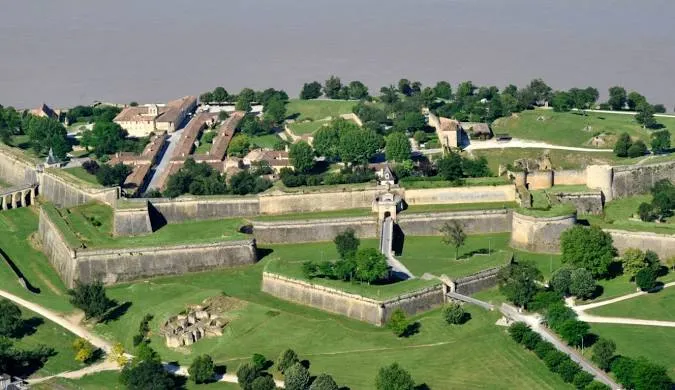
Blaye and Bourg work best when understood relationally. They make the most sense when tasted alongside more famous Right Bank wines, allowing contrast to sharpen perception.
This is why many wine travellers find value in first establishing a clear benchmark — understanding Saint-Émilion’s structure and history — before moving outward. Once that reference is set, Blaye and Bourg reveal themselves with clarity rather than confusion.
For those who want to ground their Bordeaux experience in structure before exploring its quieter expressions, beginning with a Saint Emilion Wine Tour provides that anchor — allowing Blaye and Bourg to be appreciated not as secondary regions, but as integral parts of Bordeaux’s identity.
A Closing Reflection
Blaye and Bourg do not ask for attention. They reward it.
They offer no spectacle, no mythology, and no shortcuts to admiration. What they offer instead is an understanding of how Bordeaux works when prestige is removed from the equation.
For wine lovers willing to listen carefully, these regions reveal Bordeaux in its most honest form: shaped by river, trade, and restraint, confident enough not to perform.
Seen through that lens, Blaye and Bourg are no longer forgotten. They are foundational.
