The Bordeaux Barrel of Wine
Begin your journey into Bordeaux wine culture with a saint emilion wine tour, where barrels, cellars, and centuries of winemaking tradition come together in the vineyards and châteaux of the region.
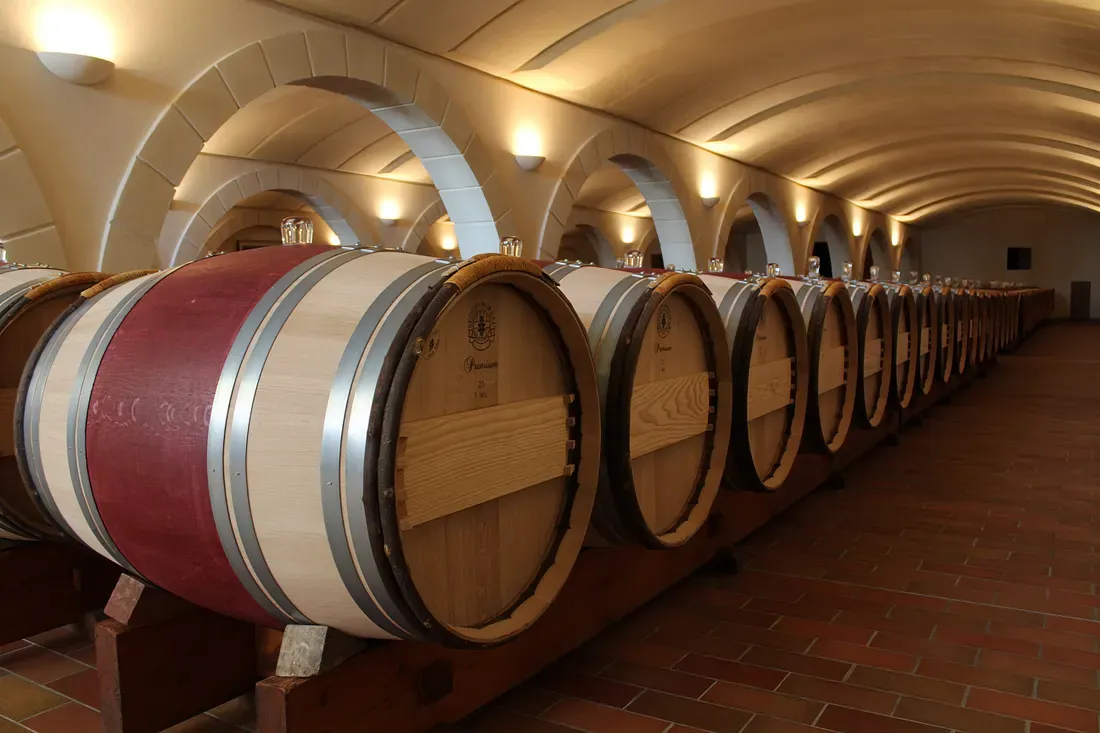
The barrique, a traditional oak barrel used for wine storage in Bordeaux and beyond, holds a fascinating history intertwined with the very concept of tonnage. Embark on a Bordeaux Wine tour and you'll witness these iconic vessels firsthand, particularly in renowned regions like Saint-Émilion.
Two barriques fill a "pipe," and two pipes fill a "tun" or "tonneau." Historically, ships' cargo capacity was measured by the number of tonneaux of Bordeaux wine they could accommodate. This term, originating in the English navy during the Middle Ages, provides a glimpse into the maritime history of wine trade.
Size Matters: The Evolution of the Barrique
The precise volume of a tonneau has been a subject of debate due to variations in cask sizes before standardization. In the 1340s, a Bordeaux barrique could hold anywhere from 56.8 to 60.76 US gallons (215-230 litres). To ensure fair taxation, the Bordeaux Chamber of Commerce established a standard barrique size of 59.44 US gallons (225 litres) in 1854.
Conversions:
1 tonneau/tun = 2 pipes or butts (approximately 238 US gallons/900 litres)
1 pipe = 2 barriques (118.88 US gallons/450 litres)
1 barrique = 25 cases of wine (59.44 US gallons/225 litres)
From Barrel to Measurement: The Legacy of the Tonneau
While the tonneau still exists as a physical container in Alsace, its name has evolved into the modern unit of measurement known as tonnage. Interestingly, a full tonneau, including both the barrel and the wine, weighs approximately 2,000 lbs (907 kg).
Learn about the barrel on a Saint-Émilion wine tour
Delve deeper into the world of wine with a Saint-Émilion wine tour. Explore the vineyards and cellars of this captivating medieval village, uncovering the artistry of winemaking. Many of the region’s most recognised Bordeaux reds owe their structure, texture, and ageing potential to time spent in oak barrels. For an adventurous twist, consider a Saint-Émilion e-bike tour, pedalling through the picturesque landscape and immersing yourself in the beauty of the region.
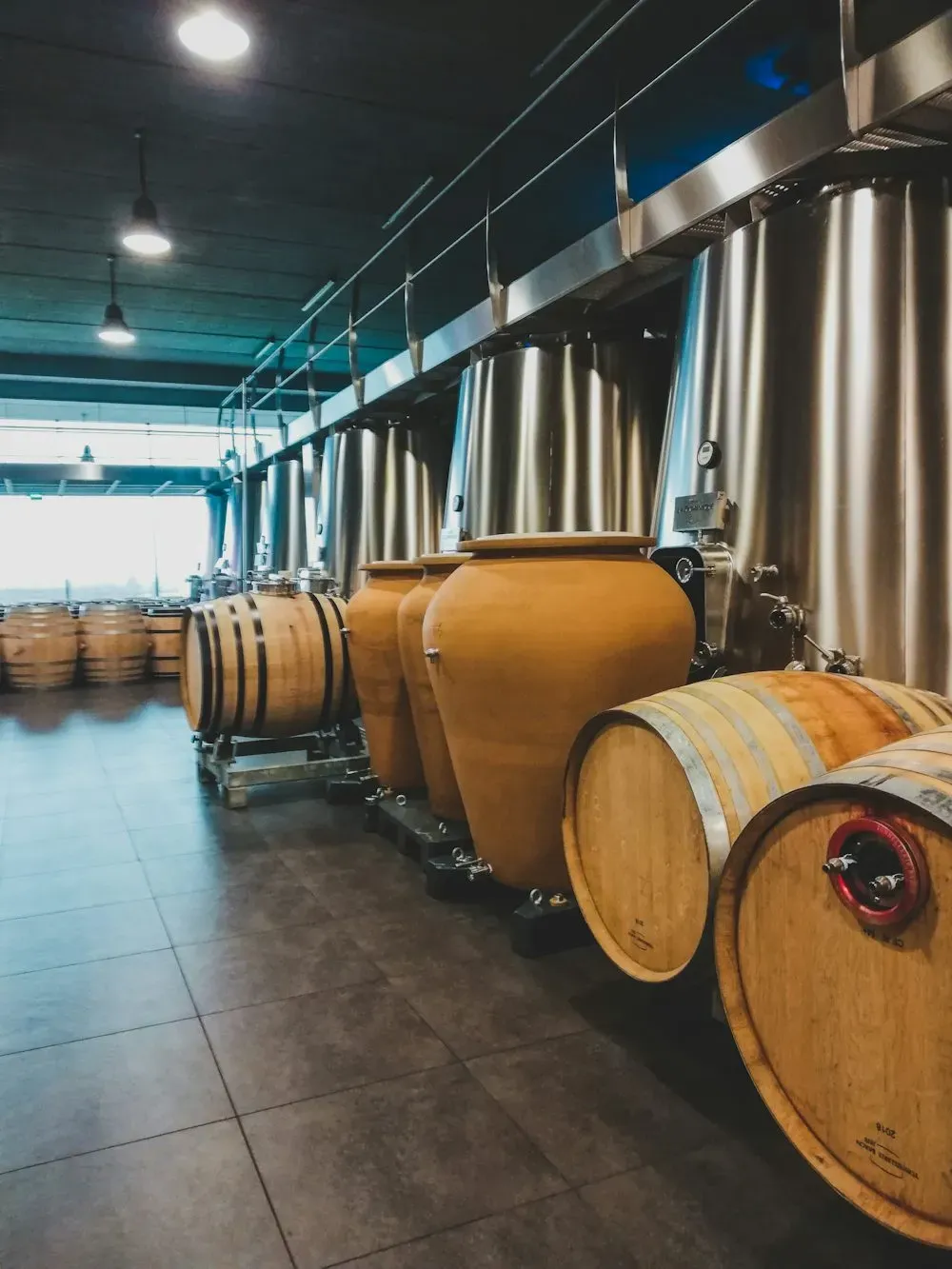
The Secrets of Bordeaux Barrel Making
The wines of Bordeaux have been exported since the Middle Ages. Back then, amphoras had already been replaced by barrels, which were ideally suited to transporting wine. Bordeaux merchants soon realised that besides the logistical advantages of using barrels, there were aromatic benefits too. Thus barrel ageing became one of the main characteristics of Bordeaux winemaking, and barrel making evolved into a highly-prized skill. Let's take a closer look at the work of one of the most famous coopers of the Bordeaux region, who will explain the different stages of making barrels for Bordeaux wines.
Step 1: Selecting the Oak
Oak is the wood of choice for barrel making, with different types selected based on the desired aromatic profile. French oak, with its tighter grain, is often chosen for Bordeaux wines to impart subtle flavours and aromas, while American oak, known for its bold and spicier notes, may be selected for certain styles. Other oak varieties, such as Hungarian oak, may also be used depending on the desired effect. Barrels can be crafted from new oak or from oak that has been previously used, with each choice offering different characteristics. New oak generally imparts stronger flavours, while used oak gives a more delicate influence on the wine.
In some cases, winemakers may opt for oak chips instead of traditional barrels. Oak chips are a cost-effective alternative that can impart oak-derived flavours to the wine without the expense of a full barrel. These chips, which are often added during fermentation or aging, can replicate the flavours of oak aging, such as vanilla, toast, and spice, though they tend to provide a more subtle influence compared to the full barrel maturation process.
Step 2: Producing and Assembling the Staves
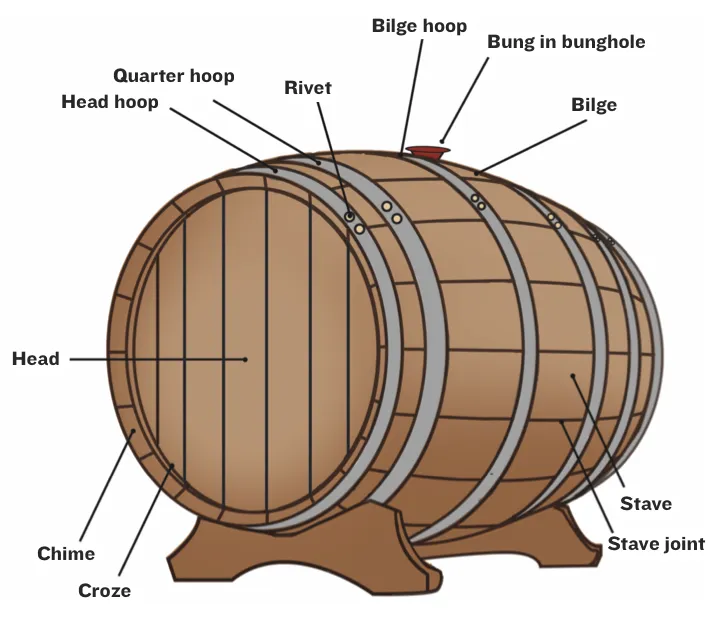
Regardless of the origin of the chosen oak, the wood is first cut into planks known as green staves. They are air-dried for at least two years, and then machined to become barrel staves. These are the lengths of wood that will make up the walls of the barrel. The cooper starts by arranging them in a rose-like shape, placing them in a ring within a metal hoop, side by side.
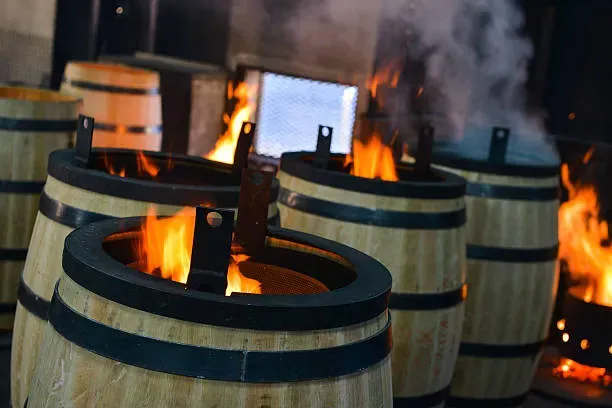
Step 3: Toasting the Wood
Toasting is a two-step process. To give the barrel walls their convex shape so that a second hoop can then be placed around the other end of the staves, they have to be pre-toasted: the cooper dampens the wood and lightly heats it, which allows it to soften without breaking. The next step is the aromatic toast, when the barrel is adapted to the style of wine to be aged in it. A barrel's aromatic potential depends not only on the type of wood from which it is made, but also on the precise intensity and duration of the toasting process. For example, to develop specific flavours, winemakers may choose different levels of toast, ranging from light to heavy.
Step 4: Inserting the Heads
The heads are the wooden discs used to seal each end of the barrel. They are made from the same oak as the staves, and are toasted in the same way. The head is inserted into the croze, a groove within which a paste made from gluten-free flour and water has been applied, to act as a glue.
Step 5: Applying the Definitive Hoops and Finishing Touches
Once all the staves are in place, the cooper removes the temporary hoops and puts the definitive hoops on the barrel before checking it to make sure it is water tight by filling it with pressurised water and air. The barrel-making process ends with planing and using a laser to mark the barrel with details such as wood type and toast.
Bordeaux and Burgundy Barrels: What’s the Difference?
The barrels used for aging wine in Bordeaux and Burgundy are very similar but not identical. Bordeaux barrels are traditionally longer and narrower, holding 225 litres, while Burgundy barrels are slightly wider and shorter, holding 228 litres. Interestingly, both barrel types are said to yield around 300 bottles of wine. Another key difference is the oak from which they are made, with the forests of Allier, Bertrange, Jupilles, Limousin, Nevers, Troncais, and Vosges supplying oak for both regions. The grain tightness of the wood and the toasting process also vary, which can influence the wine’s flavour and aroma.
Sulphur and Barrel Disinfection
In the 16th century, the Dutch introduced the use of sulphur to disinfect barrels, which quickly became a standard practice in Bordeaux. This technique was employed to prevent unwanted bacteria or mould from contaminating the wine. It was a game changer for Bordeaux wine producers, helping to maintain the high quality of their wines during the aging process. Sulphur candles would be placed inside the barrel and lit, allowing the smoke to purify the interior. This practice is still used today in many wineries, ensuring that the barrels remain in optimal condition for wine storage.
How Much Do Bordeaux Barrels Cost?
The price of a new French oak barrel typically ranges between €600 and €1,200, depending on factors such as the type of oak used, the toasting process, and the producer. While they are an essential investment for many Bordeaux wine producers, barrels are only used for a maximum of three years before they are considered too worn to impart further beneficial flavours to the wine. After this period, barrels may be sold to other producers or repurposed for various uses, including being broken down to create furniture or even used for aging other beverages such as whisky.
To see these barrels in their working environment, from fermentation cellars to ageing chai, join a saint emilion wine tour and experience Bordeaux winemaking in context, guided by local expertise.
