Château Beau-Séjour Bécot: Limestone, Legacy, and the Quiet Power of Saint-Émilion
The Bordeaux wine region is often described through its most famous estates and historic classifications. Names such as the First Growth châteaux dominate auction catalogues and collectors’ conversations. Yet the true structure of Bordeaux is not defined solely by prestige or ranking. It is shaped by geography, soil composition, and the long relationship between vineyards and the families who care for them.
Among the estates that quietly illustrate this deeper structure is Château Beau-Séjour Bécot, a vineyard estate positioned on the limestone plateau above the historic village of Saint‑Émilion.
Perched on one of the most geologically privileged areas of the Right Bank of Bordeaux, the estate produces wines that reflect the powerful influence of limestone soils combined with the richness of Merlot. Over decades, Beau-Séjour Bécot has evolved into one of the most respected Premier Grand Cru Classé estates within the Saint-Émilion classification.
Understanding this estate also helps explain something fundamental about Bordeaux: the wines are not simply products of technique or reputation. They are expressions of landscape.
Travellers who explore the vineyards surrounding Saint-Émilion often notice that the geography itself tells the story. The plateau, the slopes, and the limestone cliffs reveal why certain vineyards produce wines with remarkable balance and longevity. Many visitors begin to recognise these patterns during a Saint Emilion Wine Tour, where the connection between soil and wine becomes visible across the landscape.
The Limestone Plateau That Defines Saint-Émilion
The vineyards surrounding Saint-Émilion occupy one of the most distinctive geological formations in Bordeaux. Millions of years ago, the region lay beneath a shallow sea. Over time, marine sediments accumulated and eventually hardened into limestone packed with fossilised marine organisms.
This limestone — known locally as calcaire à astéries — forms the bedrock beneath many of the appellation’s most prestigious vineyards.
The plateau itself rises gently above the Dordogne valley. From the village centre, vineyards extend outward across slopes and terraces shaped by centuries of cultivation.
The influence of limestone on viticulture is profound. Several natural advantages explain why estates on the plateau consistently produce wines of structure and ageing potential.
Key Characteristics of Limestone Terroir
- Natural water regulation – Limestone stores moisture deep underground while allowing surface soils to drain quickly.
- Deep root systems – Vine roots penetrate fissures in the rock, encouraging stability and resilience during warm summers.
- Slow grape ripening – The soils moderate vine stress, allowing grapes to develop complex flavours gradually.
- Mineral freshness – Wines grown on limestone often retain vibrancy and tension even in warmer vintages.
These conditions explain why the plateau has supported viticulture for centuries and why estates such as Beau-Séjour Bécot occupy some of the most sought-after vineyard land in Saint-Émilion.
For readers seeking a broader understanding of how different soils influence Bordeaux wines, the geological structure of the region becomes clearer when exploring The Bordeaux Wine Regions Explained, which reveals how terroir shapes the character of wines across both banks of the Gironde.
The Meaning Behind the Name Beau-Séjour
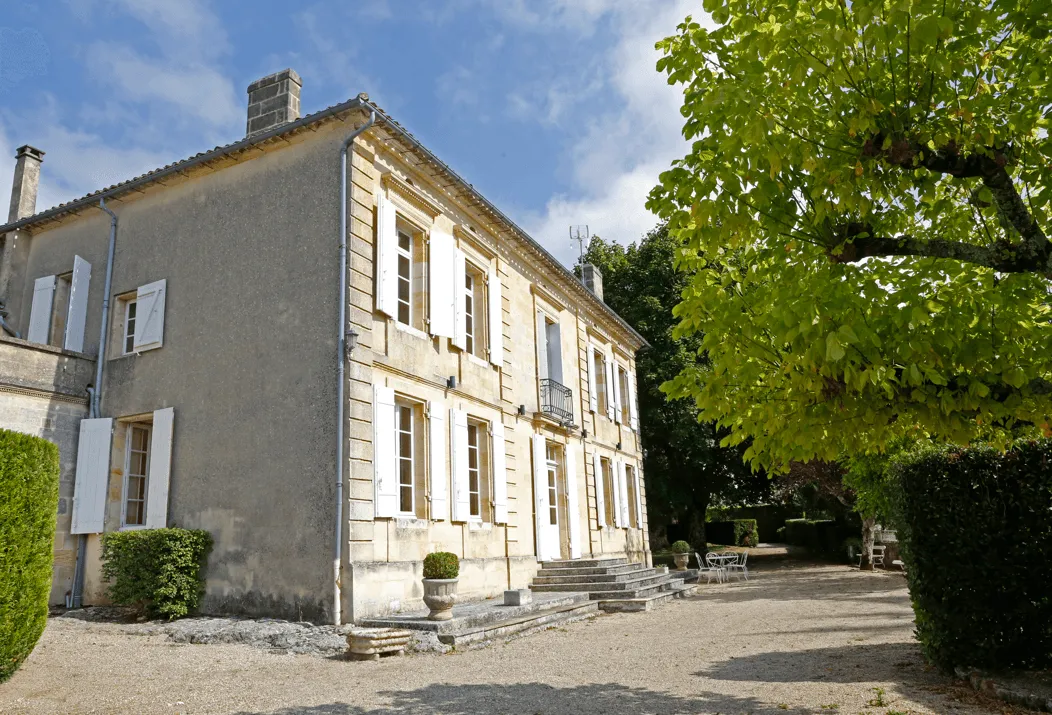
The name Beau-Séjour translates loosely as “beautiful stay” or “beautiful view.” The description is fitting.
From the plateau vineyards surrounding the estate, the view extends across the Dordogne valley and the rolling slopes of Saint-Émilion. Vineyards appear almost continuous, punctuated by historic châteaux and small stone roads connecting neighbouring properties.
Historically, the Beau-Séjour vineyards formed part of a larger estate that eventually divided into two separate properties during the nineteenth century.
Today two estates carry the name:
- Château Beau-Séjour Bécot
- Château Beau-Séjour Duffau-Lagarrosse
Although they share historical roots, each estate has developed a distinct identity within Saint-Émilion.
Beau-Séjour Bécot gradually became recognised for wines that emphasise limestone freshness combined with Merlot richness, creating a style often described as both structured and elegant.
The Arrival of the Bécot Family
The modern era of the estate began in 1969, when the Bécot family acquired the property.
At that time, Bordeaux was entering a period of transformation. Advances in vineyard management, improvements in fermentation technology, and a growing focus on terroir expression were reshaping how estates approached winemaking.
The Bécot family invested heavily in the vineyard and cellar with a clear objective: allow the vineyard’s natural character to appear more clearly in the wines.
Rather than pursuing rapid expansion or dramatic stylistic changes, the family emphasised long-term vineyard stewardship.
Several improvements gradually reshaped the estate:
- replanting selected vineyard parcels
- improving drainage and canopy management
- refining harvest selection
- modernising fermentation facilities
These decisions slowly elevated the estate’s reputation within Saint-Émilion and contributed to its recognition within the appellation’s classification hierarchy.
A Classification That Evolves
One of the defining features of Saint-Émilion is its dynamic classification system.
Unlike the famous 1855 classification of the Médoc, which has remained largely unchanged since its creation, Saint-Émilion revises its classification roughly every decade.
This system reflects the belief that wine estates should be judged not only by historical reputation but also by their present quality.
Within this hierarchy, Château Beau-Séjour Bécot achieved the rank of Premier Grand Cru Classé, placing it among the leading estates of the appellation.
However, the system has also generated debate over the years. Because rankings influence global reputation and wine prices, classification reviews often attract intense scrutiny from producers and collectors alike.
Yet this evolving structure also encourages estates to pursue continuous improvement.
Vineyard Composition
Today the estate covers approximately 16 hectares of vineyard on the limestone plateau and upper slopes of Saint-Émilion.
The grape varieties reflect the classic Right Bank blend.
Main Vineyard Varieties
- Merlot – dominant grape, providing richness and soft tannins
- Cabernet Franc – contributes floral aromas and structural elegance
- Cabernet Sauvignon – adds backbone and ageing capacity
Merlot thrives particularly well in clay-limestone soils, producing wines with deep fruit flavours while maintaining supple texture.
Cabernet Franc introduces aromatic complexity, often adding notes of violets and subtle spice.
Together, these grapes produce wines that combine generosity with freshness — a defining characteristic of plateau vineyards.
Winemaking Philosophy
Once harvested, the grapes move quickly into the cellar where careful fermentation begins.
Winemaking at Beau-Séjour Bécot aims to preserve vineyard expression rather than dominate it through excessive intervention.
The process typically includes:
- temperature-controlled fermentation•
- gentle extraction techniques
- parcel-by-parcel vinification
- ageing in French oak barrels
Barrel ageing generally lasts between 16 and 18 months, allowing the wine to develop complexity and structural harmony.
New oak contributes subtle flavours of spice, cedar, and toast while allowing tannins to soften gradually.
The goal is balance.
Oak should support the wine rather than mask the fruit or the mineral structure provided by the limestone soils.
The Style of Beau-Séjour Bécot Wines
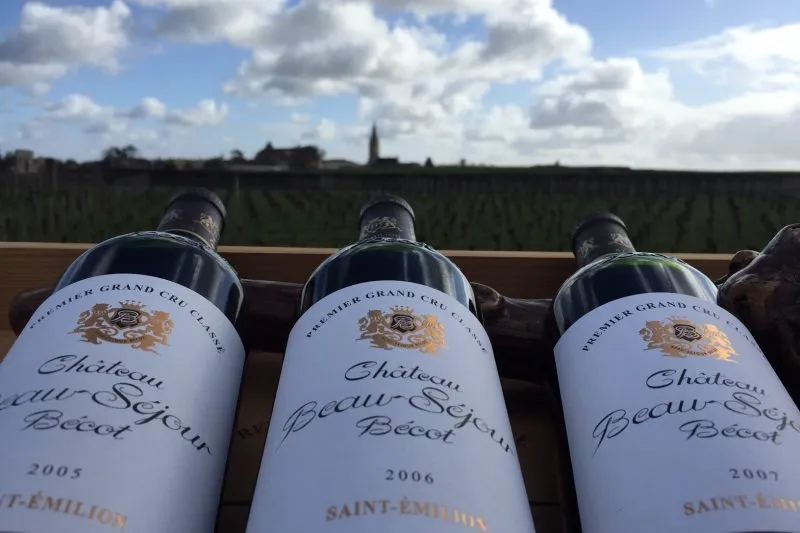
The wines of Beau-Séjour Bécot typically display a combination of richness and freshness.
Young vintages often show aromas such as:
- black cherry
- plum
- blackberry
- violet
- subtle spice
With age, these flavours evolve into deeper tertiary characteristics:
- truffle
- tobacco leaf
- forest floor
- graphite
This gradual transformation is one of the reasons collectors value limestone-based Saint-Émilion wines.
The mineral backbone supports long ageing while maintaining balance.
Visiting the Plateau
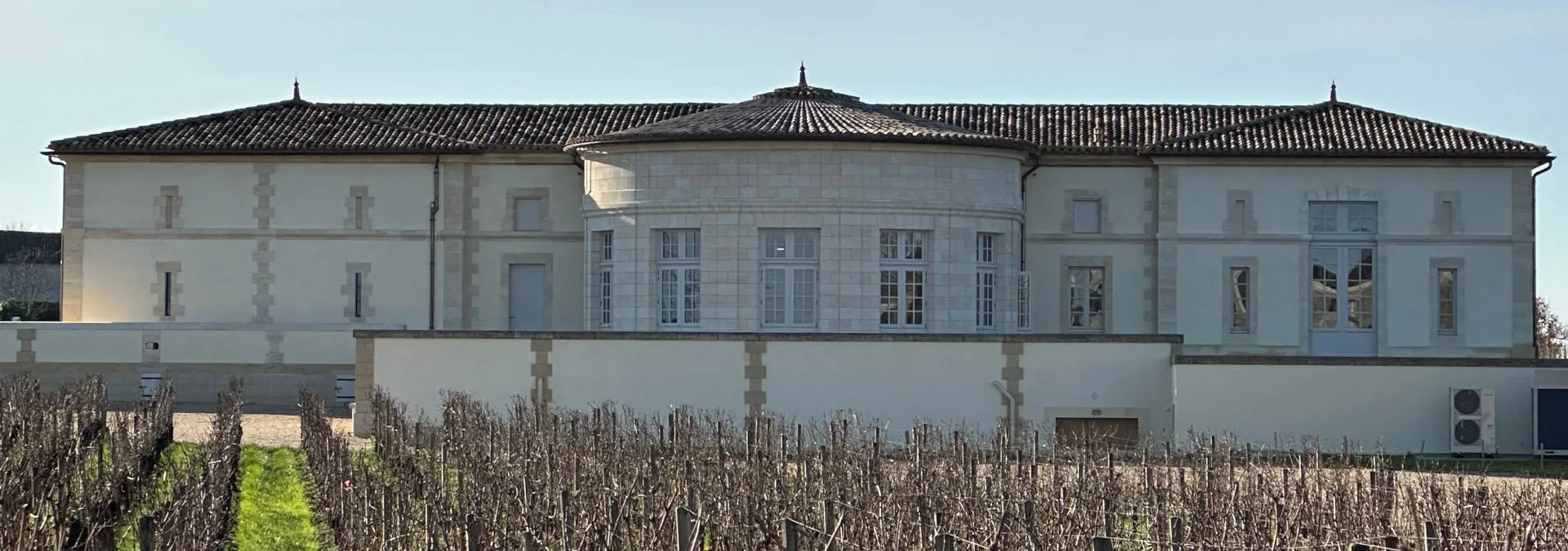
Walking through the vineyards above Saint-Émilion reveals how closely the region’s wine culture is tied to its landscape.
Unlike many wine regions where vineyards stretch far from towns, Saint-Émilion’s vineyards surround a medieval village whose identity has always been intertwined with wine.
Visitors exploring the plateau often see how estates such as Château Beau-Séjour Bécot sit within a broader mosaic of vineyards shaped by centuries of cultivation.
Many travellers discover this relationship between geology and wine during a Saint Emilion Wine Tour, where cycling or walking through the plateau vineyards reveals the geography that defines the appellation.
The Quiet Strength of Saint-Émilion
Bordeaux is often celebrated through its most famous châteaux, yet the region’s true richness lies in the diversity of its vineyards.
Estates such as Beau-Séjour Bécot represent the quieter strength of Saint-Émilion — places where soil, patience, and careful stewardship gradually shape wines of remarkable depth.
Standing on the limestone plateau above the village, surrounded by vines that stretch across the slopes, it becomes clear why Saint-Émilion has fascinated wine lovers for centuries.
The wines are not merely products of technique or fashion.
They are the result of landscape, history, and time — a relationship that estates like Château Beau-Séjour Bécot continue to express with each vintage.
And for those who wish to understand this landscape fully, exploring the vineyards firsthand during a Saint Emilion Wine Tour often reveals how the quiet power of limestone shapes some of Bordeaux’s most compelling wines.
