The Bordeaux Wine Regions Explained: How the Region Really Works
The Bordeaux wine region is often presented as a collection of names: Médoc, Saint-Émilion, Graves, Entre-Deux-Mers. Visitors memorise them, repeat them, and still struggle to understand how they connect. The problem is not complexity — it is framing.
Bordeaux does not function as a separate wine region competing for attention. It functions as a single system, divided into zones that evolved to serve different roles within the same commercial and geographic logic. Until that logic is understood, Bordeaux will always feel larger and more confusing than it needs to be.
For wine travellers encountering Bordeaux for the first time, establishing a clear Right Bank reference early makes everything else easier to read. Beginning with a structured introduction through a Saint Emilion Wine Tour creates that anchor, allowing the rest of Bordeaux’s regions to fall into place logically rather than emotionally.
Why Bordeaux Is Divided Into Regions at All
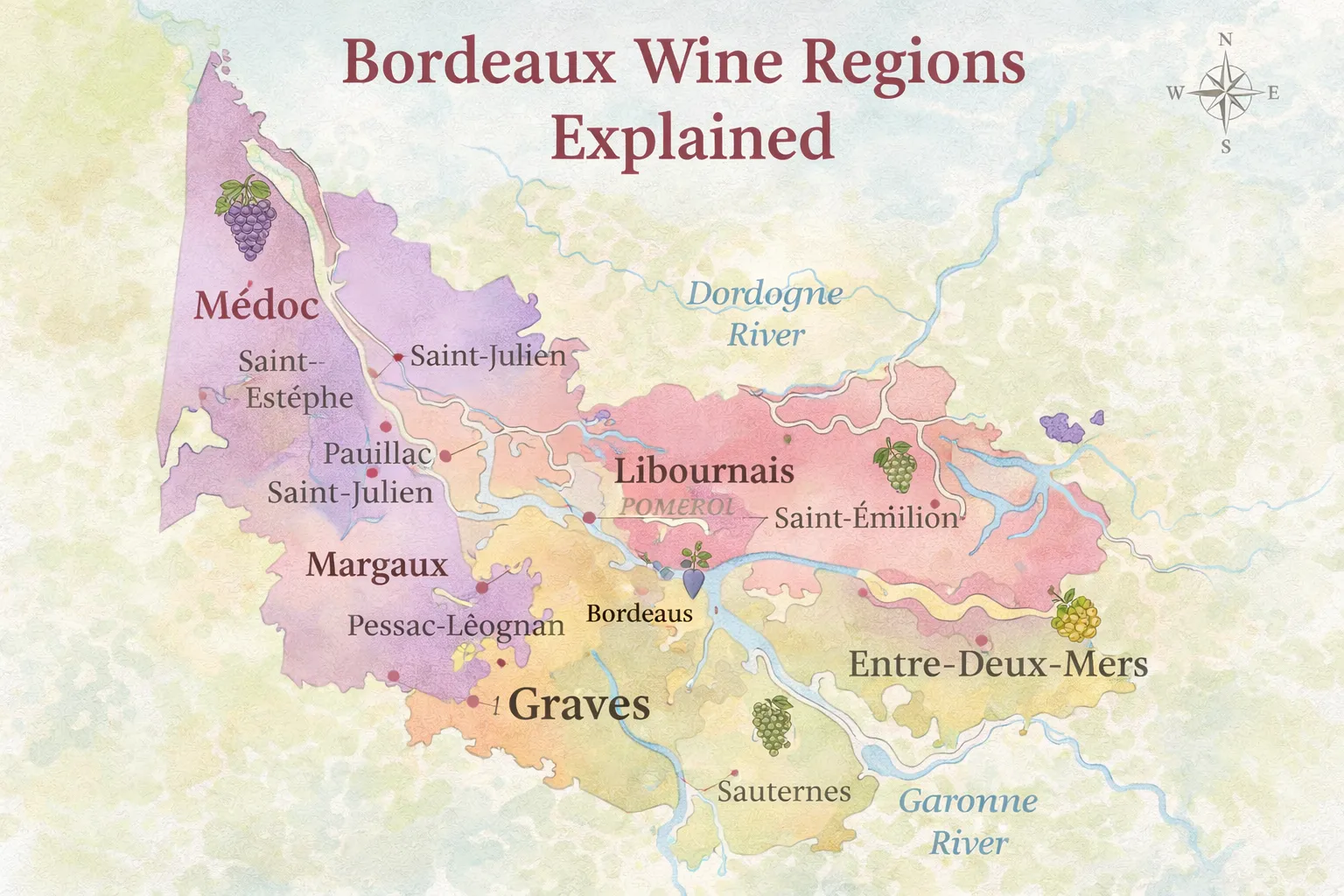
Unlike many French wine areas, Bordeaux was never organised around a single village or terroir identity. From its earliest history, Bordeaux developed as a trade-driven wine region. Wine was produced inland, moved along rivers, blended near ports, and exported outward.
As demand grew, different areas naturally specialised. Some produced wines that travelled and aged well. Others supplied fresher, earlier-drinking styles. Over time, these functional differences hardened into recognised regions.
This is why Bordeaux has so many named areas. They are not marketing inventions. They are the result of economic necessity, geography, and adaptation over centuries.
Understanding Bordeaux means understanding these roles.
The Rivers: The Hidden Structure Behind Bordeaux Wine
No explanation of Bordeaux makes sense without rivers.
The Garonne and Dordogne rivers converge north of the city to form the Gironde estuary. This water system shapes everything: climate moderation, soil deposits, trade routes, and historical access to markets.
Regions closest to the estuary gained an early advantage. Their wines could be shipped more reliably, reaching England and northern Europe long before inland wines could. Prestige followed access.
This river logic explains the fundamental division of Bordeaux into Left Bank and Right Bank, and it explains why some regions became famous earlier than others.
Left Bank Bordeaux: Structure, Gravel, and Longevity
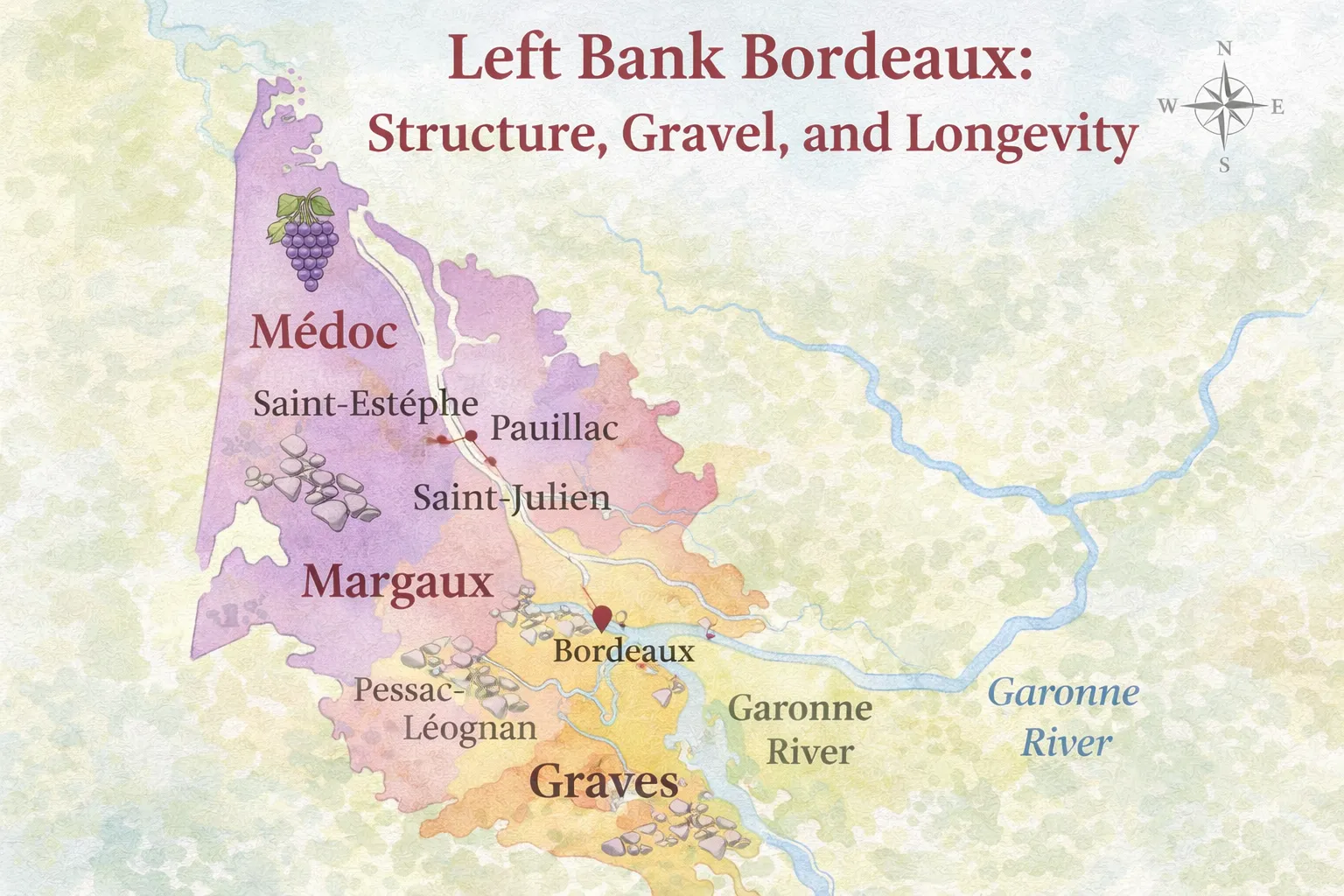
The Left Bank lies to the west of the Garonne and Gironde. Its defining feature is gravel, deposited by ancient river movement and ideal for drainage.
These soils favour Cabernet Sauvignon, a grape that ripens slowly and produces wines built on tannin, acidity, and ageing potential. As a result, Left Bank wines historically travelled well and aged predictably, reinforcing Bordeaux’s reputation for durability.
The Left Bank is not one region, but a sequence of areas with shared logic:
Médoc and Haut-Médoc
These form the backbone of classic Left Bank Bordeaux. Wines are structured, restrained in youth, and designed for long-term development. The emphasis is on proportion rather than generosity.
Graves
Located south of the city, Graves shares gravel soils but often produces wines with slightly more immediacy. It is also historically significant as one of Bordeaux’s earliest wine-producing areas.
Together, these regions established Bordeaux as a benchmark for age-worthy red wine.
Right Bank Bordeaux: Clay, Limestone, and Approachability
The Right Bank lies east of the Dordogne. Here, clay and limestone dominate, favouring Merlot and Cabernet Franc.
These soils retain water more effectively, encouraging rounder textures and earlier accessibility. Historically, Right Bank wines were consumed locally before gaining international recognition much later.
The Right Bank is often perceived as simpler, but this is misleading. Its wines emphasise texture, mid-palate weight, and balance, offering a different expression of Bordeaux’s core principles.
Saint-Émilion sits at the centre of this identity, but it does not define the entire Right Bank.
Satellite and Northern Right Bank Regions
Beyond Saint-Émilion, several regions play essential supporting roles:
Blaye and Bourg
Located along the Gironde estuary, these regions produce classical Bordeaux wines with moderation and balance. They historically supplied reliable wine to broader markets rather than elite collectors.
Côtes and satellite areas
These regions provide continuity and adaptability, absorbing market and climatic pressure without destabilising Bordeaux’s identity.
Together, they ensure Bordeaux remains flexible rather than fragile.
Entre-Deux-Mers: The Region Between the Rivers
Entre-Deux-Mers sits between the Garonne and Dordogne rivers. It is often misunderstood because its name suggests a style rather than a function. For a deeper explanation of its terroir, wines, and role within the region, see Entre-Deux-Mers Explained: Bordeaux’s Most Misunderstood Wine Area.
Historically, Entre-Deux-Mers supplied fresh, accessible wines, particularly whites, that balanced Bordeaux’s more structured reds. Its role is stabilising rather than prestigious.
Ignoring Entre-Deux-Mers creates an incomplete picture of how Bordeaux works at scale.
Sweet Wine Regions: Balance Through Contrast
While red wine dominates Bordeaux’s image, sweet wines play a crucial contextual role. They demonstrate how acidity, sugar, and structure interact — principles that apply across the region.
These wines reinforce Bordeaux’s emphasis on balance, regardless of style.
Why Bordeaux Regions Make Sense Together
Each Bordeaux region exists to reinforce the whole. No area is redundant. No area operates independently.
The Left Bank provides structure and ageing potential.
The Right Bank provides texture and accessibility.
Satellite regions provide continuity.
Entre-Deux-Mers provides freshness and balance.
This interdependence is why Bordeaux has survived shifts in taste, attaching to trends better than many other wine regions.
The Médoc: How Hierarchy and Geography Intertwined
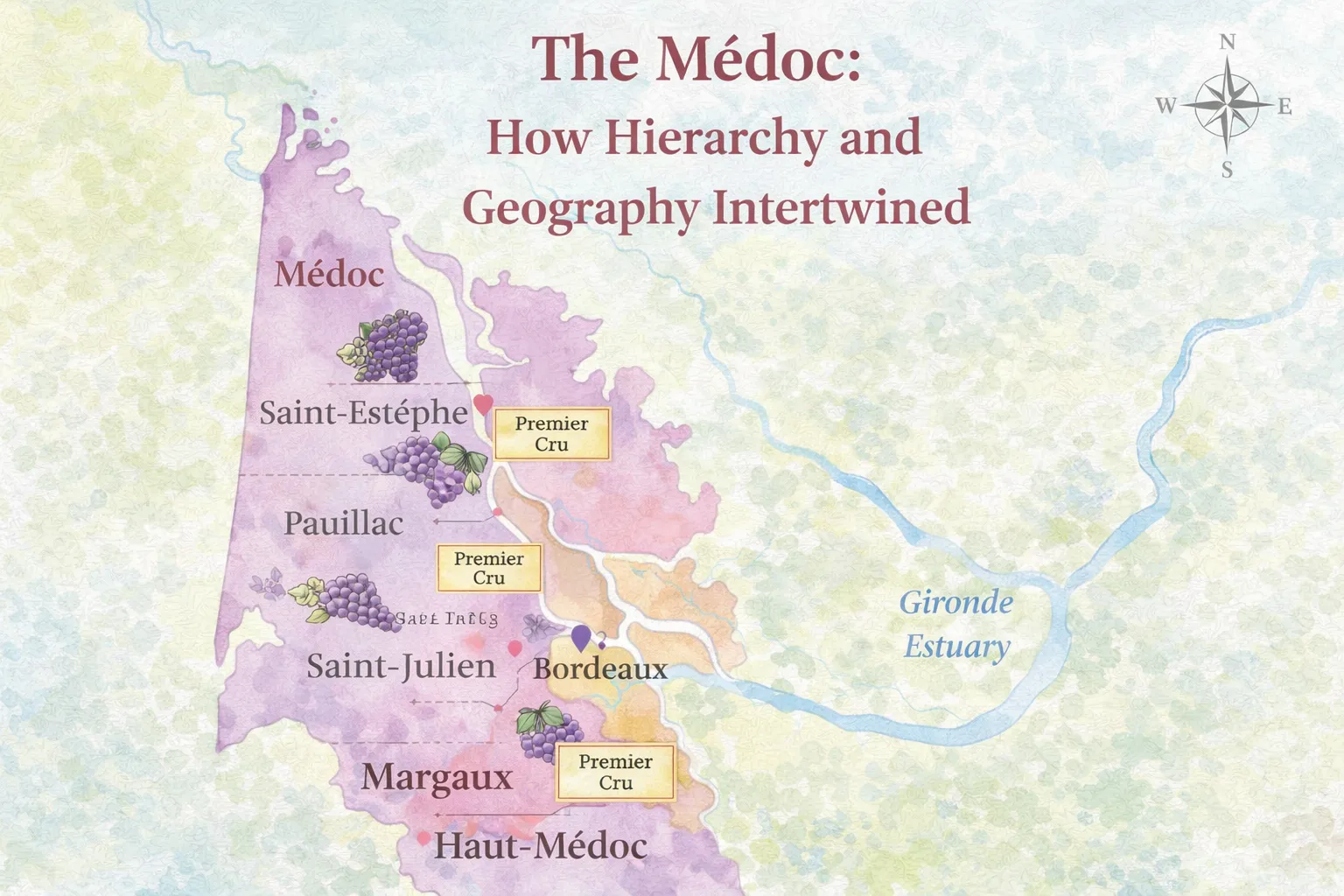
Within the Bordeaux wine region, the Médoc is often treated as shorthand for prestige. In reality, it is better understood as a lesson in how geography, trade, and reputation reinforced one another over time.
Stretching north from Bordeaux along the Gironde estuary, the Médoc benefited early from gravel-rich soils and direct access to shipping routes. These conditions favoured Cabernet Sauvignon and made it possible to produce wines that aged reliably and travelled well. As international demand grew, consistency became reputation, and reputation hardened into hierarchy.
The Médoc’s importance lies not in individual names, but in what it established: Bordeaux’s association with structure, longevity, and predictability. That legacy still shapes how Bordeaux is perceived globally, even by those who rarely drink Médoc wines themselves.
Graves and Pessac-Léognan: Bordeaux’s Historical Core
South of Bordeaux city, Graves represents one of the region’s oldest wine-producing areas. Long before classifications or global markets, wines were grown here for proximity and practicality.
Gravel soils again dominate, but wines from this part of Bordeaux often show a different balance: slightly more immediacy, a broader stylistic range, and a long tradition of both red and white production.
Graves reminds wine lovers that Bordeaux was never solely about red wine or power. It was about adaptation — producing what the land and market demanded at a given time.
Saint-Émilion and Its Role in Bordeaux’s Identity
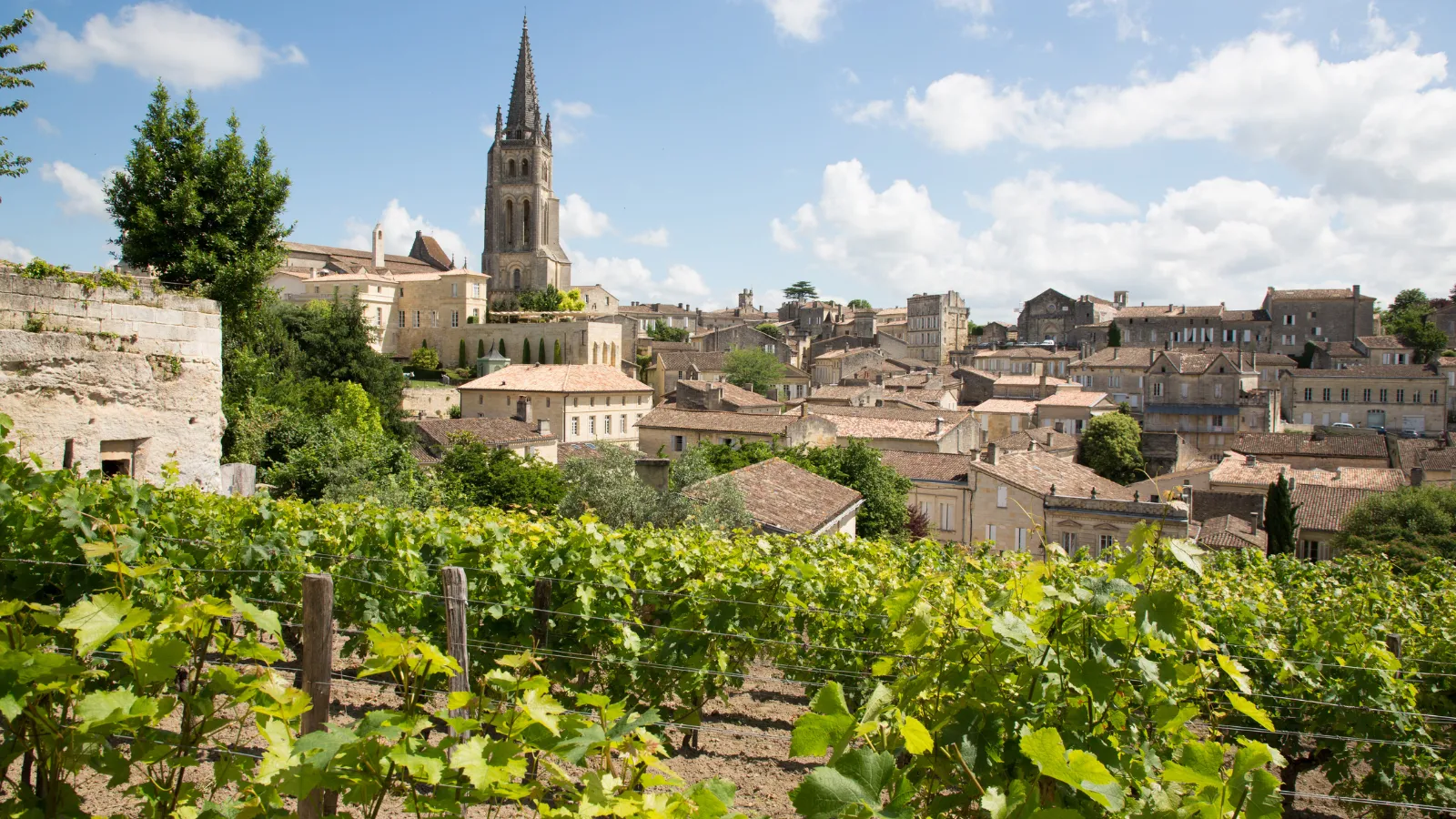
Saint-Émilion holds a unique position in the Bordeaux wine region. While geographically part of the Right Bank, it developed a symbolic identity that far exceeds its size.
Its limestone plateau, long viticultural history, and later classification system created a focal point for Merlot-driven Bordeaux. Unlike the Médoc, where hierarchy emerged through trade pricing, Saint-Émilion’s structure evolved through land ownership and later formal ranking.
This distinction matters. Saint-Émilion represents texture, richness, and mid-palate expression, offering a counterweight to Left Bank structure. Together, they form Bordeaux’s stylistic axis.
Blaye, Bourg, and the Northern Right Bank
North of Saint-Émilion, Blaye and Bourg continue along the Gironde estuary. Historically, these areas supplied Bordeaux with reliable, classically styled wines rather than prestige bottlings.
Their importance lies in continuity. They show how Bordeaux functioned when wine was an agricultural and commercial necessity, not a luxury product. Today, they provide clarity — a reminder of Bordeaux’s foundational style when excess is stripped away.
For wine lovers, these regions help recalibrate expectations, reinforcing that Bordeaux’s identity is broader than its most famous names.
Entre-Deux-Mers Revisited: Why It Cannot Be Ignored
Entre-Deux-Mers often suffers from being defined by what it is not. It is not prestigious, not red-dominated, and not driven by classification. Yet structurally, it is indispensable.
Situated between the Garonne and Dordogne, Entre-Deux-Mers historically produced fresh wines that balanced Bordeaux’s heavier styles. Its whites in particular demonstrate how acidity and blending logic underpin Bordeaux’s overall coherence.
Without Entre-Deux-Mers, Bordeaux would tilt too far toward structure. With it, balance is maintained.
Sweet Wine Areas: Function, Not Exception
Sweet wine regions are sometimes treated as decorative footnotes in Bordeaux. In reality, they reinforce core principles.
These wines demonstrate Bordeaux’s mastery of balance — sugar held in check by acidity, richness framed by structure. They also show how Bordeaux adapts its philosophy across styles without losing identity.
Their presence completes the system rather than distracting from it.
How Wine Lovers Should Navigate Bordeaux’s Regions
Understanding the Bordeaux wine regions changes how they should be explored.
Rather than treating each area as a destination to be “done”, it is far more productive to:
- Establish a stylistic reference point
- Move outward logically
- Use contrast intentionally
This approach reduces fatigue and increases clarity. Bordeaux becomes cumulative rather than overwhelming.
Bordeaux as a Reference for All French Wine
Once Bordeaux’s internal logic becomes clear, it begins to function as a reference point beyond its borders. Its emphasis on structure, balance, and long-term thinking provides a framework for understanding other French regions.
This is why Bordeaux remains so influential within wine routes in France. It teaches not just what Bordeaux tastes like, but how wine systems operate at scale.
A Closing Reflection
The Bordeaux wine region is not complex for the sake of complexity. Its many regions exist because they had to — each answering a practical need shaped by geography, trade, and history.
When these regions are viewed together, Bordeaux stops feeling fragmented. It becomes intelligible. Each area reinforces the next, creating a system that has endured not because it resists change, but because it absorbs it.
For wine lovers seeking to experience this logic rather than memorise names, beginning with a clear Right Bank foundation remains one of the most effective ways to orient understanding. Exploring Bordeaux through a Saint Emilion Wine Tour provides that anchor, allowing the region’s many parts to reveal themselves as components of a coherent whole rather than isolated destinations.
