Château Pavie – Premier Grand Cru Classé of Saint-Émilion
Château Pavie is one of the most celebrated names in the world of Bordeaux Grand Cru Classé wines. Recognised as a Saint-Émilion Premier Grand Cru Classé A, this prestigious estate has a rich history, a remarkable terroir, and a global reputation for producing some of the most powerful and age-worthy Right Bank Bordeaux wines. For wine enthusiasts, historians, and travellers alike, Château Pavie represents both the legacy and the future of Bordeaux winemaking.
History of Château Pavie
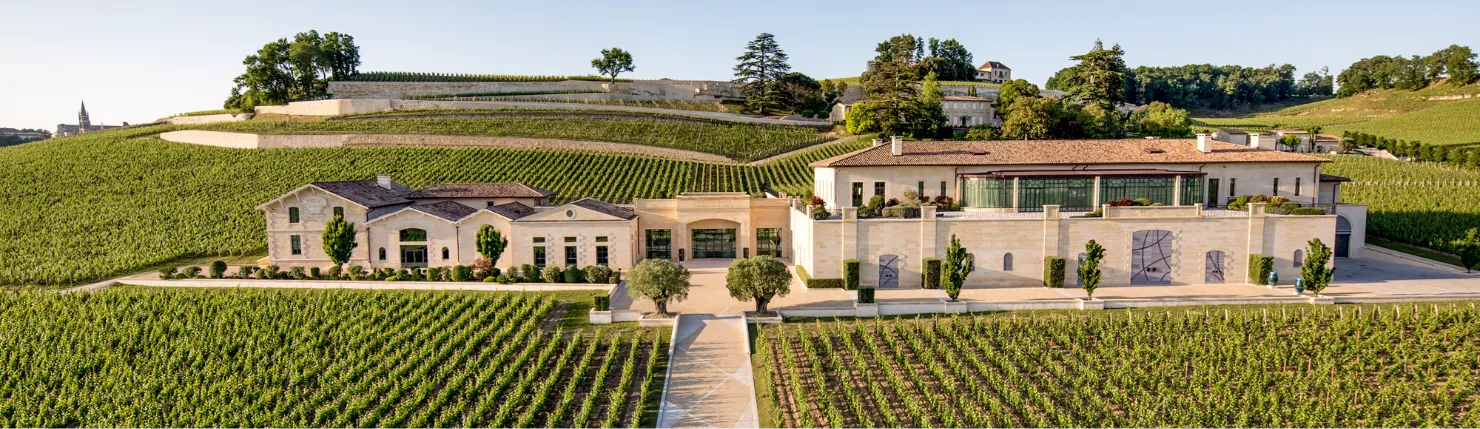
The history of Château Pavie Bordeaux dates back to Roman times, when the first vines were planted on the limestone slopes of Saint-Émilion. The estate derives its name from the peach orchards – “pavies” – that once flourished on its land. Vineyards gradually took over, and by the 19th century, Pavie had emerged as a recognised wine estate.
In 1885, Ferdinand Bouffard, a Bordeaux négociant, consolidated several vineyard plots, creating the larger estate known today as Château Pavie. His efforts placed the property firmly on the map of Saint-Émilion Grand Cru estates, but after his death, the château passed through different hands and periods of decline. During the mid-20th century, the estate produced wines of mixed reputation, reflecting both vineyard challenges and changing winemaking trends.
A major turning point came in 1998, when Parisian businessman Gérard Perse acquired Château Pavie. Perse, a former grocer and restaurateur, had already revitalised Château Monbousquet and brought a modern vision to winemaking in Saint-Émilion. At Pavie, his approach was ambitious and transformative: he drastically lowered yields, replanted vineyards, invested in advanced cellar equipment, and constructed a state-of-the-art winery. His philosophy was to respect the Château Pavie terroir while elevating quality to the highest international standards.
Under Perse’s leadership, Pavie’s wines became known for their concentration, power, and precision. Although his style initially stirred debate among traditionalists, international critics such as Robert Parker praised Pavie as one of the most exciting producers in Bordeaux. In 2012, the estate achieved the highest possible rank in the Saint-Émilion wine classification, being promoted to Premier Grand Cru Classé A. This recognition placed Pavie alongside Ausone, Cheval Blanc, and Angélus, the elite of the appellation. Gérard Perse passed away in 2024, but his family continues to uphold his vision, ensuring Château Pavie’s legacy endures.
The Terroir and Vineyards
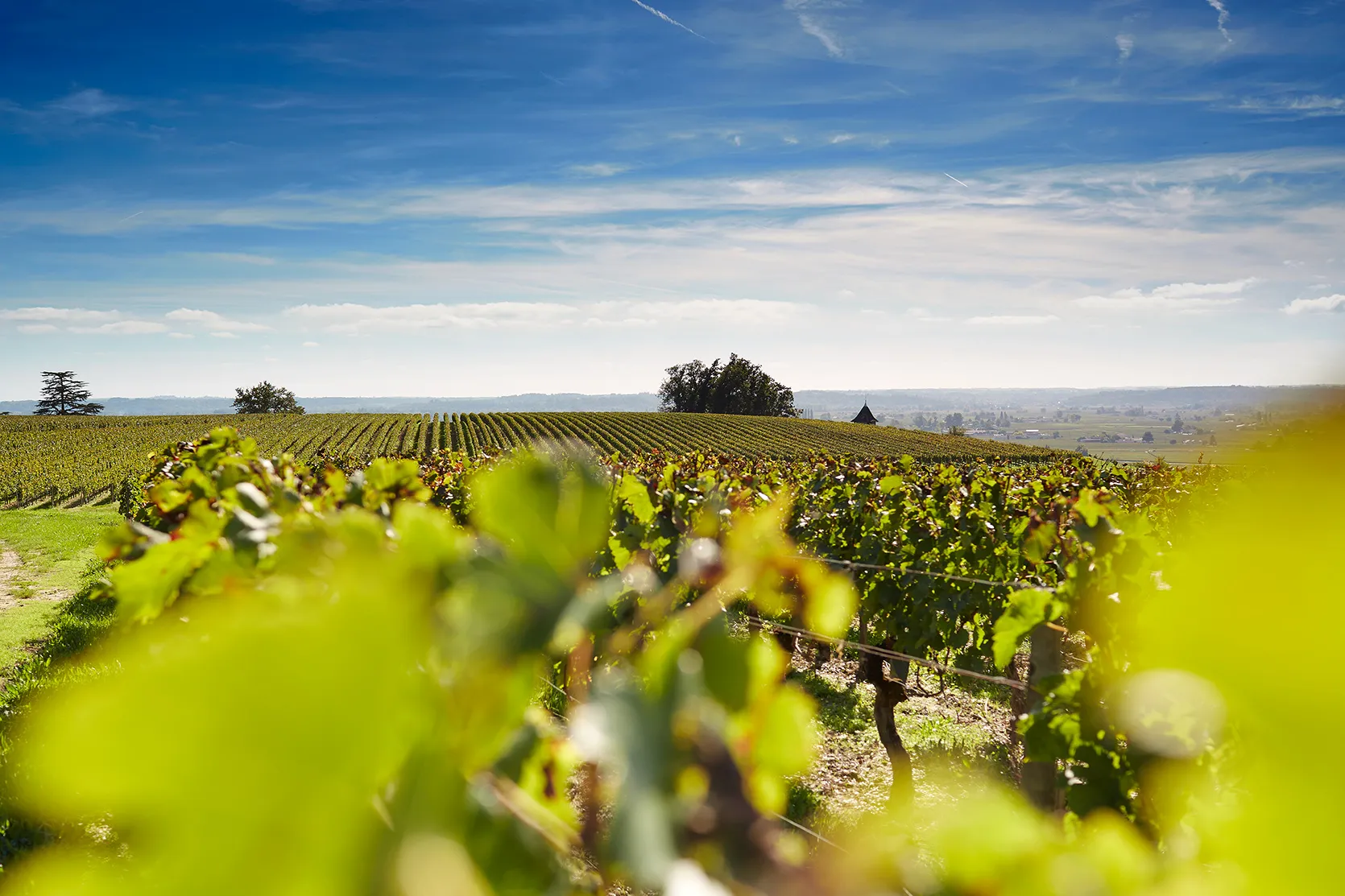
The heart of Château Pavie’s identity lies in its terroir. The estate extends over 37 hectares, making it one of the largest Saint-Émilion vineyards under a single ownership. Its location on the famous limestone plateau of Saint-Émilion, a UNESCO World Heritage site, provides ideal conditions for producing complex and structured wines.
Château Pavie’s vineyard is planted primarily with Merlot (around 60%), alongside Cabernet Franc (25%) and Cabernet Sauvignon (15%). This Merlot-dominant Bordeaux wine style is characteristic of the Right Bank, delivering rich fruit, supple tannins, and great ageing potential.
The terroir is remarkably diverse, with three distinct soil types:
- Limestone on the plateau gives elegance and minerality.
- Clay-limestone on the slopes, adding depth and concentration.
- Gravelly and sandy soils at the foot of the slope provide roundness and accessibility.
This combination allows for an exceptional expression of the Château Pavie terroir, producing wines that combine power, finesse, and longevity. The vineyards are cultivated with precision viticulture practices, including green harvesting and canopy management, to ensure optimal ripeness and balance.
Premier Grand Cru Classé Classification Explained
The Saint-Émilion wine classification is unique within Bordeaux. Unlike the 1855 classification of the Médoc, which remains largely unchanged, the Saint-Émilion system is reviewed every ten years. This ensures that estates must continually demonstrate excellence to maintain or improve their status.
First introduced in 1955, the classification ranks estates from Grand Cru Classé to Premier Grand Cru Classé, with the highest tier, Premier Grand Cru Classé A, reserved for only a handful of producers. Criteria include vineyard quality, winemaking standards, estate reputation, and consistent critical acclaim.
In 2012, Château Pavie’s elevation to Saint-Émilion Premier Grand Cru Classé A reflected both its historical significance and Gérard Perse’s dramatic improvements. This classification not only cements Pavie’s place among the finest Bordeaux wine appellations but also makes it a focal point for touring Saint-Émilion Grand Cru estates.
Visiting Château Pavie – Tours and Tastings
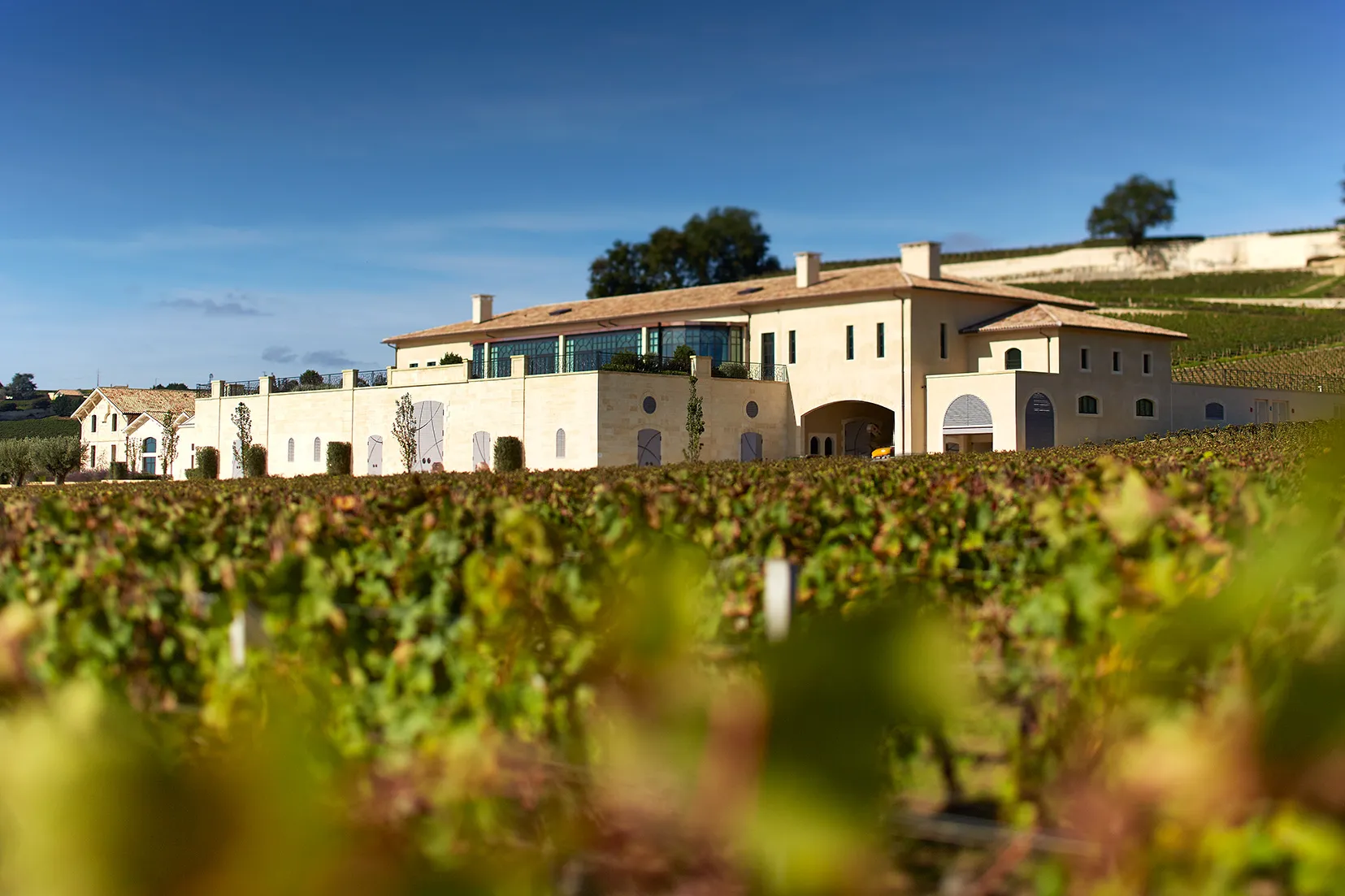
For travellers seeking authentic Bordeaux wine tourism, a visit to Château Pavie in Saint-Émilion offers a memorable and immersive experience. The estate welcomes visitors for guided tours of its vineyards, cellars, and fermentation halls. Guests learn about sustainable viticulture, hand-harvesting practices, and the intricacies of blending Merlot, Cabernet Franc, and Cabernet Sauvignon.
The winery’s modern architecture, designed to integrate seamlessly with the landscape, is itself a highlight. Vast cellars and ageing rooms showcase the barrels where Pavie’s wines mature before release. For a deeper understanding of how oak and ageing influence Bordeaux wines, see this detailed guide to Bordeaux wine barrels.
Château Pavie wine tours typically conclude with a structured tasting. Here, visitors can explore Château Pavie tasting notes, which often highlight aromas of ripe black fruits, violets, liquorice, and mineral freshness. On the palate, Pavie wines are full-bodied, with dense tannins and remarkable length. With age, they develop layers of truffle, tobacco, and spice, making them among the most collectible wines in Bordeaux.
For those planning to visit Château Pavie Saint-Émilion, the surrounding medieval village provides the perfect complement. A UNESCO World Heritage site, Saint-Émilion’s cobbled streets, Romanesque churches, and panoramic vineyard views enrich the wine-tasting journey. Pairing a visit to Pavie with a Saint-Emilion wine tour from Bordeaux Wine Pilgrim is one of the best ways to experience the region’s culture and wine heritage.
Château Pavie’s Most Notable Vintages
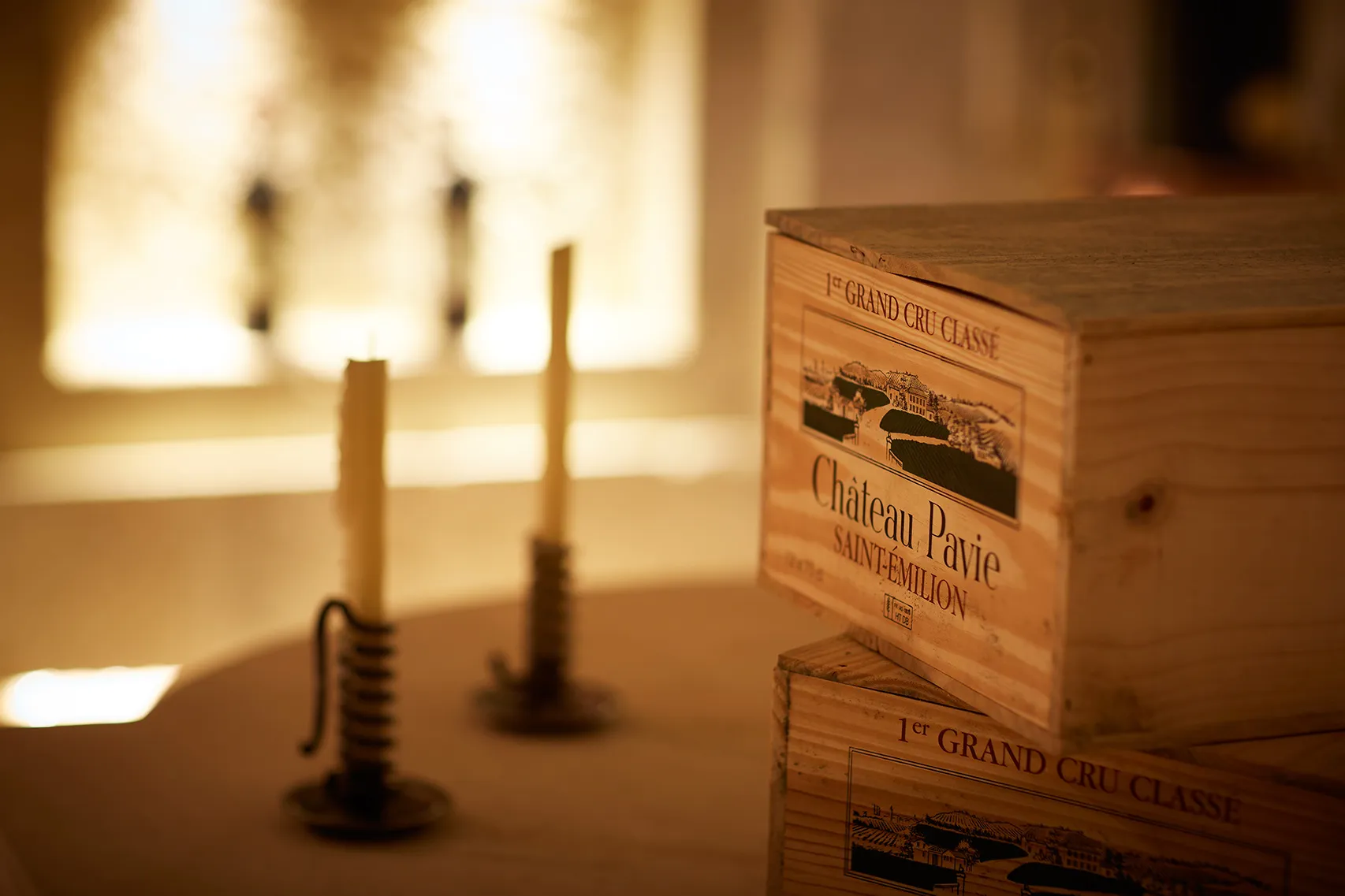
Over the past decades, Château Pavie has delivered some of the most celebrated wines in Bordeaux. Each vintage reflects the climate and harvest of the year, while consistently expressing the strength of its terroir.
- 2000 – A legendary vintage, marked by richness, depth, and immense ageing potential.
- 2005 – Defined by precision and structure, with firm tannins and incredible balance.
- 2009 – A ripe and opulent year, delivering lush fruit and generosity.
- 2010 – Concentrated and powerful, offering longevity.
- 2015 – Celebrated for its harmony and freshness.
- 2016 – Finesse-driven, combining structure with minerality.
- 2018 – Lush and concentrated, with ripe blackberry and spice.
- 2019 – Praised for balance and energy.
- 2020 – Complex and layered.
Detailed Tasting Profiles
- 2000 Château Pavie: Deep garnet colour, aromas of plum, blackcurrant, truffle, and cedar.
- 2005 Château Pavie: Notes of cassis, graphite, and violets.
- 2016 Château Pavie: Elegant, revealing black cherry, crushed stone, and spice.
- 2019 Château Pavie: Bright, energetic, with blueberry and floral notes.
Conclusion
Château Pavie stands as a symbol of excellence within Bordeaux Grand Cru Classé wines. Its history, terroir, and dedication to quality have secured its reputation as one of the finest Saint-Émilion Grand Cru estates.
Whether you are looking to taste one of the best Premier Grand Cru Classé A wines, learn about the history of Château Pavie Bordeaux, or enjoy the beauty of the Saint-Émilion vineyards, a visit to Château Pavie is an essential part of any journey through Bordeaux. Combine it with a Bordeaux wine tour and tasting organised by Bordeaux Wine Pilgrim to experience the region at its very best.
