Crémant de Bordeaux: A Different Expression of Bordeaux
Bordeaux is almost always associated with still wines.
Structured reds, age-worthy blends, and terroir-driven whites dominate the region’s identity. But there is another side to Bordeaux that is often overlooked — one that moves in a completely different direction.
Crémant de Bordeaux.
It is sparkling, fresh, and immediate — a contrast to the slow, evolving wines Bordeaux is known for. Yet it follows the same principles: terroir, balance, and structure.
Understanding Crémant de Bordeaux offers a broader perspective on what the region is capable of producing.
If you’ve explored how Bordeaux wines are constructed through How Bordeaux Blends Are Created , you’ll already recognise that blending plays a central role here as well — not just for still wines, but for sparkling ones too.
To see how these wines fit within the wider landscape of Bordeaux, experiencing vineyard conditions across different terroirs provides useful context. Observing how grape varieties behave and how freshness is preserved during a structured Saint Emilion Wine Tour helps connect sparkling wine to the same foundational principles that shape the region’s more famous styles.
What Is Crémant de Bordeaux?
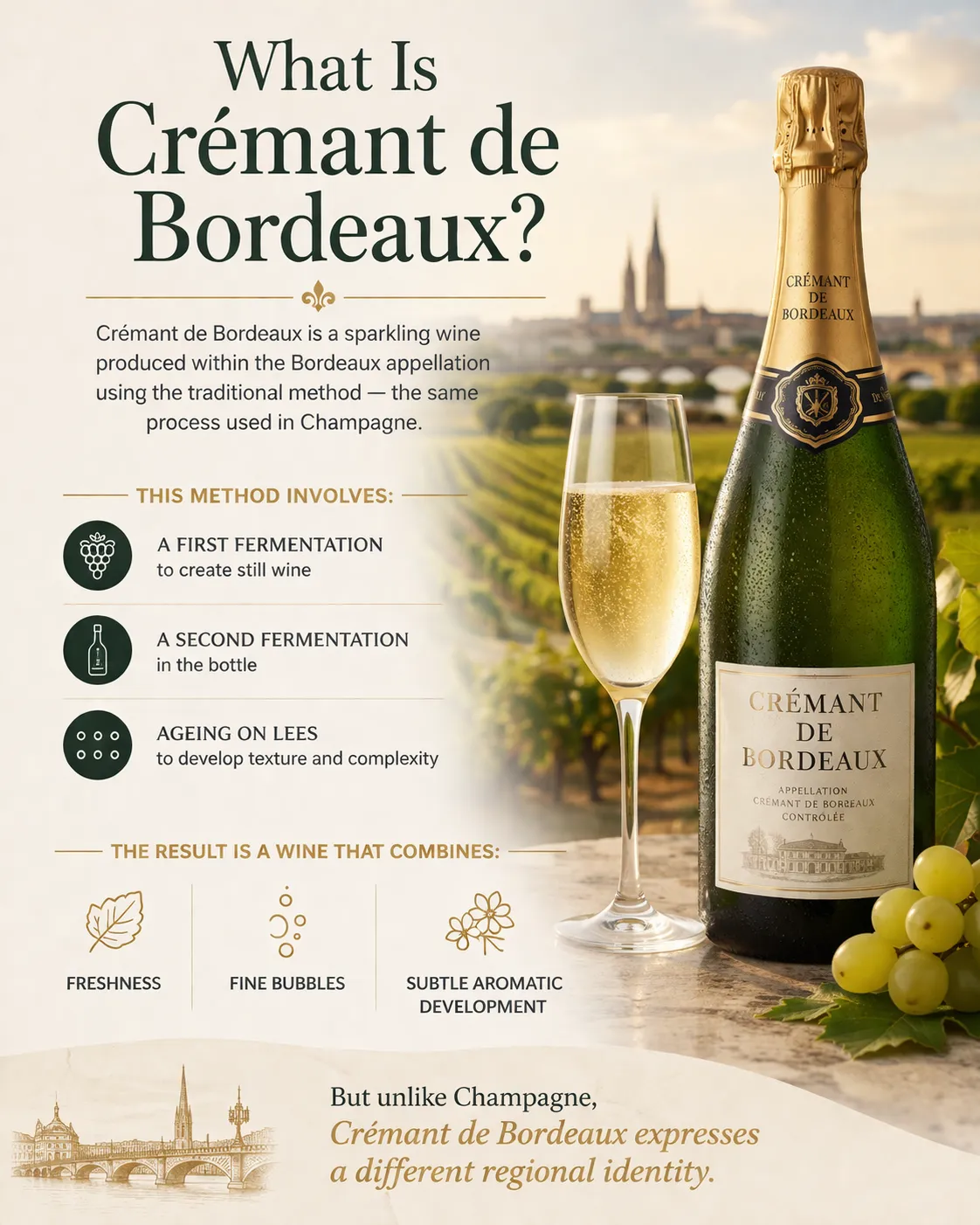
Crémant de Bordeaux is a sparkling wine produced within the Bordeaux appellation using the traditional method — the same process used in Champagne.
This method involves:
- a first fermentation to create still wine
- a second fermentation in the bottle
- ageing on lees to develop texture and complexity
The result is a wine that combines:
- freshness
- fine bubbles
- subtle aromatic development
But unlike Champagne, Crémant de Bordeaux expresses a different regional identity.
Where It Comes From
Crémant de Bordeaux is produced across the broader Bordeaux appellation rather than being restricted to a single sub-region.
This allows producers to work with a variety of soils and vineyard sites, including:
- gravel-based areas
- clay-limestone zones
- cooler vineyard parcels
These variations influence the final style of the wine.
Grape Varieties Used
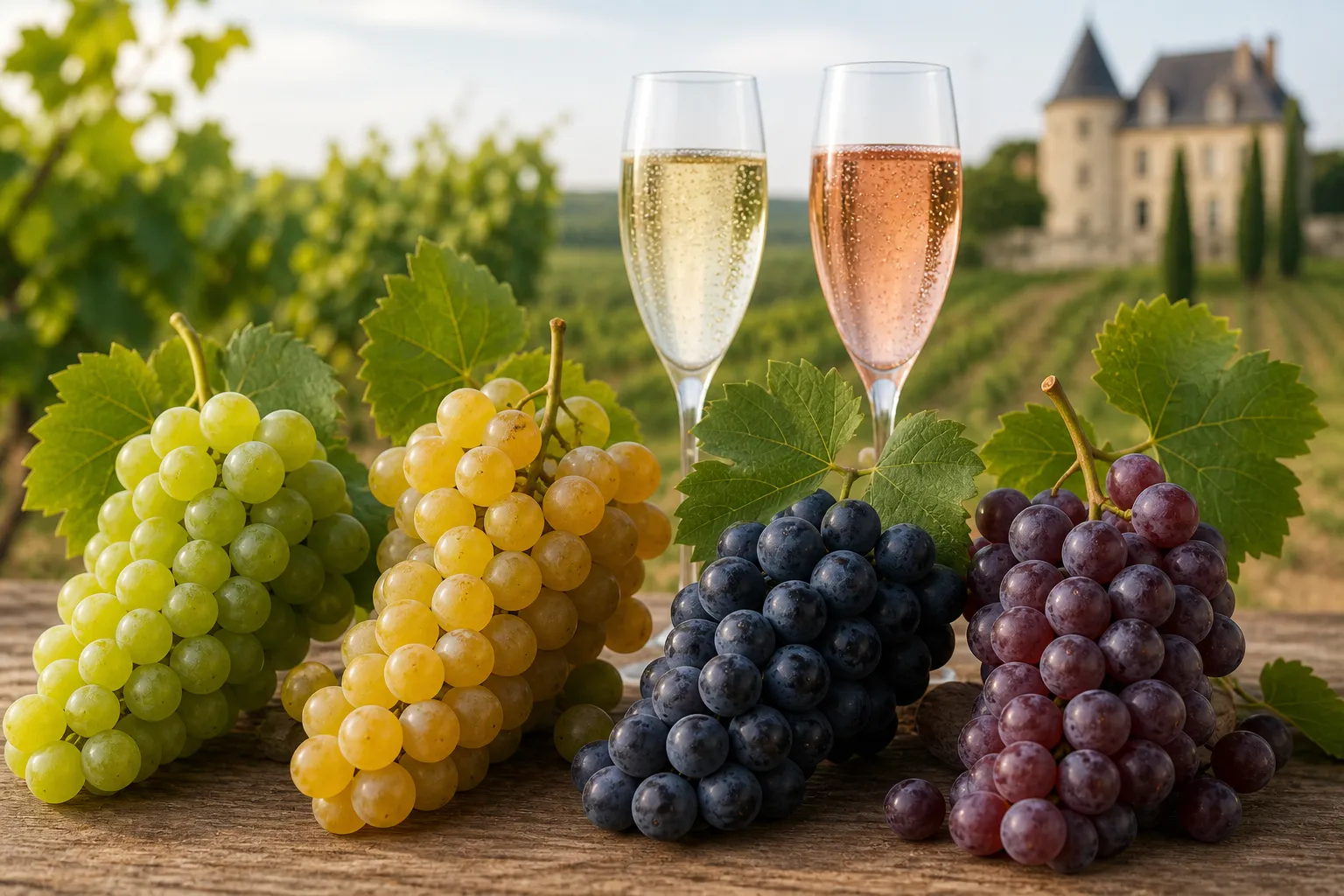
Crémant de Bordeaux is made from a blend of grape varieties, including:
White Crémant
- Sémillon
- Sauvignon Blanc
- Muscadelle
Rosé Crémant
- Cabernet Franc
- Merlot
- Cabernet Sauvignon
Each grape contributes something different.
Sauvignon Blanc brings freshness and acidity.
Sémillon adds texture.
Cabernet Franc can introduce aromatic lift in rosé styles.
As with still Bordeaux wines, blending is used to create balance rather than highlight a single variety.
The Role of Acidity
Acidity is essential in sparkling wine.
It provides:
- freshness
- structure
- balance against texture
In Crémant de Bordeaux, acidity is carefully preserved during harvest to ensure the wine remains lively.
This connects directly to The Role of Acidity in Wine Balance, where acidity is shown to be a key structural element rather than just a flavour component.
Without sufficient acidity, sparkling wine would feel flat.
How It Differs from Champagne
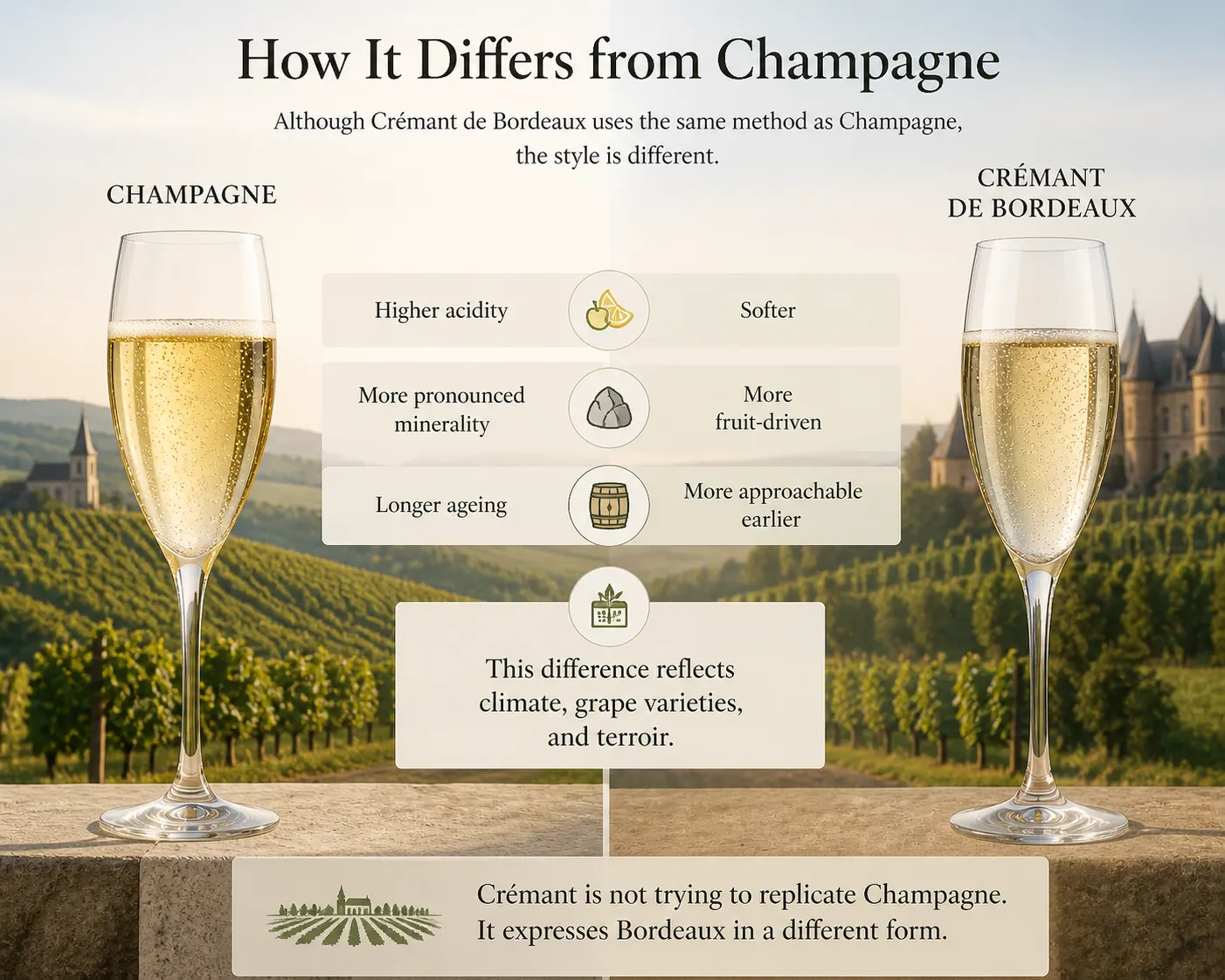
Although Crémant de Bordeaux uses the same method as Champagne, the style is different.
Champagne often shows:
- higher acidity
- more pronounced minerality
- longer ageing
Crémant de Bordeaux tends to be:
- softer
- more fruit-driven
- more approachable earlier
This difference reflects climate, grape varieties, and terroir.
Crémant is not trying to replicate Champagne. It expresses Bordeaux in a different form.
A Wine Built for Immediacy
One of the key differences between Crémant and traditional Bordeaux wines is timing.
Most Bordeaux reds are built for ageing.
Crémant de Bordeaux is built for:
- earlier drinking
- freshness
- accessibility
This makes it more aligned with modern drinking habits, where wines are often opened soon after purchase.
The Influence of Terroir
Even though Crémant is lighter in style, terroir still plays a role.
Soil influences:
- drainage
- ripening
- acidity retention
Cooler vineyard sites are often preferred, as they help preserve the freshness needed for sparkling wine.
Understanding how soil shapes wine structure, even in lighter styles, connects to broader Bordeaux principles — where terroir remains central regardless of wine type.
Texture and Ageing on Lees
After the second fermentation, Crémant de Bordeaux is aged on lees.
This process adds:
- texture
- subtle complexity
- fine bubble integration
The length of ageing can vary, influencing how the wine feels.
Shorter ageing → fresher, more direct
Longer ageing → more rounded, complex
Why Crémant de Bordeaux Matters
Crémant de Bordeaux expands the identity of the region.
It shows that Bordeaux is not limited to:
- structured reds
- age-worthy wines
It can also produce wines that are:
- fresh
- immediate
- versatile
This adds depth to the region’s overall profile.
Experiencing Crémant in Context
To fully understand Crémant de Bordeaux, it helps to see how it fits within the broader vineyard landscape.
Seeing how grapes are grown, how acidity is preserved, and how different vineyard sites influence style provides clarity that tasting alone cannot.
Exploring these vineyard conditions through a structured Saint Emilion Wine Tour allows you to connect sparkling wines to the same terroir principles that define Bordeaux as a whole.
A Closing Reflection
Crémant de Bordeaux represents a different rhythm within the region.
Where many Bordeaux wines are built for time, Crémant is built for immediacy.
Yet both follow the same foundation:
- balance
- terroir
- structure
Understanding Crémant is not just about discovering a sparkling wine.
It is about recognising that Bordeaux is more versatile than it first appears — capable of producing wines that evolve over decades, and wines that are ready to be enjoyed in the moment.
And that contrast is part of what makes the region so compelling.
