How Bordeaux Blends Are Created
In the Bordeaux wine region, blending is not simply a technique — it is the foundation of the region’s identity. Unlike many wine regions that rely on a single grape variety, Bordeaux wines are built through the careful combination of multiple grapes, each contributing a distinct element to the final composition.
This philosophy has developed over centuries, shaped by the region’s diverse soils, maritime climate, and complex vineyard landscapes. Each vineyard parcel behaves differently, each grape ripens at its own pace, and each vintage presents new challenges. Blending allows winemakers to bring these variables together into a wine that feels balanced, complete, and expressive.
For travellers walking through the vineyards surrounding Saint-Émilion village, the concept of blending becomes tangible. Seeing Merlot, Cabernet Franc, and other varieties growing side by side — and later tasting wines in the cellar during a Saint Emilion Wine Tour — reveals how each grape contributes to the final wine.
Understanding how Bordeaux blends are created is therefore essential to understanding Bordeaux itself.
The Historical Origins of Blending in Bordeaux
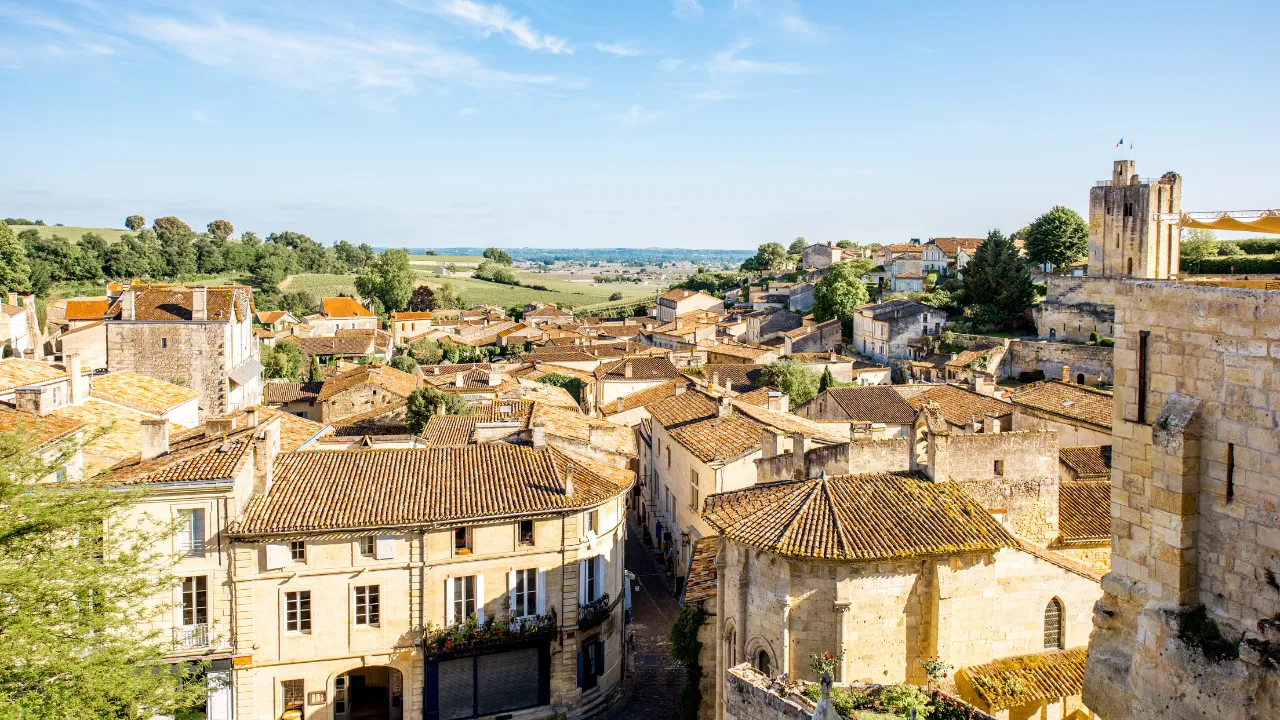
Blending in Bordeaux began as a practical response to environmental uncertainty.
The region’s proximity to the Atlantic Ocean creates a maritime climate, where rainfall and temperature fluctuations can vary significantly from year to year. Some seasons favour early-ripening grapes such as Merlot, while others allow Cabernet Sauvignon to reach optimal maturity.
Rather than relying on a single grape that might fail under certain conditions, winemakers began combining varieties to reduce risk.
Why blending became essential
- Different grape varieties ripen at different times
- Weather conditions affect grapes unevenly
- Blending ensures consistency across vintages
- Combining grapes increases complexity
Over time, this necessity evolved into a defining characteristic of Bordeaux wines.
The Grapes That Shape Bordeaux Blends
Bordeaux blends rely on a small number of traditional grape varieties, each contributing a specific structural element.
Red Bordeaux blend components
- Cabernet Sauvignon – structure, tannins, and ageing potential
- Merlot – softness, richness, and volume
- Cabernet Franc – aromatic lift and freshness
- Petit Verdot – spice, colour, and depth
- Malbec – intensity in smaller quantities
White Bordeaux blend components
- Sauvignon Blanc – acidity and freshness
- Sémillon – body and ageing capacity
- Muscadelle – floral aromatics
The balance between these grapes determines the final style of the wine.
Vineyard Parcels: The True Beginning of the Blend
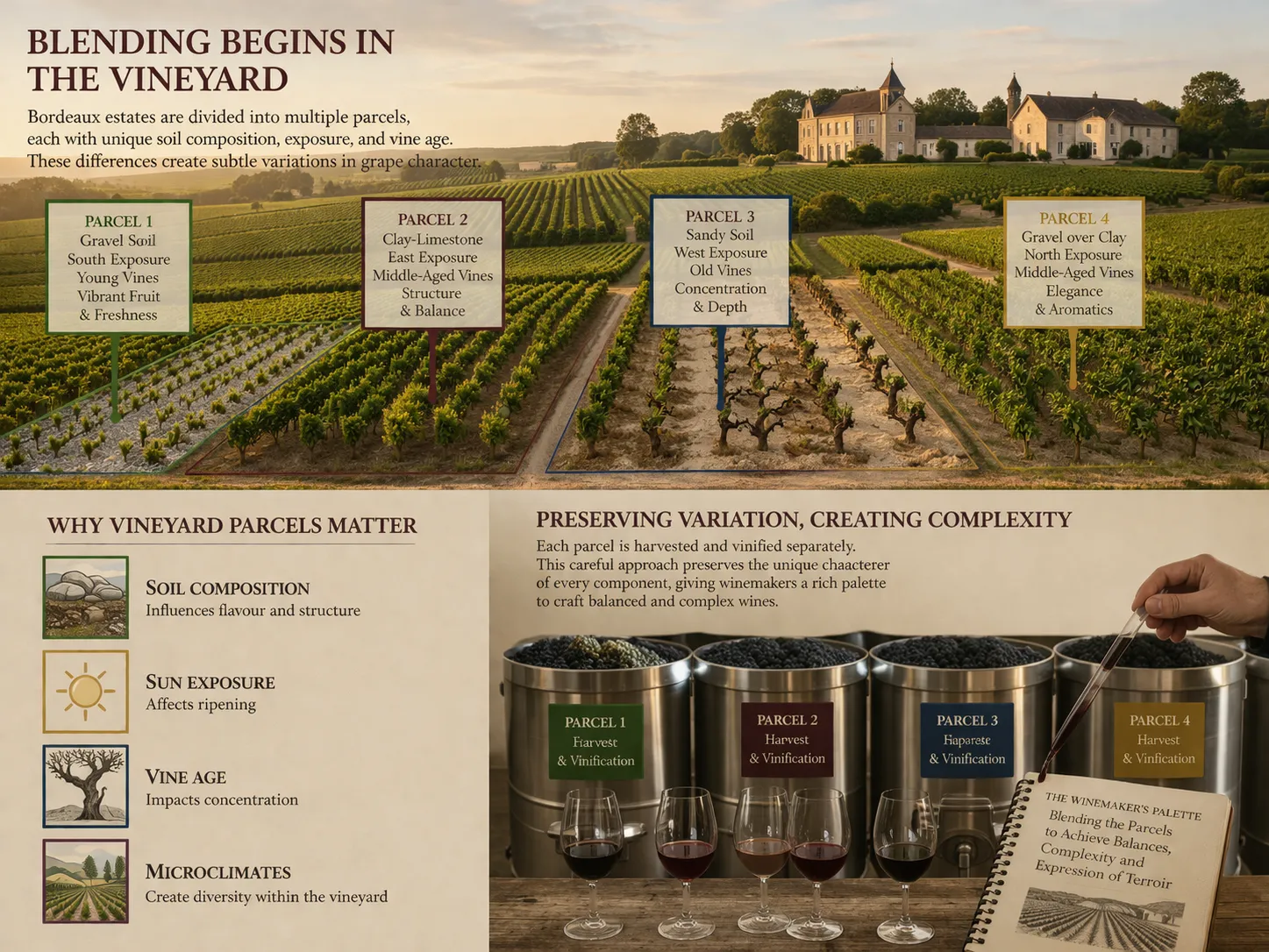
Blending begins in the vineyard.
Bordeaux estates are divided into multiple parcels, each with unique soil composition, exposure, and vine age. These differences create subtle variations in grape character.
Why vineyard parcels matter
- Soil composition influences flavour and structure
- Sun exposure affects ripening
- Vine age impacts concentration
- Microclimates create diversity within the vineyard
These variations are preserved through separate harvesting and vinification, allowing winemakers to work with a wide range of components.
For readers interested in how soil influences blending decisions, the subject is explored in Gravel vs Clay vs Limestone: How Bordeaux Soils Shape Wine Styles, where geology plays a key role in defining wine structure.
Harvest and Separate Vinification
Harvest is carried out with precision, often parcel by parcel.
Each grape variety — and frequently each parcel — is fermented separately. This process ensures that the characteristics of each component are preserved.
During fermentation:
- Cabernet Sauvignon develops structure and tannins
- Merlot produces round, fruit-driven wines
- Cabernet Franc contributes aromatic complexity
These individual wines form the foundation of the final blend.
Assemblage: The Art of Blending
The blending stage is known as assemblage, one of the most critical moments in Bordeaux winemaking.
Winemakers taste individual components and experiment with combinations to achieve balance.
How assemblage works
- Each parcel is evaluated individually
- Trial blends are created
- Balance between fruit, acidity, and tannin is assessed
- Final proportions are selected
Assemblage is both a science and an art, requiring experience and intuition.
Building Balance Through Blending
The objective of blending is harmony.
Each grape contributes a different structural element to the wine.
Structural role of each grape
- Cabernet Sauvignon provides backbone
- Merlot softens and rounds the wine
- Cabernet Franc enhances aromatics
- Petit Verdot adds depth
A successful blend feels seamless and integrated.
The Influence of Vintage
Every vintage in Bordeaux presents different conditions.
How vintage affects blending
- Warm years favour Merlot
- Cooler years highlight Cabernet Sauvignon
- Rainfall affects grape concentration
- Harvest timing shapes flavour
Blending decisions are adjusted each year to reflect these differences.
Ageing and Integration
After blending, wines are aged in French oak barrels, where they develop complexity.
Effects of ageing
- Tannins soften
- Flavours integrate
- Subtle spice notes develop
- Structure becomes more refined
This stage allows the blend to evolve before bottling.
Left Bank vs Right Bank Blending Styles
Blending styles differ across Bordeaux.
Left Bank
- dominated by Cabernet Sauvignon
- structured and powerful
- long ageing potential
Right Bank
- dominated by Merlot
- softer and more approachable
- expressive in youth
This contrast becomes clear when exploring vineyards near Saint-Émilion village, where Right Bank wines differ from those of the Médoc. Experiencing this during a Saint Emilion Wine Tour reveals how blending reflects terroir.
Blending as the Identity of Bordeaux
Each château expresses its identity through blending.
Winemakers aim to reflect:
- vineyard terroir
- estate philosophy
- vintage character
Even neighbouring estates may produce very different wines depending on their approach.
The Final Blend and Bottling
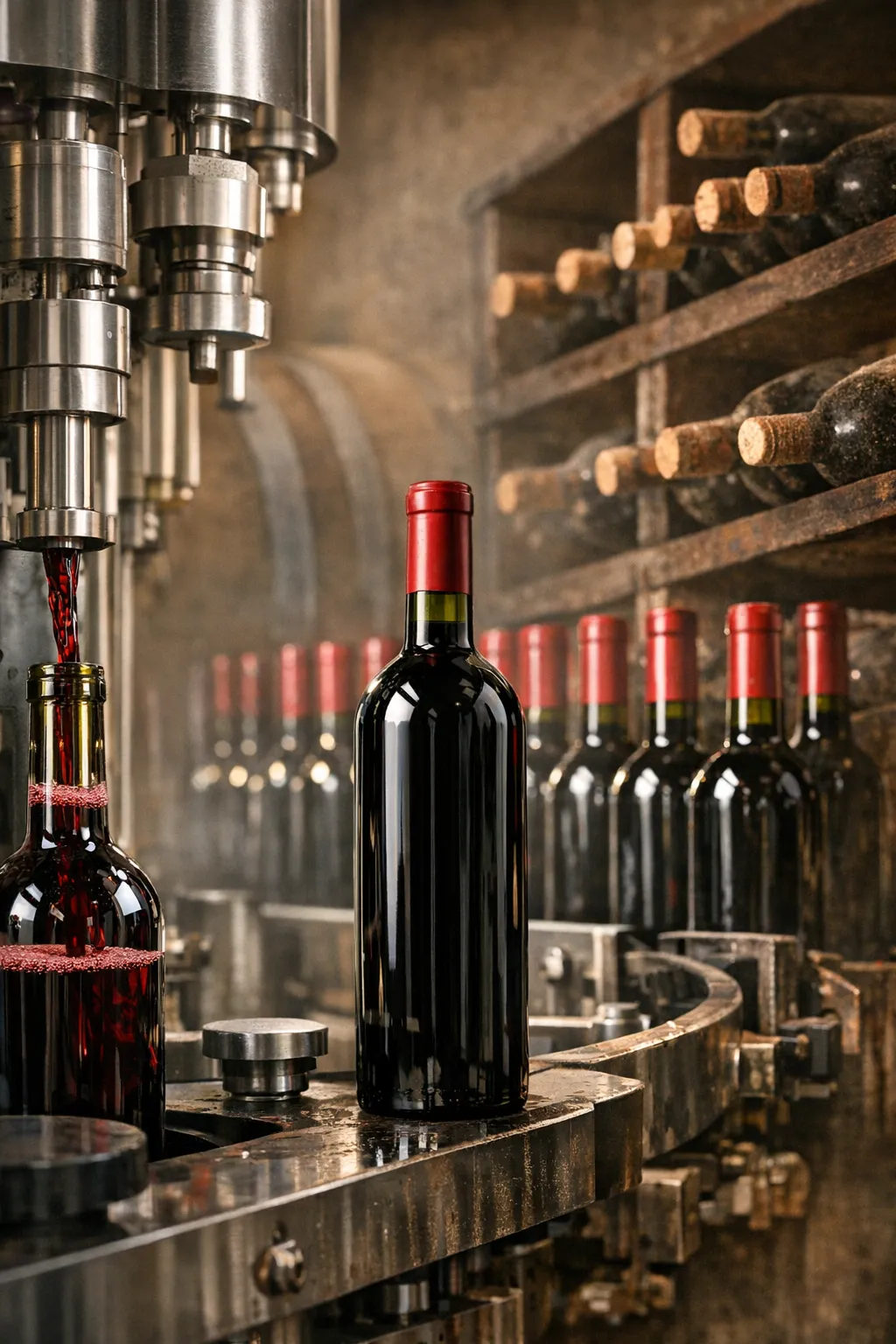
Once the blend is finalised, the wine is bottled.
From this point, it continues to evolve, developing complexity and depth over time.
Understanding Bordeaux Through Blending
Blending is the essence of Bordeaux winemaking.
It allows winemakers to navigate climate variability, express terroir, and create wines that balance structure, elegance, and longevity.
For wine lovers, understanding this process transforms how Bordeaux wines are experienced. A single glass becomes the result of countless decisions made in vineyard and cellar.
And for those exploring the region, discovering this process during a Saint Emilion Wine Tour reveals how Bordeaux wines are carefully assembled — shaped by land, time, and expertise.
