Entre-Deux-Mers Explained: Bordeaux’s Most Misunderstood Wine Area
Among all areas of the Bordeaux wine region, none suffers more from misunderstanding than Entre-Deux-Mers. Its name is widely recognised, yet rarely understood. For many wine lovers, it exists only as a label associated with inexpensive white wine, peripheral to Bordeaux’s “serious” conversation.
This perception is incomplete — and historically inaccurate.
Entre-Deux-Mers is not a stylistic footnote. It is a structural component of Bordeaux, shaped by geography, river influence, and commercial necessity. To understand Bordeaux without understanding Entre-Deux-Mers is to miss how the region maintains balance at scale.
For wine travellers grounding their Bordeaux experience in the Right Bank first, beginning with a clear stylistic benchmark such as a Saint Emilion Wine Tour helps contextualise Entre-Deux-Mers properly — not as a rival to Saint-Émilion, but as a complementary expression within the same system.
What “Entre-Deux-Mers” Actually Means
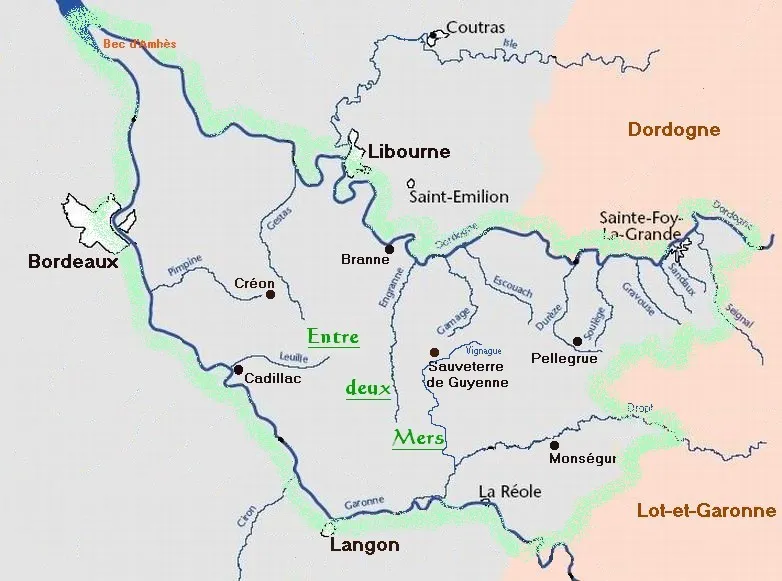
The name Entre-Deux-Mers translates literally as “between two seas”, though no seas are involved. Instead, it refers to land between two rivers: the Garonne and the Dordogne.
This geography matters. These rivers define Bordeaux’s climate moderation, soil formation, and historical trade routes. Entre-Deux-Mers sits at its intersection, shaped by both without dominating either.
Unlike regions built along a single riverbank, Entre-Deux-Mers developed as an interior zone. Its role was not to produce wines for long maritime export, but to supply freshness, accessibility, and balance within Bordeaux’s broader economy.
Understanding this function is key to understanding its wines.
Why Entre-Deux-Mers Was Never About Prestige
Prestige in Bordeaux followed access. Regions closest to the Gironde estuary could ship wine earlier and more reliably. Their reputations grew first.
Entre-Deux-Mers, by contrast, evolved away from the main export arteries. Its wines were consumed locally and regionally, valued for immediacy rather than longevity. This shaped both perception and production.
This does not mean quality was absent. It means the purpose was different.
Entre-Deux-Mers wines were designed to:
- Refresh rather than impress
- Balance rather than dominate
- Support Bordeaux’s ecosystem rather than define it
When evaluated against the wrong criteria — ageing potential or prestige — they seem secondary. When evaluated against their intended role, they make perfect sense.
Soil and Landscape: Why Whites Dominate
The soils of Entre-Deux-Mers are varied but generally lighter than those of the Médoc or Saint-Émilion. Clay-limestone appears, but often with shallower depth and greater exposure to cooling influences from surrounding waterways.
These conditions favour freshness over density, illustrating the principles explored in understanding terroir in Bordeaux. As a result, white grape varieties historically thrived here, producing wines with clarity, acidity, and moderate alcohol.
This is why dry white Bordeaux became the region’s defining output — not by branding choice, but by natural suitability.
The land dictated the wine, not the market.
White Grape Varieties and Blending Logic
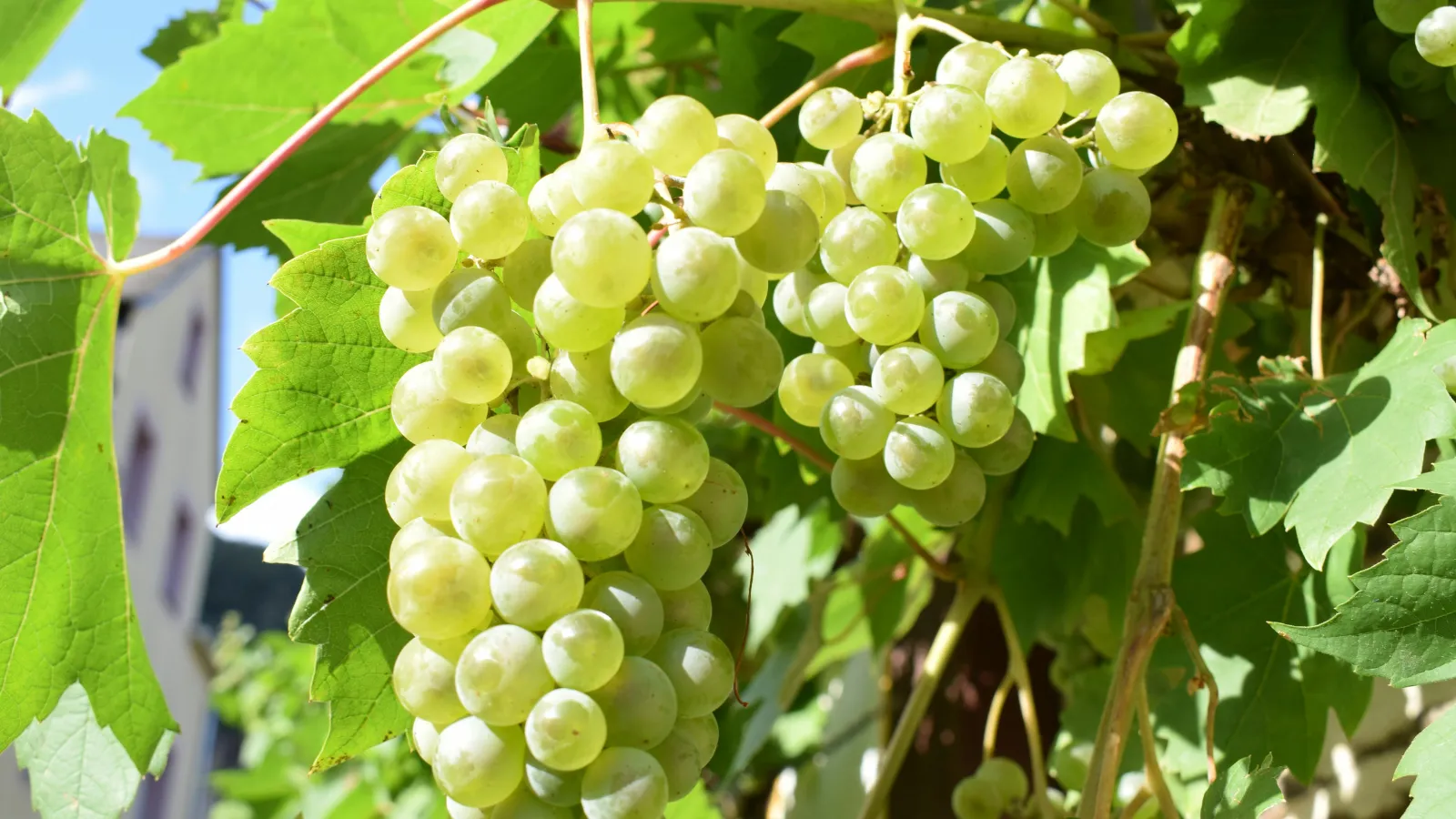
Entre-Deux-Mers white wines are traditionally blends, reflecting Bordeaux’s broader philosophy.
Rather than chasing aromatic intensity, these blends aim for balance and drinkability:
- Acidity to refresh
- Texture to carry flavour
- Subtle aromatics rather than excess
This approach aligns with Bordeaux’s core identity, even if the wines sit outside its prestige spotlight.
For wine lovers, these whites provide insight into Bordeaux’s blending logic applied at a different scale — one focused on immediacy rather than endurance.
Red Wines in Entre-Deux-Mers: Often Ignored, Increasingly Relevant
While the name Entre-Deux-Mers is legally associated with white wine, red wines are also produced throughout the area. Historically, they were consumed locally and rarely marketed internationally.
Today, this is changing.
As viticulture improves across Bordeaux, red wines from Entre-Deux-Mers are gaining definition. They tend to be:
- Lighter in structure
- More fruit-forward
- Earlier-drinking
These wines do not compete with Left Bank power or Saint-Émilion richness. They provide contrast — and accessibility.
Within the Bordeaux wine region, this contrast matters more than ever.
Entre-Deux-Mers as Bordeaux’s Balancing Force
Perhaps the most important role Entre-Deux-Mers plays is balance.
Bordeaux’s reputation is dominated by structured reds. Without regions producing freshness and immediacy, the region would skew heavily toward power and austerity.
Entre-Deux-Mers prevents that imbalance. It ensures Bordeaux remains drinkable as well as age-worthy, every day as well as exceptional.
This function explains why the region has endured, even without prestigious recognition.
Why Wine Lovers Are Re-Evaluating Entre-Deux-Mers
As tastes shift away from excess and toward freshness, Entre-Deux-Mers is being re-examined.
Wine lovers increasingly value:
- Lower alcohol
- Higher acidity
- Clear purpose
Entre-Deux-Mers offers all three, without abandoning Bordeaux’s identity.
This reassessment is not driven by fashion. It is driven by fatigue with excess and renewed interest in balance.
Entre-Deux-Mers in the Context of Wine Routes in France
Within broader wine routes in France, Entre-Deux-Mers rarely headlines itineraries. Yet structurally, it plays a role similar to other “in-between” regions: stabilising, supplying, and contextualising.
It reminds wine travellers that not all regions exist to impress. Some exist to make the system work.
Entre-Deux-Mers Compared to the Left Bank
When compared to the Left Bank, Entre-Deux-Mers wines reveal their purpose most clearly. The Left Bank is defined by gravel soils, Cabernet Sauvignon, and long-term structure. Wines are built to age, travel, and project authority over time.
Entre-Deux-Mers does the opposite — intentionally.
Here, freshness replaces firmness. Acidity leads rather than tannin. Alcohol remains restrained. These wines are not designed to evolve for decades; they are designed to function early and clearly.
This contrast is not a weakness. It is a structural necessity within the Bordeaux wine region. Without areas producing immediacy, Bordeaux would lean too heavily toward austerity. Entre-Deux-Mers absorbs that pressure, ensuring the region remains balanced rather than monolithic.
Entre-Deux-Mers Compared to the Right Bank
Against the Right Bank, particularly Merlot-driven areas, Entre-Deux-Mers again shows its distinct role.
Right Bank wines emphasise texture and mid-palate weight. Even when approachable, they carry density. Entre-Deux-Mers whites, by contrast, emphasise line and lift. They refresh rather than envelop.
This difference matters for wine lovers navigating Bordeaux sequentially. After tasting structured or textural wines, Entre-Deux-Mers provides a reset — sharpening the palate and restoring clarity.
It is not meant to replace the Right Bank expression. It is meant to counterbalance it.
Ageing Potential Versus Immediacy
Ageing potential is often treated as a universal measure of quality in Bordeaux. This assumption distorts how Entre-Deux-Mers is judged.
Most wines from this area are built for early to mid-term enjoyment. Their success lies in precision at release, not transformation over time. Acidity remains lively. Fruit remains primary. Balance remains intact.
This does not make them inferior. It makes them purpose-built.
Understanding this helps wine lovers avoid disappointment caused by misplaced expectations. Entre-Deux-Mers should be assessed on clarity, freshness, and drinkability — not longevity.
How Entre-Deux-Mers Fits Into a Serious Bordeaux Tasting Journey
For wine lovers exploring Bordeaux thoughtfully, Entre-Deux-Mers plays an essential role in sequencing.
It works best:
- Early in a tasting journey to establish freshness
- Between structured reds to recalibrate the palate
- As a reminder of Bordeaux’s breadth beyond power
Used this way, it enhances appreciation of the entire region rather than competing for attention.
This approach transforms wine tasting in France from accumulation into understanding.
Why Entre-Deux-Mers Is Increasingly Relevant Today
Modern wine preferences increasingly favour restraint, freshness, and balance. In this context, Entre-Deux-Mers feels less peripheral than it once did.
Lower alcohol, clearer expression, and immediate drinkability align with contemporary expectations — without abandoning Bordeaux’s identity.
This shift explains why wine lovers are revisiting the region with new interest. Entre-Deux-Mers has not changed its philosophy. The audience has changed its priorities.
Entre-Deux-Mers as a Measure of Bordeaux’s Health
Perhaps the most revealing way to view Entre-Deux-Mers is as a diagnostic tool.
A Bordeaux that values only prestige would marginalise it. A Bordeaux that values balance sustains it. The continued relevance of Entre-Deux-Mers suggests a region that still understands its own internal needs.
It proves that Bordeaux is not just capable of producing great wines, but of maintaining coherence across styles and scales.
A Closing Reflection
Entre-Deux-Mers does not seek attention, and it does not need to. Its role within the Bordeaux wine region is foundational rather than performative.
By supplying freshness, immediacy, and balance, it allows Bordeaux’s more structured regions to exist without distortion. It is the quiet counterweight that keeps the system aligned.
For wine lovers who want to understand Bordeaux beyond reputation, recognising the purpose of Entre-Deux-Mers is essential. And for those beginning their journey through the region, anchoring understanding with a clear Right Bank reference before exploring outward often brings the greatest clarity. Starting with a Saint Emilion Wine Tour provides that foundation — allowing Entre-Deux-Mers to be appreciated not as an afterthought, but as an integral part of Bordeaux’s enduring logic.
