Graves Explained: Bordeaux Before Classifications
Before Bordeaux became a map of appellations, before the Left Bank and Right Bank were defined as opposing identities, and long before classifications attempted to impose hierarchy, there was Graves. Not as a category, not as a brand, but as a place where Bordeaux wine first learned how to exist in the world.
Graves is not merely an appellation. It is the foundation of Bordeaux’s wine culture — the region where viticulture took hold earliest, where gravel soils were first recognised as assets rather than obstacles, and where Bordeaux developed wines capable of ageing, travelling, and sustaining an international reputation. To understand Graves is to understand Bordeaux before it was organised, ranked, or simplified.
This is Bordeaux at its most elemental.
Why Graves Came First
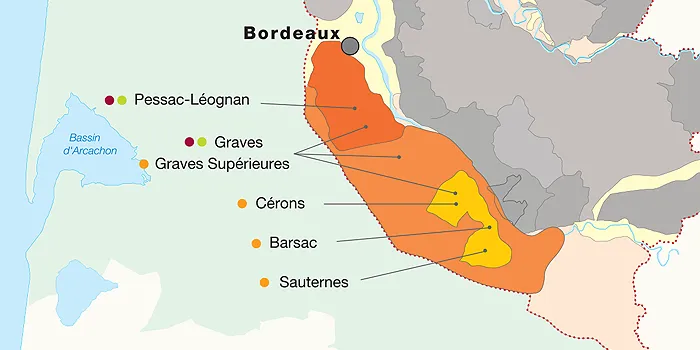
The story of Graves begins with geography and necessity. South of the city of Bordeaux, along the Garonne River, lay land that was ill-suited to traditional agriculture. The soil was stony, gravelly, and fast-draining — difficult for crops, but ideal for vines.
At a time when fertile land was reserved for food production, these gravel beds were available. Vines, which struggle in overly rich soils, thrived here. The stones absorbed heat during the day and released it at night, aiding ripening in Bordeaux’s cool, maritime climate. Drainage prevented waterlogging and vine vigour, naturally limiting yields and concentrating flavour.
This was not an intentional act of viticultural genius. It was a practical adaptation. Yet that adaptation shaped the future of Bordeaux wine.
The Meaning of “Graves”
The name Graves is literal. It refers directly to gravel — graves in French —, and this is not symbolic language. Gravel is the defining feature of the region, both physically and philosophically.
These soils forced early winemakers to work with nature rather than against it. Vines grew deeper roots. Yields remained moderate. Wines developed structure rather than sweetness. Acidity was preserved. These traits allowed Bordeaux wines to age and, crucially, to survive transport.
This ability to travel mattered enormously. Bordeaux’s relationship with trade — particularly via the river and the Atlantic — shaped its identity. Wines from Graves could reach England, the Low Countries, and beyond without falling apart. That alone set them apart.
Graves and the Birth of Fine Bordeaux Wine
Long before Médoc was drained and planted, long before Saint-Émilion built its reputation on limestone, Graves was producing wines that defined what Bordeaux could be.
The earliest estates to refine blending, barrel ageing, and estate bottling were here. Practices now seen as fundamental to Bordeaux were developed out of necessity rather than luxury.
Among the most historically significant estates is Château Haut-Brion, located within what is now Pessac-Léognan but originally part of Graves’ historical heart. Haut-Brion was already recognised internationally in the 17th century, decades before any formal classification existed. Its reputation was built on consistency, balance, and longevity — values that still define Bordeaux today.
Red and White: Graves Was Always Dual-Purpose
One of the most important things to understand about Graves is that it has always produced both red and white wines of seriousness. This was never an afterthought.
Red wines, based on Cabernet Sauvignon, Merlot, and Cabernet Franc, offered structure, savoury depth, and age-worthiness. White wines, based on Sauvignon Blanc and Sémillon, provided texture, complexity, and longevity rarely associated with dry white wine at the time.
This dual identity predates modern appellation thinking. Graves did not specialise because it did not need to. The soils supported both expressions, and the market valued both.
Oak, Ageing, and the Graves Philosophy
Graves played a crucial role in shaping Bordeaux’s philosophy of oak usage. Barrels were not adopted to add flavour, but to stabilise wine, allow controlled oxygen exposure, and improve ageing potential. Understanding why Bordeaux uses so much oak helps explain how this practice evolved from practical necessity into one of the defining structural tools of serious Bordeaux winemaking.
This approach — oak as architecture rather than decoration — emerged here first. It remains a defining feature of serious Bordeaux wine.
In Graves, oak is meant to disappear with time. Its purpose is to support structure, refine tannins, and allow the wine to evolve slowly. When oak is obvious decades later, it has failed.
The Rise of Classifications — and What Graves Lost
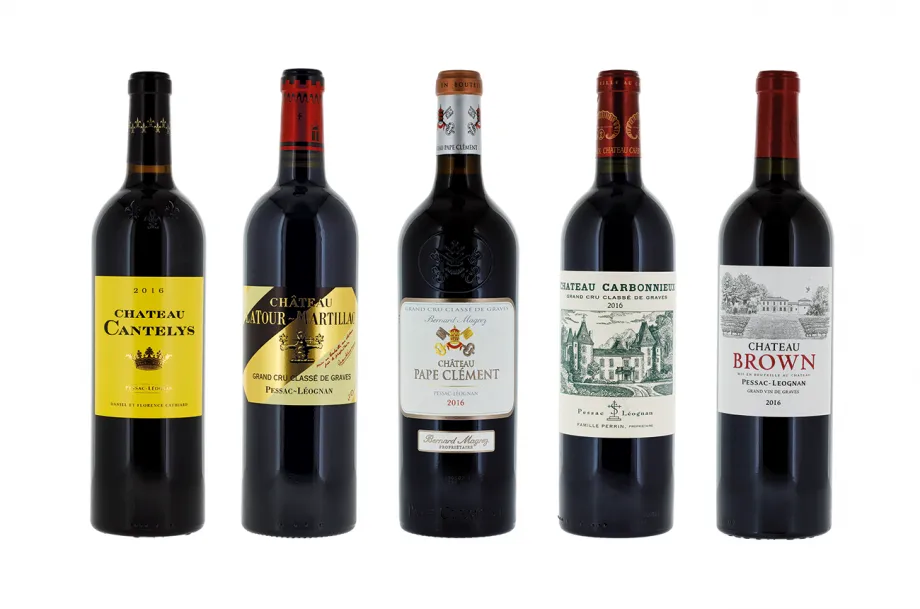
When Bordeaux began formalising classifications in the 19th century, Graves was already established. Ironically, that seniority worked against it.
The 1855 Classification focused on the Médoc and Sauternes, driven by commercial visibility rather than historical depth. Graves, despite its importance, was largely excluded. This shifted attention north, and over time, the Médoc came to dominate perceptions of Bordeaux greatness.
Graves did not disappear — but it became quieter, less fashionable, and less easily summarised. Its importance became implicit rather than advertised.
Only later did a separate Graves classification emerge, recognising estates such as Château La Mission Haut-Brion and Château Smith Haut Lafitte, reinforcing the region’s historical stature.
Graves Today: A Region of Substance, Not Spectacle
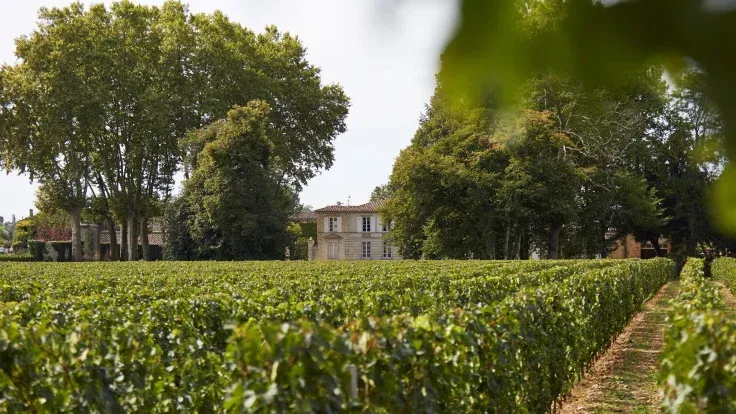
Modern Graves remains deeply tied to its origins. The wines are rarely exaggerated. Alcohol is usually moderate. Structure matters more than extraction. Freshness is valued over immediacy.
This is Bordeaux without theatrics. It asks for attention rather than admiration.
Graves also remains a region where white wines are taken seriously. Estates such as Château Carbonnieux continue to demonstrate how dry white Bordeaux can age gracefully, developing savoury, complex profiles that defy expectations.
Climate Change and the Advantage of Gravel
As Bordeaux warms, Graves’ gravel soils have proven resilient. Drainage prevents excess vigour, while heat retention aids ripening without pushing sugar accumulation too far.
This balance allows producers to adapt without radical change. Earlier harvests, careful canopy management, and restrained oak use help preserve identity rather than reinvent it.
In many ways, Graves now represents a blueprint for Bordeaux’s future: adaptation grounded in tradition.
Why Graves Matters for Wine Travellers
For wine travellers seeking to understand Bordeaux beyond prestige labels, Graves offers clarity. It shows how Bordeaux worked before it was ranked, how wines were valued before hierarchy, and how terroir spoke before classifications tried to translate it.
Exploring Graves often reframes how people understand the region, particularly when done alongside visits to later-developed areas. This deeper context is something many travellers encounter through Bordeaux Wine Tours, where historical continuity matters as much as tasting.
Graves as Bordeaux’s Memory
Graves is Bordeaux’s memory. It holds the region’s earliest lessons: that poor soil can make great wine, that balance outlasts power, and that reputation must be earned over time rather than declared.
Before Bordeaux was organised, there was Graves.
And without Graves, Bordeaux would not exist as we know it.
For those who want to experience Bordeaux not as a checklist of names, but as a living story, Wine Tours Bordeaux region offer the opportunity to see how everything began — on gravel, beside the river, without classification, but with purpose.
