Iconic Wine Routes in France for Wine Lovers
France is not a country of wine destinations so much as a country of wine systems. To travel its vineyards well is to understand how geography, history, and human decisions align to create coherence over distance. A great wine route is not defined by how scenic it is, nor by how many estates appear along the way, but by how clearly it allows a wine lover to read a region.
This is why the idea of wine routes in France deserves careful treatment. These routes are not tourist constructs designed to fill days. They are logical pathways through appellations, soils, and traditions, shaped by centuries of production and trade. Experienced slowly, they allow patterns to emerge: changes in grape varieties, shifts in structure and style, and the subtle dialogue between landscape and wine.
What follows is not a checklist, nor a driving itinerary. It is an exploration of iconic wine routes as tasting journeys — routes that make sense because the wines along them speak to one another.
Bordeaux: Rivers, Banks, and the Architecture of Power
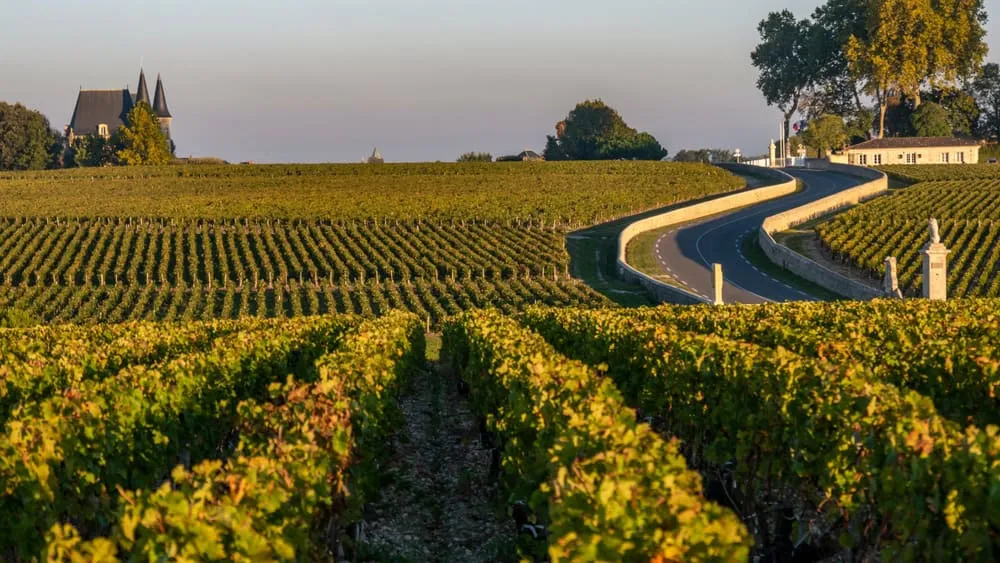
Any discussion of French wine routes begins naturally with Bordeaux, not because of prestige alone, but because Bordeaux offers one of the clearest examples of how geography structures wine experience. The region’s logic is shaped by water: the Garonne and Dordogne rivers converge to form the Gironde estuary. These waterways are not decorative; they are the organising principle of the region.
Travelling through Bordeaux as a wine lover means understanding the movement between banks. On one side, gravel-dominated soils favour Cabernet Sauvignon, structure, and longevity. On the other hand, clay and limestone encourage Merlot’s roundness and earlier approachability. The route is not linear in the sense of distance, but conceptual: Left Bank and Right Bank form two complementary expressions of Bordeaux’s identity.
The Médoc, stretching north from the city along the estuary, reads almost like a lesson in consistency and variation. Appellations unfold gradually, each maintaining a recognisable framework while expressing nuance through soil composition and microclimate. Further inland, the Right Bank reveals a different rhythm, where compact appellations emphasise intimacy over scale.
What makes Bordeaux an iconic wine route is not the number of estates, but the clarity of its system. Each stop reinforces an understanding of how classification, trade, and terroir interact. Bordeaux rewards repetition and comparison rather than novelty, making it foundational for any serious wine traveller.
Burgundy: Linear Terroir and the Discipline of Detail
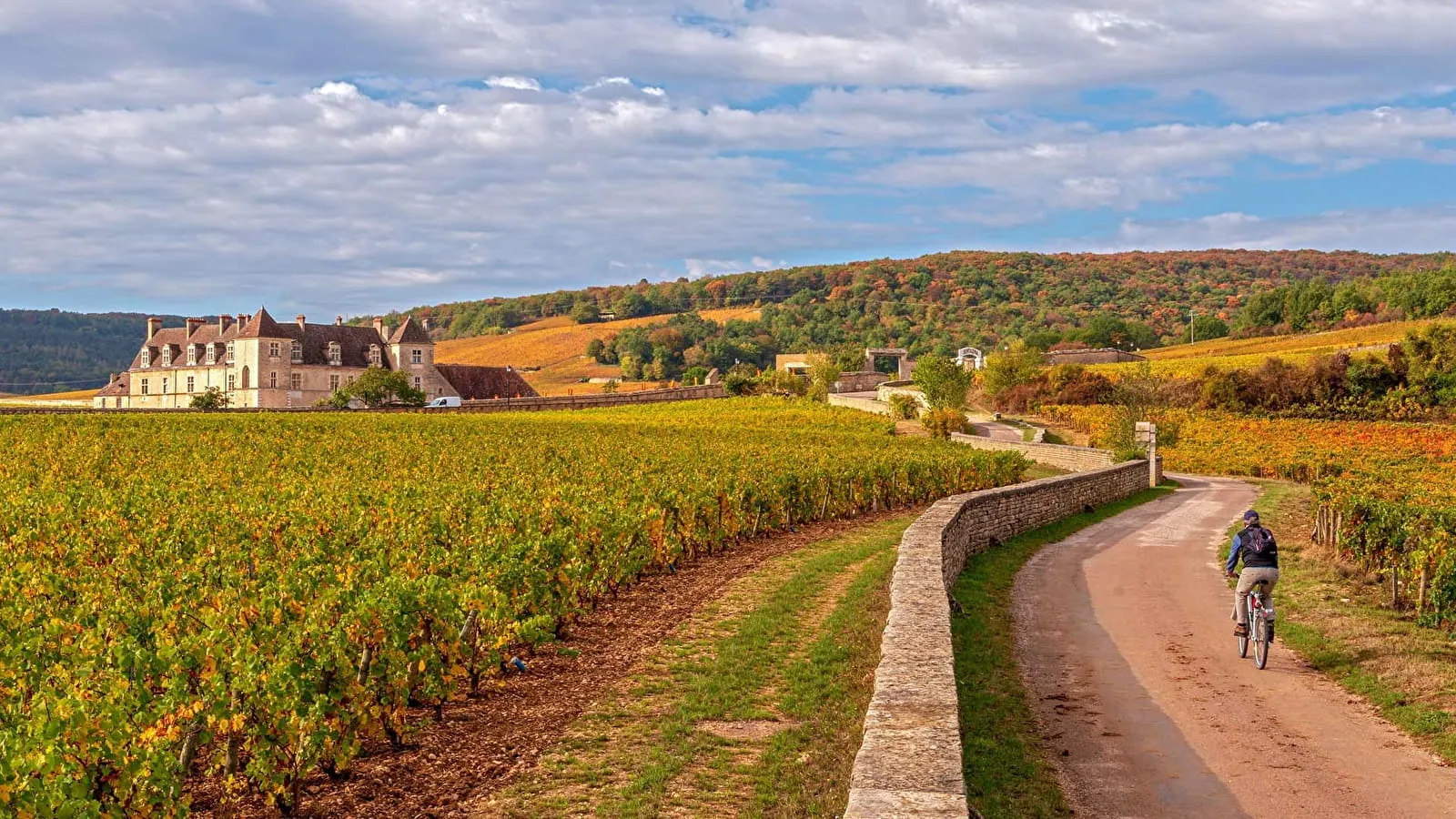
If Bordeaux teaches structure, Burgundy teaches precision. The wine route through Burgundy is not expansive, but narrow and intensely focused. Vineyards follow a geological fault line, creating a near-linear progression of climats that reward careful observation.
Travelling in Burgundy as a wine lover means slowing down. Distances are short, yet differences are profound. The same grape varieties — Pinot Noir and Chardonnay — recur again and again, but rarely taste the same twice. Here, the route itself becomes a study in how minimal changes in slope, exposure, and soil composition can produce dramatically different results.
The conceptual power of Burgundy’s route lies in its restraint. There is no need for contrast between banks or regions; the dialogue happens within metres. Villages succeed one another like paragraphs in a tightly written text. Wines invite comparison rather than explanation.
For those seeking to understand terroir in its most distilled form, Burgundy remains one of the most intellectually demanding and rewarding wine routes in France.
Champagne: Villages, Hierarchies, and the Art of Assembly
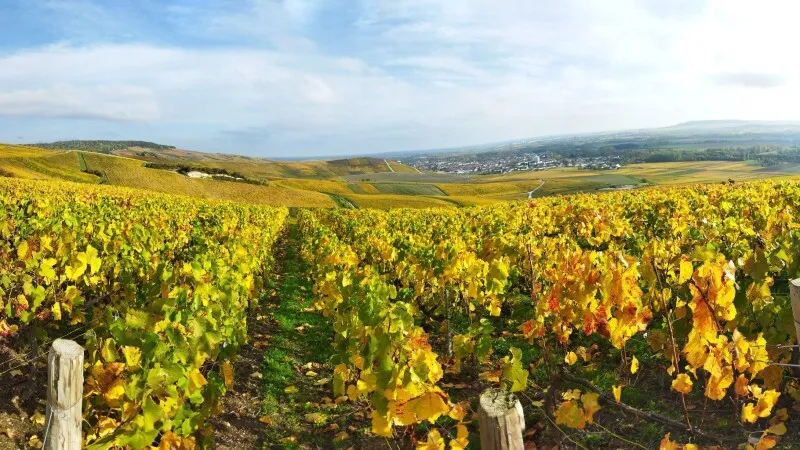
At first glance, Champagne may seem an unlikely candidate for a wine route defined by geography. The region’s identity is shaped as much by blending and production choices as by vineyard expression. Yet for wine lovers, Champagne offers one of the most instructive routes in France.
Travelling through Champagne reveals a landscape organised around villages rather than estates. Each village carries historical weight, shaped by its classification and long-standing reputation. The route unfolds through chalk soils, cool climates, and a deep relationship between land and cellar.
What makes Champagne compelling as a route is the contrast between raw material and finished wine. Vineyards appear understated, even austere, while the wines they produce are among the most complex in the world. The journey teaches patience, precision, and the importance of process.
For wine travellers, Champagne is less about surface beauty and more about understanding how restraint and discipline create depth.
The Northern Rhône: Tension, Scale, and Singular Expression
The Northern Rhône offers one of the most dramatic contrasts in French wine travel. The route follows the Rhône River closely, flanked by steep slopes that immediately communicate difficulty and intent. Here, viticulture is not expansive; it is heroic.
This wine route is defined by tension — both in the landscape and in the wines. Syrah dominates, yet its expression shifts noticeably as the route progresses. Whites appear sparingly but memorably, reinforcing the region’s focus on structure and precision.
Travelling the Northern Rhône is an exercise in focus. Appellations are small, identities are strong, and wines demand attention. The route rewards those who taste slowly and think comparatively, allowing the interplay between site and style to become clear.
The Southern Rhône: Breadth, Blend, and Mediterranean Influence
Moving south along the Rhône, the landscape opens, and the rules loosen. The Southern Rhône’s wine route is expansive, both geographically and stylistically. Blends replace single-variety focus, and Mediterranean influence becomes increasingly pronounced.
For wine lovers, this route offers insight into how complexity can be achieved through combination rather than isolation. Grenache forms the backbone, supported by a wide cast of complementary varieties. Wines speak more of warmth and generosity, yet structure remains essential.
The Southern Rhône teaches balance at scale. Its route is less about pinpoint precision and more about understanding how regional identity emerges from diversity.
Loire Valley: Diversity as a Throughline
Few regions illustrate diversity as clearly as the Loire Valley. Stretching across a vast distance, the Loire’s wine route is unified not by style, but by movement along the river itself.
Travelling the Loire as a wine lover means accepting variety as the organising principle. White, red, sparkling, and sweet wines coexist along the same route, each responding to subtle shifts in climate and soil. The challenge — and pleasure — lies in identifying continuity amid change.
The Loire rewards curiosity and flexibility. It is a route best experienced without rigid expectations, allowing each section to redefine the conversation.
Alsace: Varietal Clarity and Cultural Identity
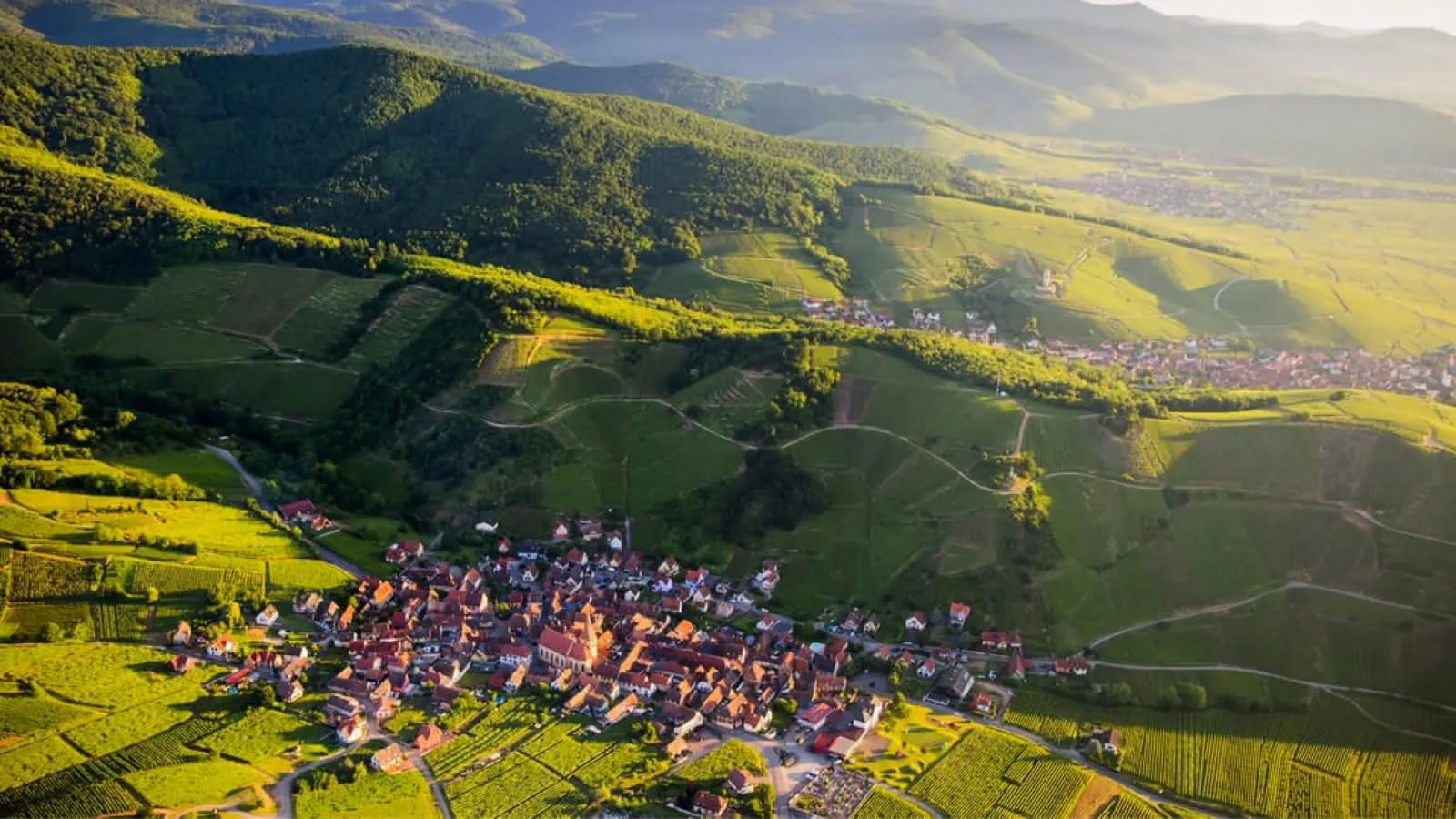
Alsace’s wine route is one of the most visually recognisable in France, yet its real significance lies in its clarity of purpose. Varietal labelling, distinctive bottles, and aromatic intensity create a region that communicates directly and confidently.
For wine lovers, travelling in Alsace means focusing on purity and expression. Grape varieties lead the conversation, supported by village identity and soil variation. The route encourages attentiveness to detail rather than breadth.
Alsace offers a rare combination of accessibility and depth, making it an essential stop for those interested in how transparency and tradition coexist.
Provence: Rosé as a Regional System, Not a Trend
Provence is often misunderstood because of its visibility. Rosé dominates the conversation, and with it comes the assumption that the region is stylistically simple. Travelling in Provence as a wine lover quickly dismantles that idea.
The Provençal wine route is not defined by colour, but by coherence. Rosé here is not a by-product or seasonal indulgence; it is the structural backbone of the region. Vineyard decisions, harvest timing, blending philosophy, and even parcel selection are built around producing wines that prioritise balance, freshness, and texture rather than power.
What makes Provence an iconic wine route is its consistency of intent. As you move through the region, wines change subtly, but the underlying logic remains stable. This creates an experience that rewards attention to nuance rather than dramatic contrast. For wine travellers accustomed to red-centric regions, Provence offers a valuable lesson in how style can be elevated through restraint.
Languedoc-Roussillon: Scale, Reinvention, and the Long View
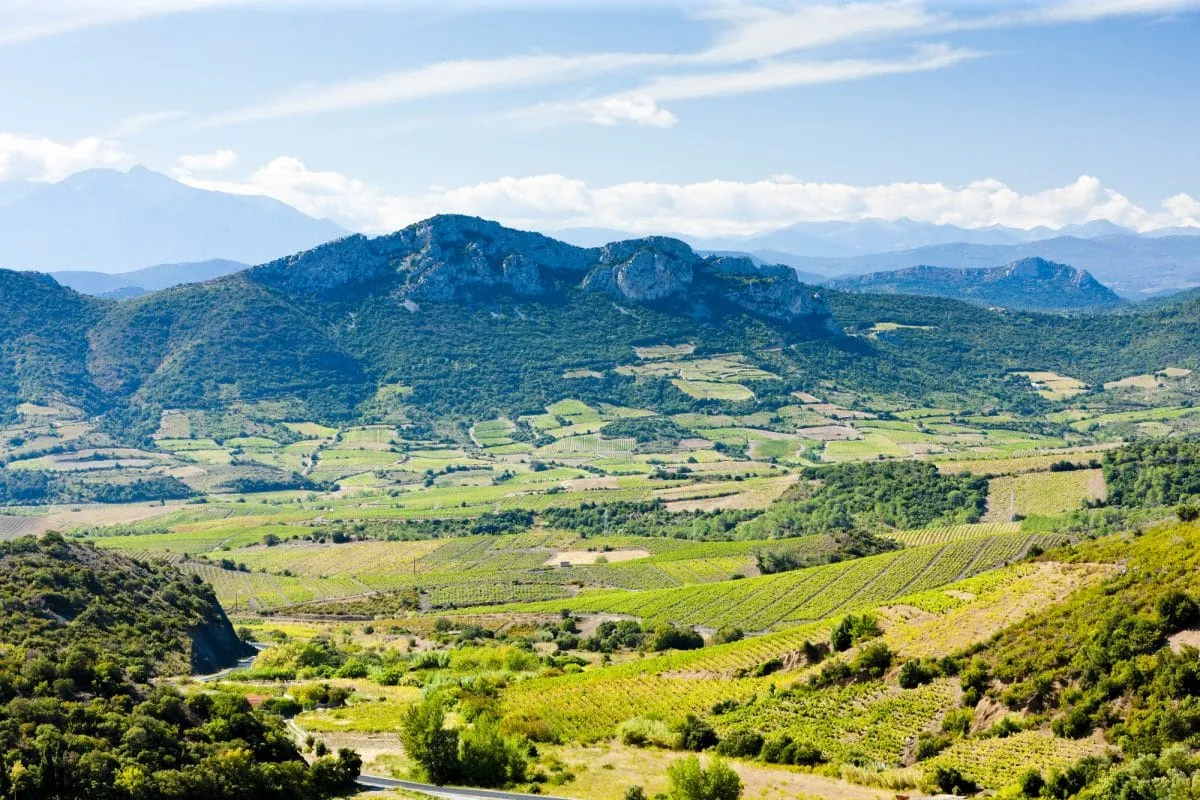
No French wine route has changed as profoundly in recent decades as Languedoc-Roussillon. Historically associated with volume and cooperative production, the region now represents one of France’s most dynamic wine landscapes.
Travelling this route as a wine lover requires abandoning preconceptions. Scale remains vast, but intention has shifted. Terroir expression, parcel selection, and appellation identity have gained prominence, reshaping how the region is read.
The Languedoc route teaches patience. Its diversity can feel overwhelming at first, but over time, patterns emerge. Mediterranean influence is constant, yet expressions vary widely depending on altitude, exposure, and producer philosophy. This is a route best approached with curiosity rather than expectation, allowing understanding to develop gradually.
For experienced wine travellers, Languedoc-Roussillon offers insight into how regions evolve — not through reinvention alone, but through reassessment of value and identity.
Choosing a Wine Route That Matches Your Palate
One of the most common mistakes in wine travel is assuming that prestige should dictate the itinerary. The most rewarding wine routes in France are those that align with how you enjoy wine, not with how regions are ranked.
Wine lovers drawn to structure, longevity, and comparison often find their rhythm in Bordeaux or the Northern Rhône. Those interested in terroir precision gravitate toward Burgundy or Alsace. Travellers seeking diversity and adaptability may feel most at home in the Loire or Languedoc.
Understanding this alignment transforms wine travel from consumption into education. Routes stop being sequences of tastings and become narratives that unfold logically, reinforcing personal preference rather than challenging it unnecessarily.
The Importance of Repetition in Wine Travel
Wine routes reveal their meaning through repetition. Tasting a single wine tells you little; tasting several wines built on the same logic reveals structure.
This is why experienced wine travellers return to regions rather than attempting to cover them exhaustively. Repetition sharpens perception. Differences become legible. Patterns emerge.
In this sense, wine routes function less like journeys and more like conversations. They reward those willing to listen carefully, revisit ideas, and resist the urge to move on too quickly.
France as a Network of Wine Systems
Taken together, France’s iconic wine routes form a network rather than a hierarchy. Each route expresses a different solution to the same question: how to translate land into wine with coherence and intent.
Bordeaux answers through classification and trade. Burgundy answers through parcel identity. Champagne answers through blending and precision. The Rhône answers through contrast. The Loire answers through diversity. Provence answers through restraint. Languedoc answers through evolution.
Understanding these systems transforms wine travel from tourism into a study. It allows wine lovers to move through France not as visitors chasing highlights, but as readers interpreting a text written over centuries.
For those wishing to explore this depth with guidance and structure, experiences such as Wine Tours in the Bordeaux region offer an opportunity to engage with these systems thoughtfully, without losing sight of context or coherence.
Returning to Bordeaux as a Point of Reference
No matter how many regions a wine lover explores, Bordeaux often remains a point of return. Its clarity of structure, breadth of styles, and historical influence make it a useful reference against which other regions are understood.
Travellers who want to understand how one Bordeaux appellation encapsulates this complexity often begin with Saint-Émilion’s layered landscape and structure, where geology, classification, and producer philosophy intersect in unusually revealing ways.
Revisiting Bordeaux after travelling elsewhere often sharpens perception. Comparisons feel more precise. Preferences become clearer. The region’s role within the broader French wine landscape becomes easier to articulate.
For travellers seeking this perspective through curated experiences, Bordeaux Wine Tours provides a way to reconnect with the region’s logic after encountering France’s wider wine mosaic.
A Closing Reflection for Wine-Led Travel
France’s iconic wine routes are not defined by scenery, convenience, or reputation. They are defined by coherence — the sense that each glass belongs to a larger story shaped by land, history, and choice.
For wine lovers, travelling these routes is not about accumulation. It is about calibration. Each region refines understanding, sharpens taste, and deepens appreciation for how wine communicates place.
When approached with patience and intention, wine routes stop being itineraries and become frameworks for understanding. They teach not only how French wine works, but why it continues to matter — not as a collection of labels, but as a living, evolving system.
