Marpaout: The Bordeaux Wine That Challenges the Rules of the Left Bank
In Bordeaux, expectations are not easily broken. The region is built on structure — not just in the wines, but in its identity. The Left Bank is Cabernet territory, defined by gravel soils and powerful blends, while Merlot belongs to the Right Bank, where it reaches its most expressive form in places like Pomerol and Saint-Émilion.
And yet, within this rigid framework, a small vineyard in Moulis-en-Médoc village has begun to challenge that entire structure.
Marpaout is not simply another Bordeaux wine. It is a 100% Merlot grown on the Left Bank, produced in extremely limited quantities, and already drawing comparisons with some of the world’s greatest Merlot wines. Its emergence raises a fundamental question — not just about this single wine, but about Bordeaux itself.
For those exploring the region, this shift becomes more visible when moving between traditional appellations and newer ideas. Many visitors begin to understand this contrast while experiencing different styles during a Saint Emilion Wine Tour, where the classic expression of Merlot provides a reference point for understanding how unusual Marpaout truly is.
A Vineyard That Should Not Exist — But Does
Marpaout originates from a 1.7-hectare parcel within Château Branas Grand Poujeaux, located in the small appellation of Moulis-en-Médoc.
For decades, this parcel contributed only a small percentage to the estate’s main wine. But over time, something became clear — its fruit consistently stood apart.
When tasted separately, it showed a level of precision and complexity that could not be ignored.
This led to a simple but radical decision:
What if this vineyard were bottled on its own?
The Terroir That Changed Everything
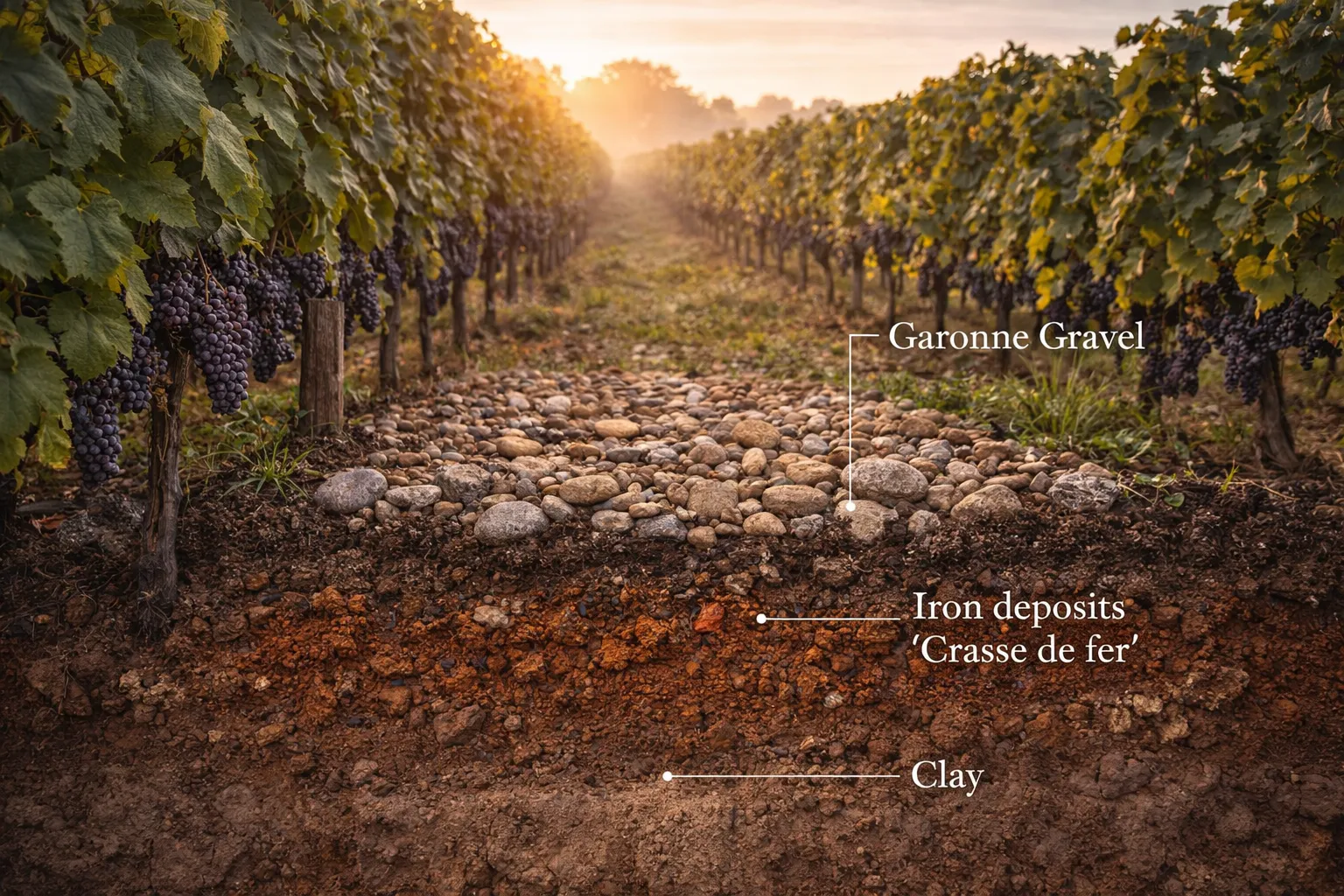
The answer lies beneath the vines.
Marpaout sits on what is known as Terrace 3, one of Bordeaux’s most complex geological formations. The soil profile combines deep gravel, iron-rich deposits, and clay — a rare combination more commonly associated with Pomerol than the Médoc.
Key characteristics of the Marpaout terroir
- layers of Garonne gravel providing drainage
- presence of “crasse de fer” (iron deposits)
- deep clay retaining moisture during dry periods
- elevated position improving exposure
This combination creates conditions where Merlot can achieve both power and finesse — something rarely seen on the Left Bank.
A Climate That Preserves Balance
The vineyard’s location also plays a critical role.
Situated relatively close to both the Atlantic Ocean and the Gironde estuary, the site benefits from a slightly cooler microclimate.
This moderates extremes and helps preserve acidity — a key factor in maintaining balance in Merlot.
Climatic influences
- cooler conditions slow down ripening
- preserved acidity enhances freshness
- balanced sugar development avoids excess heaviness
The result is a wine that combines richness with structure — a rare balance for Merlot in Bordeaux.
Winemaking: Precision Over Power
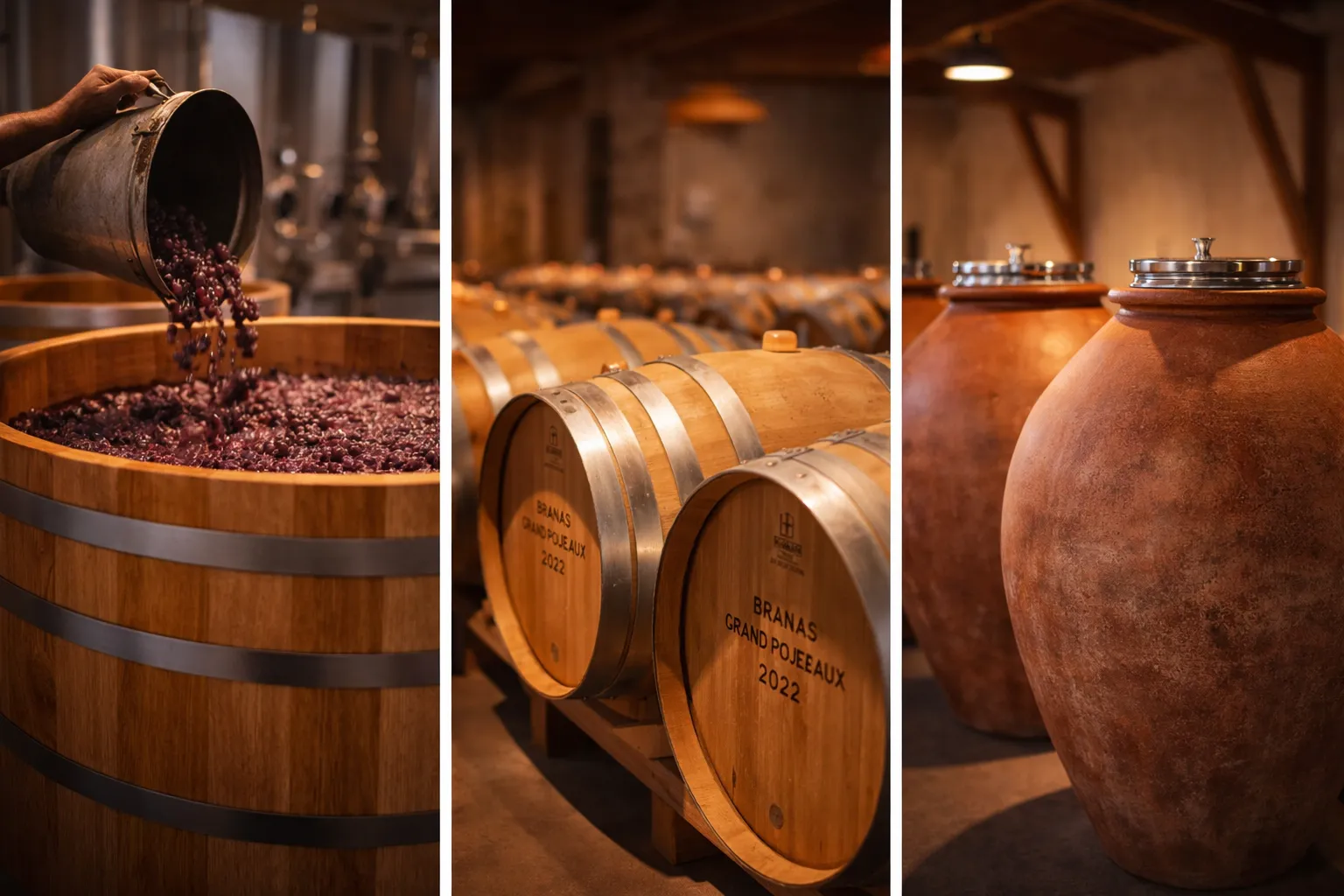
The approach to winemaking reflects the same philosophy as the vineyard.
The 2022 vintage — the first release — was harvested in a single morning and vinified with extreme precision.
The ageing process is particularly distinctive:
Key winemaking steps
- fermentation in wooden vats
- 12 months in new French oak
- further ageing in amphora
- gradual integration of tannins and structure
The use of amphora is significant. It allows the wine to develop without excessive oak influence, preserving purity and freshness.
A Wine That Surprised Bordeaux Itself
Perhaps the most striking aspect of Marpaout is how it has been received.
Within Bordeaux — a region not easily impressed — the wine has drawn strong reactions.
Respected figures in the wine world have described the vineyard as producing fruit of exceptional quality, and tastings alongside prestigious wines have shown that Marpaout can compete at the highest level.
In one high-profile tasting, it was reportedly selected as the standout wine among globally recognised Merlot icons.
This is not a small achievement.
Production: A Wine Defined by Rarity
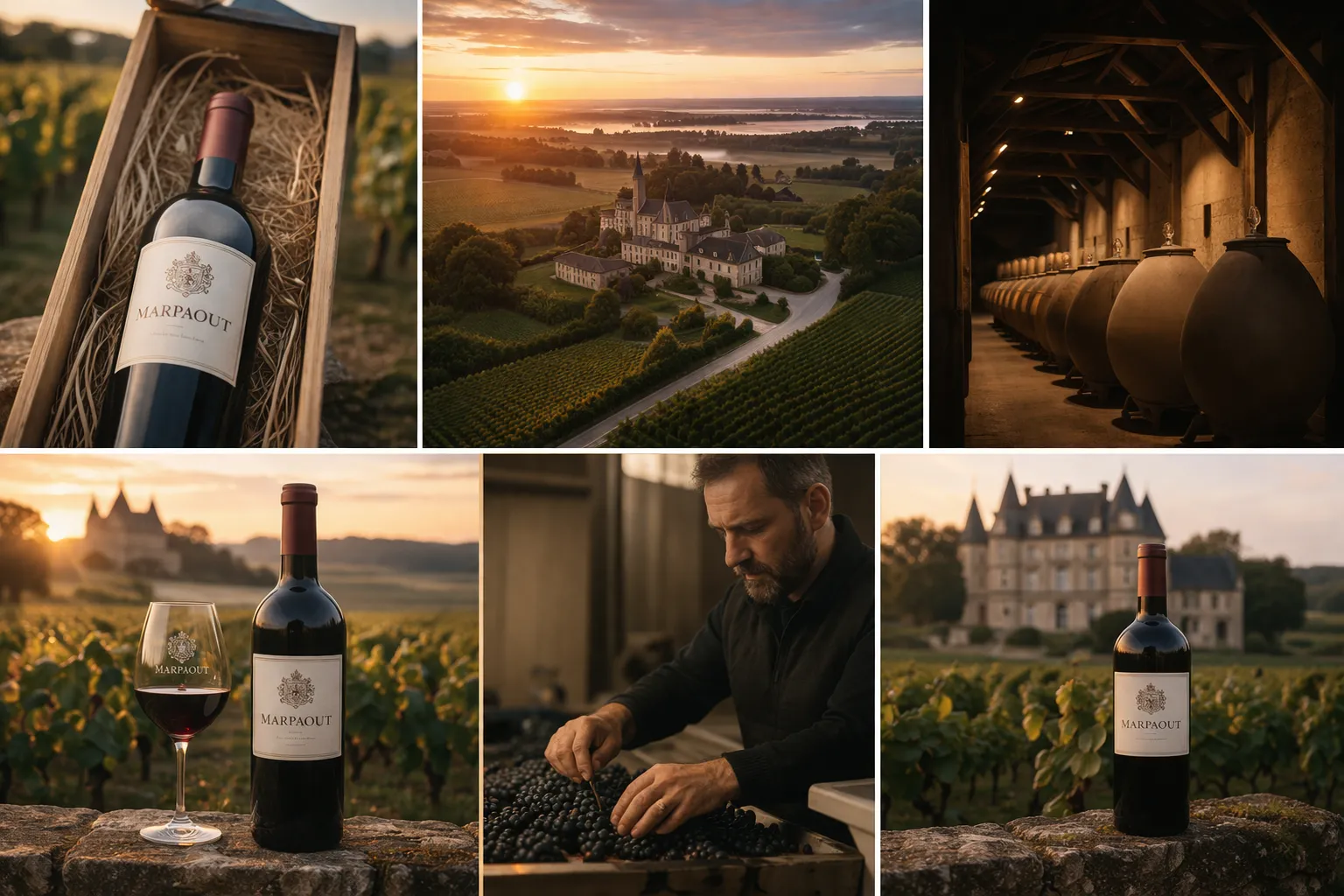
Marpaout is not produced at scale.
The first vintage yielded:
- approximately 900 bottles
- around 50 magnums
- extremely limited distribution
There are even vintages where it may not be produced at all, depending on conditions.
This scarcity places it firmly within the world of collector wines rather than commercial production.
Challenging Bordeaux Tradition
Marpaout does more than produce an exceptional wine — it challenges Bordeaux’s identity.
For centuries, the Left Bank has been defined by Cabernet Sauvignon. Merlot has always played a secondary role.
Marpaout reverses that hierarchy.
What Marpaout represents
- Merlot thriving on the Left Bank
- terroir overriding traditional classification
- small parcels rivaling prestigious estates
- innovation within a historic region
It suggests that Bordeaux is not as fixed as it appears.
For readers interested in how blending traditionally defines Bordeaux wines, the subject is explored in How Bordeaux Blends Are Created, where multiple grape varieties work together to shape structure and balance.
Marpaout stands apart from that system.
A Bridge Between Left and Right Bank
One of the most interesting aspects of Marpaout is how it connects two sides of Bordeaux.
The structure reflects the Left Bank — firm, precise, and mineral.
The texture reflects the Right Bank — rich, layered, and expressive.
This dual identity makes it something rare:
A bridge between Bordeaux’s two worlds.
Experiencing Bordeaux Beyond Its Rules
For visitors, wines like Marpaout reveal why Bordeaux cannot be understood through classification alone.
The region is far more complex than Left Bank versus Right Bank. It is shaped by micro-terroirs, individual decisions, and occasional moments of innovation.
Many travellers begin to understand this complexity while exploring the region during a Saint Emilion Wine Tour, where tasting different styles provides a broader perspective on what Bordeaux can be.
The Future of Bordeaux?
Marpaout raises an important question.
Is this an exception — or the beginning of something new?
Bordeaux has always evolved slowly. Its structure is built on history, reputation, and tradition. But wines like Marpaout suggest that even within this system, change is possible.
Not through revolution, but through precision.
Not through rejection of tradition, but through a deeper understanding of terroir.
When Terroir Redefines the Rules
Marpaout is not just a wine. It is a reminder that Bordeaux’s greatest strength has always been its adaptability.
At its best, the region is not defined by rigid rules, but by its ability to interpret land.
And in this case, a small parcel in Moulis-en-Médoc village has done exactly that — revealing that even on the Left Bank, Merlot can reach extraordinary heights.
That is what makes Marpaout important.
Not because it breaks the rules.
But because it proves they were never absolute.
