Saint-Julien Wines Explained: Balance and Structure
Within the Bordeaux wine region, few appellations express harmony as clearly as Saint-Julien. Set on the Left Bank of the Gironde estuary, between Margaux to the south and Pauillac to the north, Saint-Julien is a relatively small appellation with an outsized reputation.
Wine lovers often describe it as the point of equilibrium in the Médoc. If Margaux is associated with perfume and Pauillac with power, Saint-Julien is where those qualities seem to meet. Its wines are structured without harshness, refined without fragility, and capable of ageing for decades without losing their sense of proportion.
That balance is what makes Saint-Julien so compelling. The wines rarely feel exaggerated. They do not seek attention through sheer force or overt opulence. Instead, they are admired for precision: dark fruit held in place by fine tannins, freshness, and a quietly persistent architecture that reveals itself over time.
For travellers trying to understand how Bordeaux is organised, Saint-Julien also serves as an excellent lesson in Left Bank identity. Many visitors begin to grasp these distinctions while exploring the region during a Saint Emilion Wine Tour, where the broader contrast between Bordeaux’s appellations becomes easier to understand through landscapes, wines, and cellar visits.
To understand Saint-Julien properly, however, one must begin with the land itself.
Where Saint-Julien Sits in the Médoc
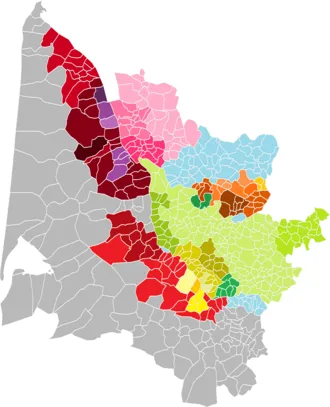
Saint-Julien lies in the heart of the Médoc on the Left Bank of Bordeaux, close to the Gironde estuary. The appellation takes its name from the commune of Saint-Julien-Beychevelle, whose vineyards form the core of the area.
Geographically, Saint-Julien is positioned between two of Bordeaux’s best-known appellations. To the south lies Margaux, famous for aromatic finesse. To the north lies Pauillac, renowned for depth, authority, and some of the most celebrated wines in the world.
Saint-Julien often seems to sit stylistically between them. It borrows some of Margaux’s polish and some of Pauillac’s structure, but it is not merely a compromise between the two. It has its own identity — one built on measured strength, consistency, and classical Médoc form.
Its position beside the Gironde is especially important. The estuary acts as a climatic regulator, moderating temperatures throughout the year and reducing extremes during the growing season. This stable environment is particularly beneficial for the slow, even ripening of Cabernet Sauvignon.
A Small Appellation with Remarkable Consistency
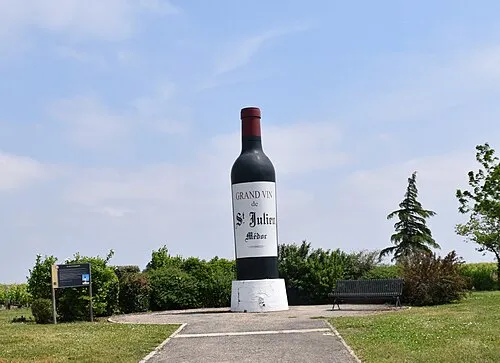
Saint-Julien is not large by Bordeaux standards. Yet within its limited area lies a remarkable concentration of high-quality estates.
The appellation contains numerous classified growths from the 1855 Classification, including Second, Third, and Fourth Growth estates. It does not have a First Growth, but that absence has never prevented Saint-Julien from being viewed as one of the Médoc’s most reliable and accomplished appellations.
In fact, one of the defining features of Saint-Julien is consistency. Across the appellation, the quality level is strikingly high. Because the vineyards are relatively compact and the terroir is comparatively coherent, the wines often share a recognisable identity even when estates differ in style.
This consistency has helped make Saint-Julien one of the most trusted names in Bordeaux for collectors and drinkers alike.
Gravel Soils and the Structure of Saint-Julien
The essential foundation of Saint-Julien wines is gravel.
Like much of the Left Bank, Saint-Julien was shaped by ancient river deposits that left behind deep layers of gravel mixed with sand and occasional clay. These soils are among the most important viticultural assets in the Médoc.
Gravel drains water efficiently, preventing excessive vine vigour and encouraging roots to grow deep into the ground. It also retains and reflects heat, helping grapes ripen fully during the long growing season.
This is especially important for Cabernet Sauvignon, which thrives in well-drained soils and requires time to reach full maturity.
The influence of these soils on Bordeaux wines more broadly is explored in Gravel vs Clay vs Limestone: How Bordeaux Soils Shape Wine Styles, which helps explain why Left Bank wines often show such distinct structure compared with their Right Bank counterparts.
In Saint-Julien, gravel is not simply a geological detail. It is the framework on which the appellation’s style is built.
The Influence of the Gironde Estuary
If gravel provides the structure beneath the vines, the Gironde estuary shapes the climate above them.
Large bodies of water warm and cool more slowly than land. This means the estuary helps regulate temperatures across the vineyards, softening cold spells in spring and tempering excessive summer heat. It also reflects light and warmth back toward the vines during the growing season.
For Cabernet Sauvignon, this matters enormously. The grape depends on a long, stable ripening period. Too much heat can push it out of balance; too little can leave tannins underripe. Saint-Julien’s position near the estuary helps it reach maturity with consistency.
This combination of gravel and river influence is central to the appellation’s identity. It allows Saint-Julien to produce wines with both ripeness and restraint — one of the reasons the wines feel so composed.
The Grape Varieties of Saint-Julien
Like most Left Bank Bordeaux, Saint-Julien wines are blends built around Cabernet Sauvignon.
Cabernet Sauvignon provides the structural backbone of the wines: tannins, ageing capacity, and the blackcurrant, cedar, and graphite notes for which Médoc wines are famous.
Merlot usually plays the second most important role, adding flesh, texture, and fruit depth. Depending on the estate and the vintage, Cabernet Franc may contribute aromatic lift and nuance, while Petit Verdot can add colour, spice, and extra structure in small quantities.
The proportions vary from estate to estate, but the overall logic remains consistent. Saint-Julien wines are not about a single grape speaking alone. They are about how several grapes are blended into something coherent and complete.
That coherence is one of the defining traits of the appellation.
The Style of Saint-Julien Wines
If one word must be used for Saint-Julien, it is balance.
Young wines often show aromas of blackcurrant, dark plum, cedar, tobacco, and graphite. The palate is structured but polished, with tannins that are firm yet usually finer than those found in more severe Left Bank wines.
Saint-Julien wines rarely feel showy. Their strength tends to be internal rather than obvious. Even when concentrated, they often retain a sense of proportion that makes them feel settled from an early stage.
This is why the appellation is so often admired by people who value classical Bordeaux. Saint-Julien wines can be powerful, but they are never defined by power alone. Their identity lies in how all the components fit together: fruit, tannin, acidity, oak, and time.
Texture is especially important here. Great Saint-Julien wines often feel seamless, with no single element dominating the others. That sense of integration is one of the reasons they are frequently described as complete wines.
Famous Châteaux of Saint-Julien
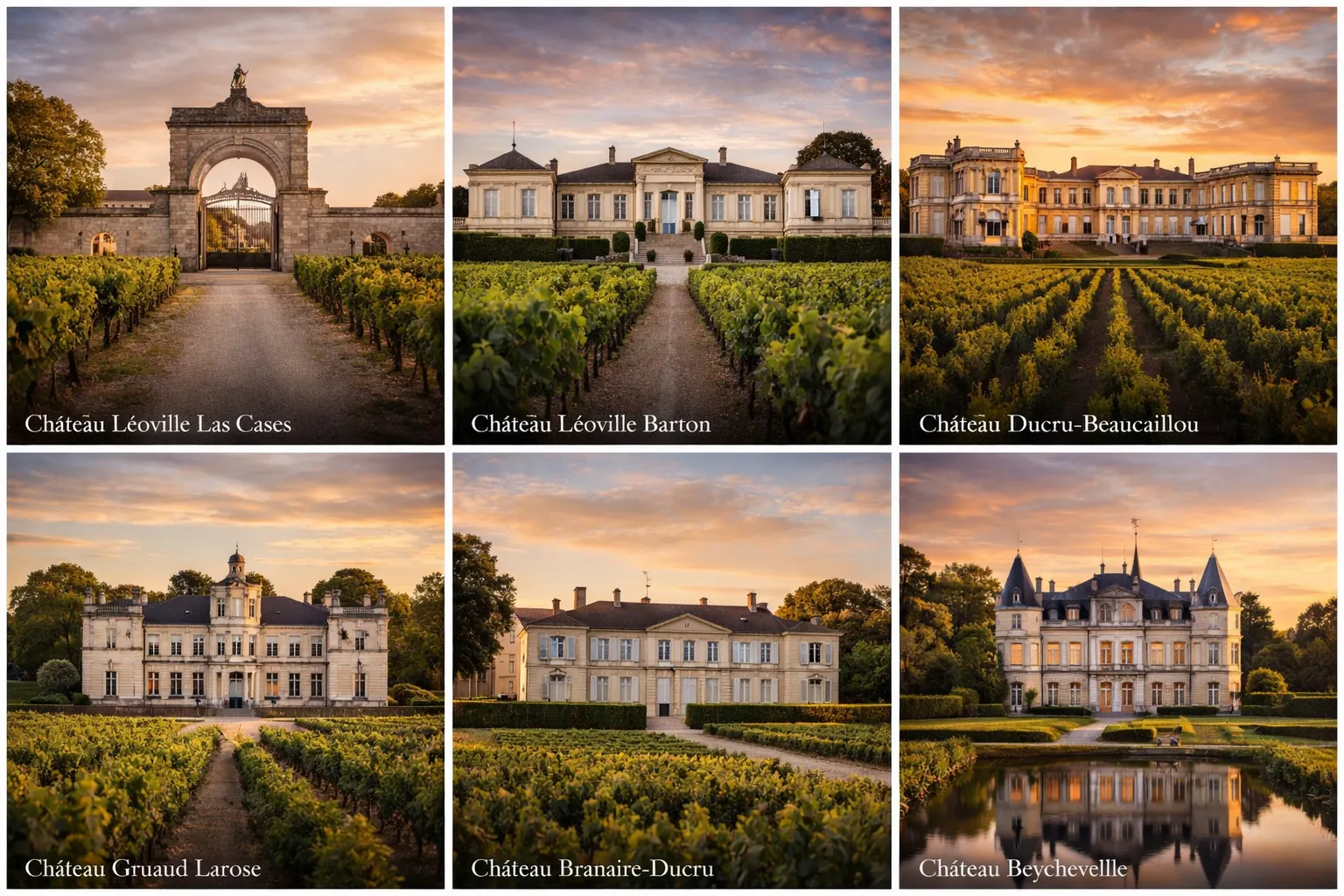
Saint-Julien is home to several of Bordeaux’s most respected estates.
Among the most celebrated is Château Léoville Las Cases, a Second Growth property whose wines are often regarded with near-First Growth seriousness. Structured, long-lived, and deeply classical, it has become one of the emblematic names of the appellation.
Other important estates include Léoville Barton, Léoville Poyferré, Ducru-Beaucaillou, Gruaud Larose, Branaire-Ducru, and Beychevelle. Each has its own style, but all draw from the same broader terroir and contribute to the appellation’s collective reputation.
This is one of the strengths of Saint-Julien. Its identity does not rest on a single château. It is reinforced by a network of serious estates producing wines that share a family resemblance while remaining individually distinct.
Vineyard Parcels and Precision
Although Saint-Julien is a compact appellation, individual estates often divide their vineyards into many small parcels.
These parcels may differ subtly in gravel depth, clay content, vine age, drainage, and exposure. Modern château management treats these variations with great precision. Parcels are often harvested separately, fermented separately, and assessed separately before blending.
This approach allows winemakers to understand exactly what each part of the vineyard contributes.
One parcel might deliver firmer tannins and darker fruit. Another may offer aromatic lift or softer texture. By keeping them apart early on, estates gain much greater control over the final blend.
This parcel-by-parcel philosophy helps explain why Saint-Julien wines can feel both structured and refined. Precision in the vineyard is one of the reasons the wines achieve such poise.
Harvest and Fermentation
In Saint-Julien, harvest timing is crucial. Cabernet Sauvignon must be picked ripe enough to achieve full flavour and tannin maturity, but not so late that freshness is lost.
Once harvested, grapes are sorted carefully before fermentation. Modern estates use a combination of manual and technical selection to ensure only healthy fruit enters the vats.
Fermentation usually takes place in temperature-controlled tanks, where the grape juice remains in contact with the skins to extract colour, tannins, and flavour. Winemakers manage extraction carefully through pump-overs or similar techniques, aiming to preserve structure without coarseness.
The overall goal in Saint-Julien is rarely excess. Fermentation is not used to force the wine into heaviness. It is used to shape a wine that will carry its structure naturally.
Oak Ageing and the Development of Texture
After fermentation, the wines are typically transferred into French oak barrels for ageing, often for twelve to eighteen months.
Oak serves several functions. It allows a controlled exchange with oxygen, helping tannins soften gradually and stabilising the wine’s structure. It also contributes subtle notes of cedar, spice, and toast that become part of the wine’s profile over time.
The proportion of new oak depends on the estate and the style of the vintage. Some wines can absorb more oak because of their concentration; others require a lighter hand. In Saint-Julien, the best results usually come when oak supports the wine without obscuring its balance.
This is an appellation where texture matters enormously, and oak is part of how that texture is shaped.
Why Saint-Julien Wines Age So Well
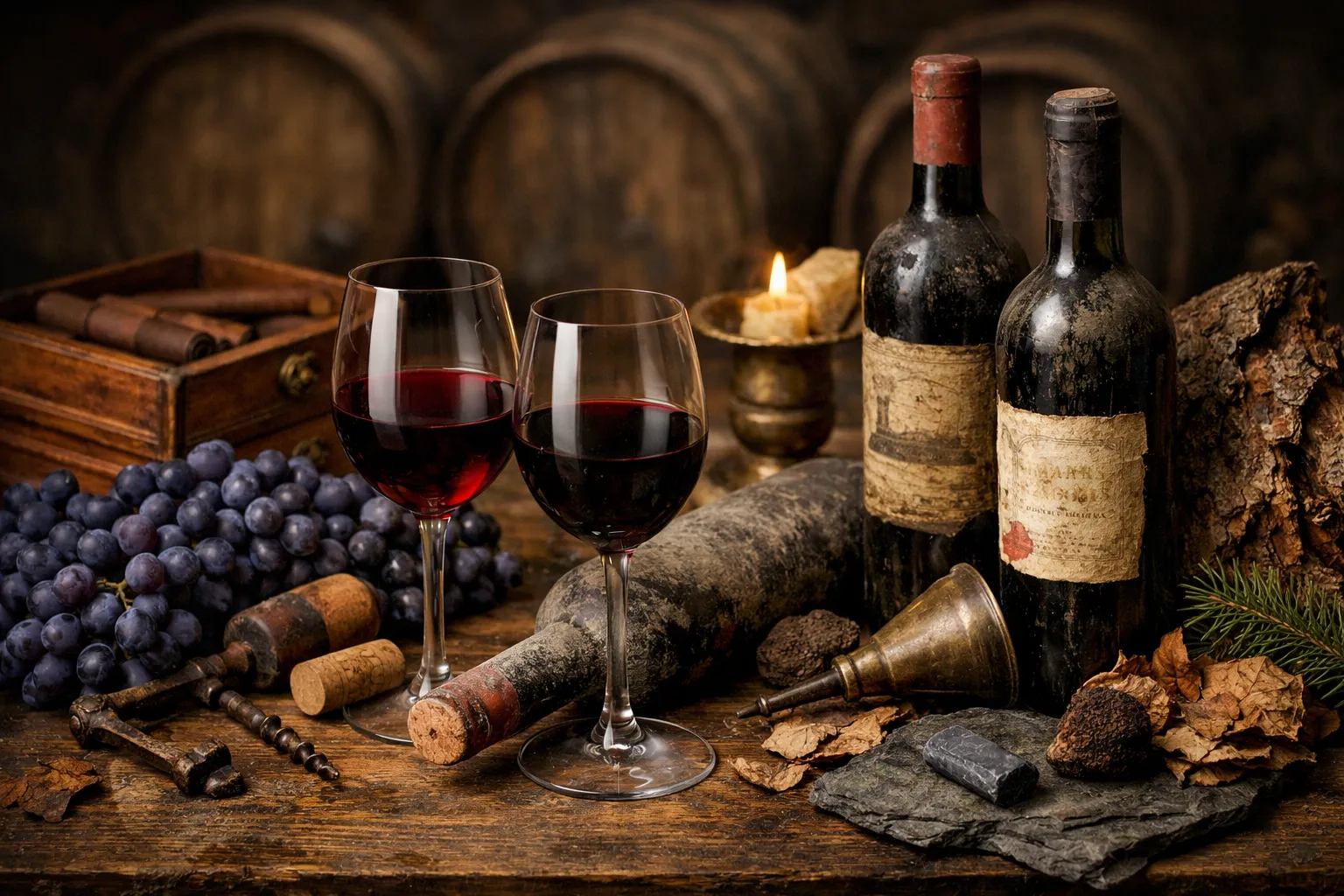
Saint-Julien wines are built for ageing.
Their longevity comes from the interaction of three main elements: tannin, acidity, and fruit concentration. Cabernet Sauvignon provides a firm frame, the terroir preserves freshness, and the fruit has enough depth to evolve slowly over time.
In youth, the wines often show cassis, plum, cedar, and dark spice. With age, they develop more tertiary notes: leather, tobacco, forest floor, graphite, and sometimes a subtle savoury complexity that only mature Bordeaux can offer.
What makes Saint-Julien especially satisfying in maturity is that it rarely loses its shape. Even after many years, the wines often retain their internal line. They soften, certainly, but they do not collapse.
For collectors, that reliability is one of the appellation’s great strengths.
Walking Through the Vineyards of Saint-Julien
The landscape of Saint-Julien reflects the character of its wines.
The vineyards stretch across low gravel rises beside the Gironde, broken by historic estates and quiet roads rather than dramatic scenery. At first glance, the landscape can seem understated. But that understatement is part of its appeal.
This is not a place that announces itself loudly. Like the wines, it reveals its depth gradually.
Travelling through the vineyards around Saint-Julien-Beychevelle makes the appellation easier to understand. The closeness of the estates, the consistency of the gravel terrain, and the proximity of the estuary all help explain why the wines share such a recognisable form.
For visitors trying to understand Bordeaux not just as a collection of labels but as a set of landscapes, Saint-Julien is one of the clearest lessons the region can offer.
Visiting Saint-Julien in the Broader Bordeaux Context
Saint-Julien is especially rewarding because it helps clarify Bordeaux as a whole.
To move through these vineyards is to understand what the Left Bank means in practical terms: gravel soils, Cabernet-led blends, estuarine influence, and wines built on structure. When compared with the limestone and clay vineyards of the Right Bank, the distinctions become even more vivid.
Many travellers begin connecting these ideas while exploring Bordeaux through a Saint Emilion Wine Tour, where guided visits reveal how one region differs from another in soil, grape variety, architecture, and style.
Saint-Julien fits naturally into that broader understanding. It is one of the places that makes the logic of Bordeaux easier to read.
Why Saint-Julien Matters
Among the great appellations of Bordeaux, Saint-Julien holds a special place because it so rarely falls out of balance.
It is not the most powerful appellation, nor the most perfumed, nor the most dramatic. Its greatness lies elsewhere. It lies in the way it brings its elements together with restraint and authority.
These are wines of structure, proportion, and calm confidence.
For wine lovers seeking the essence of classical Médoc character without excess in either direction, Saint-Julien often feels like the answer. It represents Bordeaux at its most measured and complete — wines shaped by gravel, tempered by the Gironde, and refined by a long tradition of disciplined winemaking.
That is why Saint-Julien continues to matter. Not because it shouts louder than its neighbours, but because it so often gets the balance exactly right.
