Sauternes Wines Explained: The Precision Behind Bordeaux’s Greatest Sweet Wines
In the southern edge of the Bordeaux wine region, where two rivers quietly shape the landscape, a rare transformation takes place each autumn. Around Sauternes village, mist settles over the vineyards in the early morning, only to be lifted by warm sunlight hours later. It is within this narrow climatic window that one of the world’s most extraordinary wine styles is created.
Sauternes is not defined simply by sweetness. It is defined by precision — a fragile balance between climate, timing, and human judgement. Each vintage depends on conditions that cannot be controlled, only understood. Too much humidity destroys the grapes; too little prevents the transformation altogether.
For many travellers, this level of nuance only becomes clear after exploring Bordeaux more broadly. Moving from structured reds to sweet wines during a Saint Emilion Wine Tour often provides the contrast needed to understand just how different Sauternes truly is. It is not an extension of Bordeaux winemaking — it is a completely different discipline.
The Geography That Makes Sauternes Possible
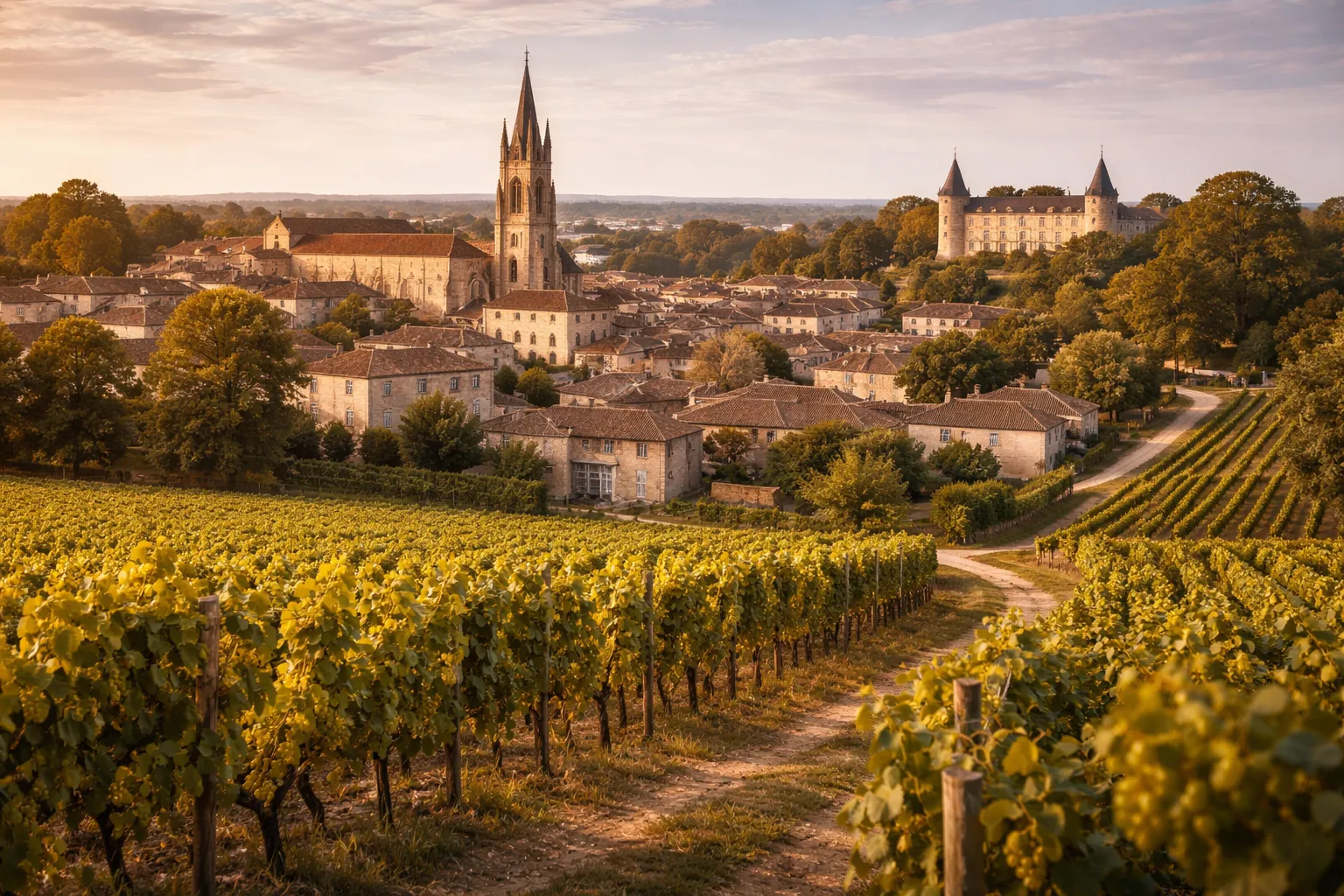
The existence of Sauternes depends on a unique geographical phenomenon.
The Ciron River, cold and shaded by forest, flows into the warmer Garonne. This meeting point creates morning fog that spreads across the vineyards during harvest season. As the sun rises, the mist burns away, leaving behind dry conditions that prevent the grapes from rotting completely.
Key geographical conditions
- convergence of Ciron and Garonne rivers
- consistent autumn morning mist
- warm, dry afternoons
- well-drained vineyard slopes
This daily cycle is essential. Without it, the defining element of Sauternes — noble rot — would not develop.
Noble Rot: The Core of Sauternes Identity
At the heart of Sauternes lies Botrytis cinerea, known as noble rot.
Unlike destructive rot, noble rot enhances the grape. It slowly dehydrates the berries, concentrating sugars, acidity, and flavour compounds into something far more complex than the original fruit.
Effects of noble rot
- intense sugar concentration
- development of honeyed and dried fruit notes
- increased aromatic complexity
- transformation of texture and structure
However, noble rot is unpredictable. Its success depends entirely on the balance between moisture and sunlight.
Each vintage is therefore a risk — and that risk defines the identity of Sauternes.
The Grapes That Shape Sauternes
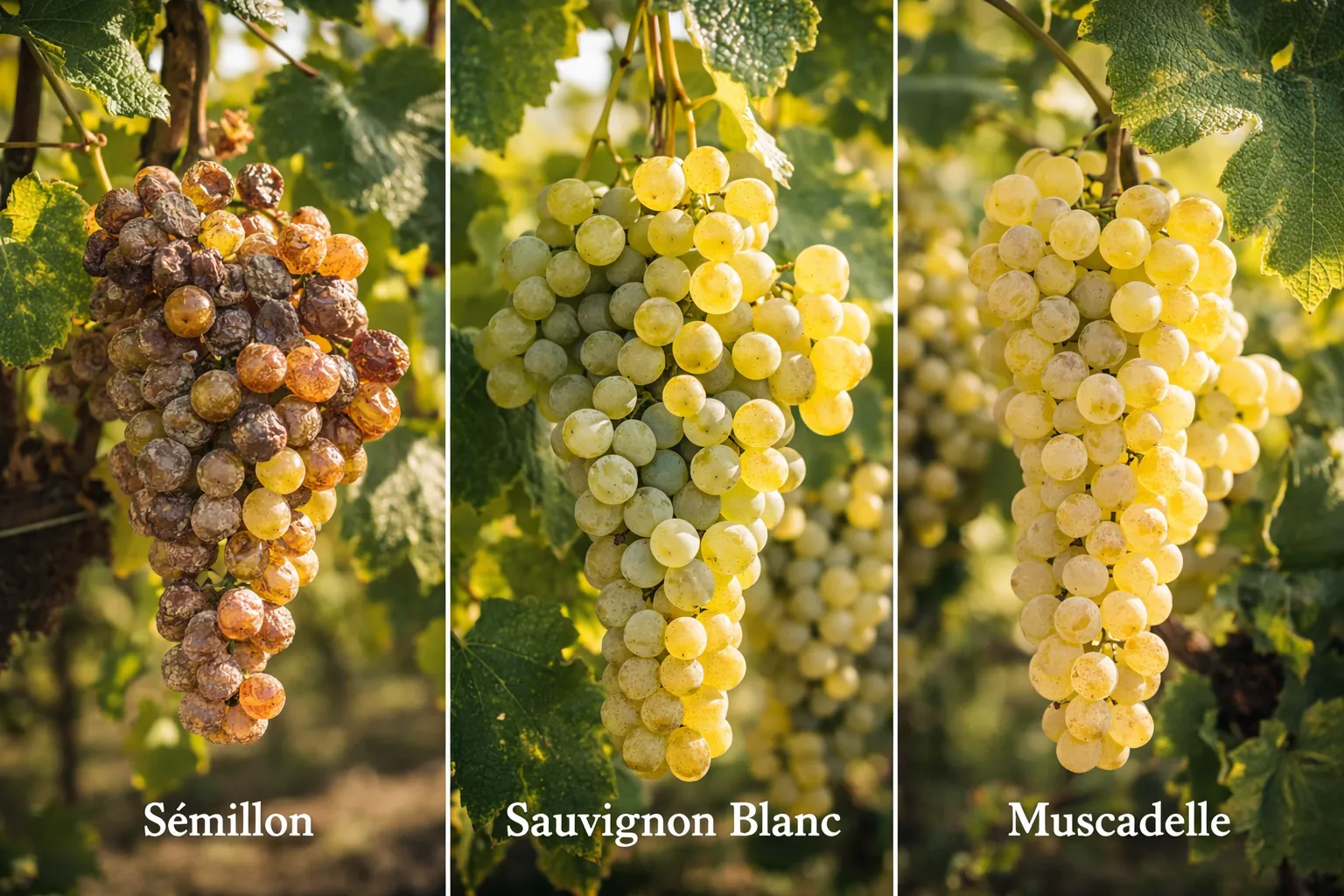
Sauternes wines are created from a blend of traditional white Bordeaux varieties, each contributing a distinct role.
Main grape varieties
- Sémillon – richness, texture, ageing capacity
- Sauvignon Blanc – acidity and freshness
- Muscadelle – floral and aromatic lift
Sémillon dominates most blends because of its thin skin and susceptibility to noble rot, allowing it to develop the depth and complexity that define Sauternes.
Sauvignon Blanc plays a critical supporting role, ensuring the wine remains balanced and not overly heavy.
Harvesting: Precision at Its Extreme
Harvesting in Sauternes is one of the most demanding processes in Bordeaux.
Unlike other regions where grapes are picked in a single pass, Sauternes requires multiple selective harvests. Workers return to the same vines repeatedly, picking only the berries that have reached the ideal stage of noble rot.
Harvest characteristics
- multiple passes through the vineyard (tries)
- individual berry selection
- extremely low yields
- high dependence on weather
This method is slow and labour-intensive, but essential for achieving the required level of precision.
Winemaking: Controlling Balance
Once harvested, the grapes are pressed to extract their concentrated juice. Fermentation is slow due to the high sugar content, and winemakers must carefully manage the process to maintain balance.
Key winemaking priorities
- preserving acidity
- controlling sweetness levels
- using oak for structure and complexity
- maintaining clarity of flavour
The objective is not simply to produce sweetness, but to create a wine that remains structured and capable of ageing.
The Style of Sauternes Wines
Sauternes wines are often described as rich, but their defining characteristic is balance.
Typical flavour profile
- honey and apricot
- marmalade and citrus peel
- tropical fruit
- saffron and spice
- subtle oak influence
The best examples never feel heavy. Their acidity lifts the sweetness, creating a wine that remains precise and layered.
Ageing Potential: Built Over Decades
One of the most remarkable aspects of Sauternes is its ability to age.
Over time, the wines evolve dramatically, developing deeper and more complex flavours.
Ageing characteristics
- fresh fruit evolves into dried fruit
- honey deepens into caramel and toffee
- acidity maintains structure
- flavours integrate and soften
Some of the greatest Sauternes wines can age for 50 years or more.
Sauternes in the Context of Bordeaux
To fully understand Sauternes, it must be placed within the wider structure of Bordeaux.
While most of the region is defined by red blends, Sauternes represents a completely different approach — one focused on white grapes, sweetness, and long ageing potential.
For a broader understanding of how different areas within Bordeaux function and how styles vary across the region, the subject is explored in The Bordeaux Wine Regions Explained: How the Region Really Works, where geography and structure define everything from grape selection to ageing potential.
This context highlights just how unique Sauternes truly is.
Experiencing Sauternes Through Travel
Sauternes is best understood not just through tasting, but through place.
Seeing the vineyards, the rivers, and the morning mist reveals how dependent these wines are on natural conditions. The quiet landscape contrasts with the intensity of the wines themselves.
Many visitors begin to connect these elements while exploring the wider region during a Saint Emilion Wine Tour, where moving between appellations provides a clearer understanding of Bordeaux’s diversity.
Why Sauternes Still Matters
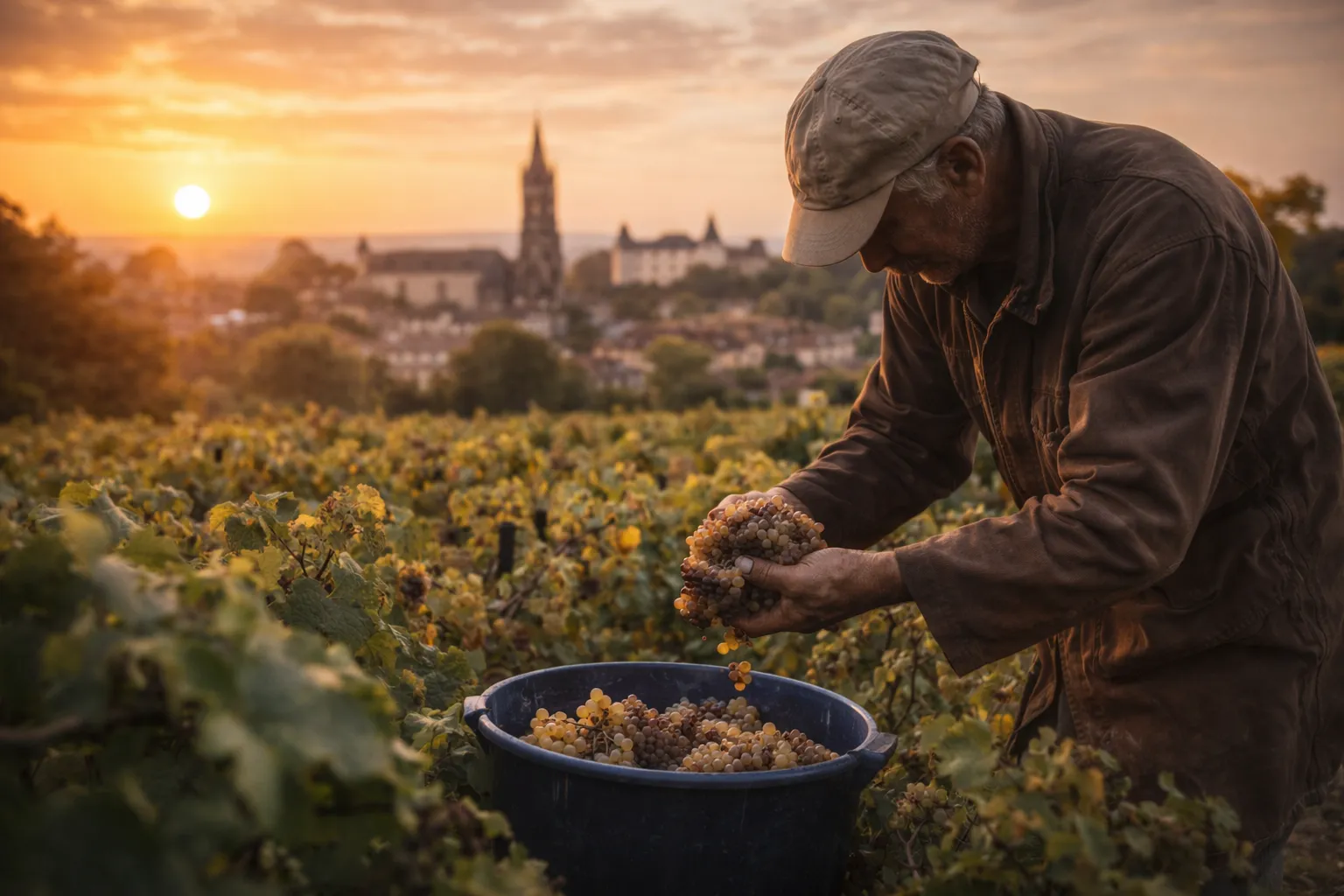
In a wine world increasingly driven by trends and changing consumer preferences, Sauternes remains unchanged.
It continues to rely on:
- unpredictable natural conditions
- labour-intensive harvesting
- extremely low yields
- long-term ageing potential
This resistance to change is precisely what makes it important.
The Precision of Sauternes
Sauternes is not about excess. It is about control.
It represents one of the most precise expressions of terroir in the Bordeaux wine region, where climate, geography, and human decision-making align to create something that cannot be replicated elsewhere.
Each bottle is the result of:
- risk in the vineyard
- patience during harvest
- discipline in winemaking
- time in ageing
And it is this combination that makes Sauternes not just a sweet wine — but one of Bordeaux’s most remarkable achievements.
