The History of Bordeaux Wine: How a Region Learned to Think in Centuries
The story of Bordeaux wine is not the story of individual estates or famous bottles. It is the story of systems — commercial, geographic, political, and cultural — aligning over time to create something remarkably stable. Bordeaux did not become influential because it chased innovation aggressively. It became influential because it learned how to organise itself.
To understand the history of Bordeaux wine is to understand how a region learned to think long-term. Bordeaux’s power has always rested less on spontaneity and more on structure: rivers that enabled trade, classifications that created hierarchy, and a culture that valued continuity over disruption.
This article traces how Bordeaux evolved from a regional producer into a global reference point — not through mythology, but through mechanisms that still shape how the Bordeaux wine region functions today.
Geography as Destiny: Why Bordeaux Was Always a Trade Region
Long before Bordeaux was associated with prestige, it was associated with movement. The region sits at the meeting point of two rivers — the Garonne and the Dordogne — which merge to form the Gironde estuary. This geography did not merely influence Bordeaux wine; it defined it.
From the beginning, wine routes in France mattered less here than shipping routes. Wine was produced inland and moved outward, not consumed locally in isolation. This outward orientation shaped Bordeaux’s mentality: wine was something to be sold, negotiated, transported, and compared.
Unlike regions that developed wine culture inwardly, Bordeaux developed externally. Its wines were always intended to travel. This single fact explains much of Bordeaux’s later success — and many of its controversies.
Roman Foundations and the Birth of Export Thinking
Viticulture arrived in Bordeaux during Roman rule, but what distinguished Bordeaux early was not planting vines — it was exporting wine. Roman trade networks allowed Bordeaux wines to move northward, embedding the idea that wine here was a commercial product as much as an agricultural one.
This export-first mindset created early incentives for consistency and scale. Wine needed to survive transport. It needed to be recognisable. It needed to be reliable. These pressures favoured blends over single-parcel expression and encouraged practices that would later define the region.
The seeds of Bordeaux’s future identity were already present: durability over delicacy, structure over immediacy, and repeatability over individuality.
Medieval Bordeaux and the English Influence
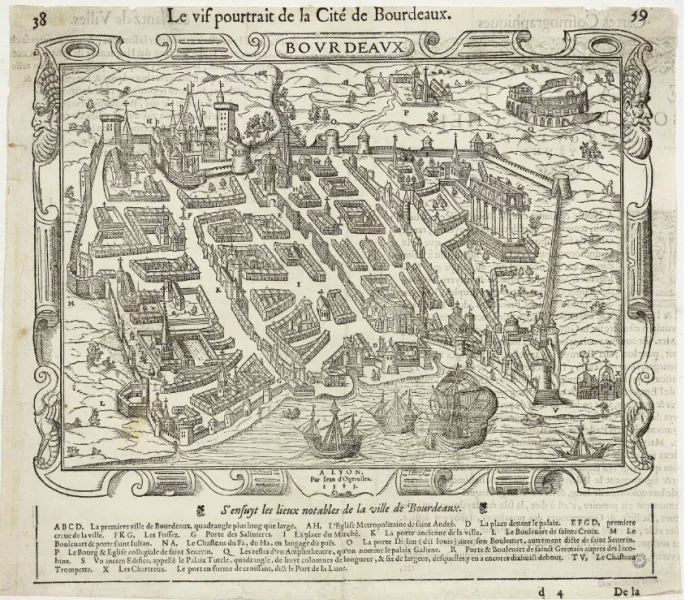
No period shaped Bordeaux wine more profoundly than the medieval English connection. When Bordeaux came under English rule in the 12th century, the region gained access to a vast and thirsty market.
English merchants did not simply buy wine; they shaped how it was made. Demand favoured lighter, earlier-drinking wines shipped quickly after harvest. The term “claret” emerged, referring to pale red wines that suited English tastes and transport logistics.
Crucially, trade privileges gave Bordeaux wines priority access to export routes, marginalising inland producers. This created an early hierarchy and reinforced Bordeaux’s role as a gatekeeper region — one that controlled access to markets as much as production itself.
This era cemented Bordeaux’s identity as a wine region built around commerce, not isolation.
The Rise of the Négociant System
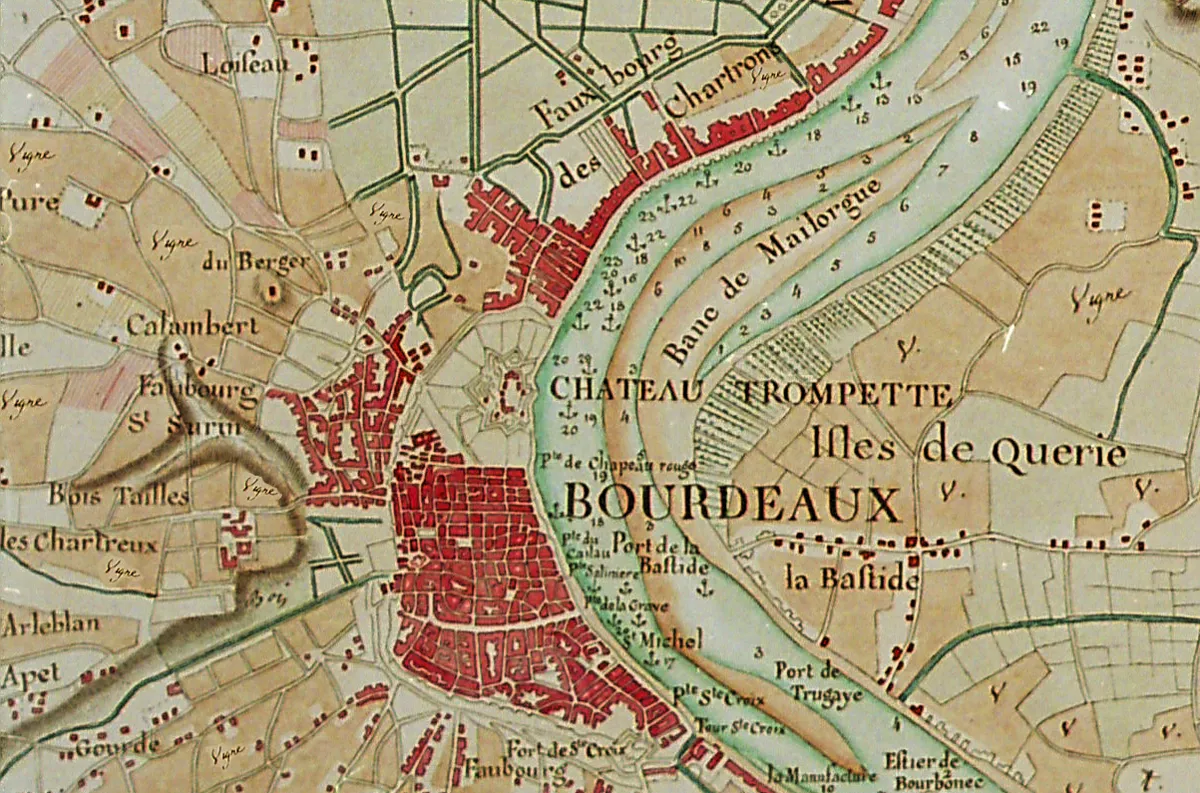
As the Bordeaux wine trade expanded, so did the importance of intermediaries. The négociant system — merchants who bought, blended, aged, and sold wine — became central to the region’s functioning.
This system allowed estates to focus on production while merchants handled distribution and reputation. Over time, it created a division of labour that stabilised quality and reinforced consistency. It also concentrated power, shaping which wines reached markets and how they were perceived.
Unlike regions where producers controlled their own narratives, Bordeaux developed a layered identity. Wine was not only made in vineyards; it was shaped in warehouses, offices, and contracts.
This commercial sophistication would later allow Bordeaux to adapt to global markets more effectively than many other French wine regions.
Classification as Control: The 1855 Turning Point
By the mid-19th century, Bordeaux had already established itself as France’s most internationally visible wine region. The 1855 Classification did not create Bordeaux’s hierarchy — it formalised it.
Requested for the Paris Exposition, the classification ranked wines based largely on market price and reputation. This reinforced the idea that Bordeaux wine was already a commodity traded globally, with value measured publicly and comparatively.
What makes the classification historically significant is not its accuracy, but its endurance. Few wine regions have frozen a hierarchy so visibly — and lived with it for generations.
This decision reveals Bordeaux’s core philosophy: stability matters more than flexibility. Once a structure works, it is preserved.
The Left Bank, the Right Bank, and Structural Duality
As Bordeaux matured, its internal geography became more clearly defined. The Left Bank, with its gravel soils and emphasis on Cabernet Sauvignon, evolved toward wines built for longevity and structure, while the Right Bank, shaped by clay and limestone, favoured Merlot-driven styles that matured earlier — a contrast explored in the Bordeaux wine regions explained. The Right Bank, with more clay and limestone, favoured Merlot-driven styles that matured earlier.
This duality did not fragment Bordeaux; it strengthened it. The region learned to accommodate differences within coherence. Multiple styles existed, but all spoke the same commercial language.
For wine lovers, this internal contrast remains one of Bordeaux’s most instructive features — showing how variation can exist without destabilising identity.
Bordeaux and the Global Market
By the late 19th and early 20th centuries, Bordeaux was no longer merely a French wine region. It was a global reference. Phylloxera devastated vineyards, yet Bordeaux rebuilt with an eye toward the future, reinforcing its commitment to durability and scale.
In the modern era, Bordeaux wine became synonymous with investment, ageing potential, and international trade. Critics, collectors, and markets shaped perception as much as terroir.
This global orientation has brought both prestige and tension. Bordeaux has often been criticised for conservatism, yet its ability to survive changing tastes speaks to the strength of its underlying system.
Why History Still Matters in the Bordeaux Wine Region
Understanding the history of Bordeaux wine is essential because the past is not decorative here — it is operational. Trade routes still matter. Classifications still influence value. Blending philosophies still prioritise balance and longevity.
Bordeaux’s success lies in its refusal to abandon structure. While other regions chase reinvention, Bordeaux refines continuity. This does not make it static; it makes it resilient.
Modern Bordeaux: Adaptation Without Abandoning Structure
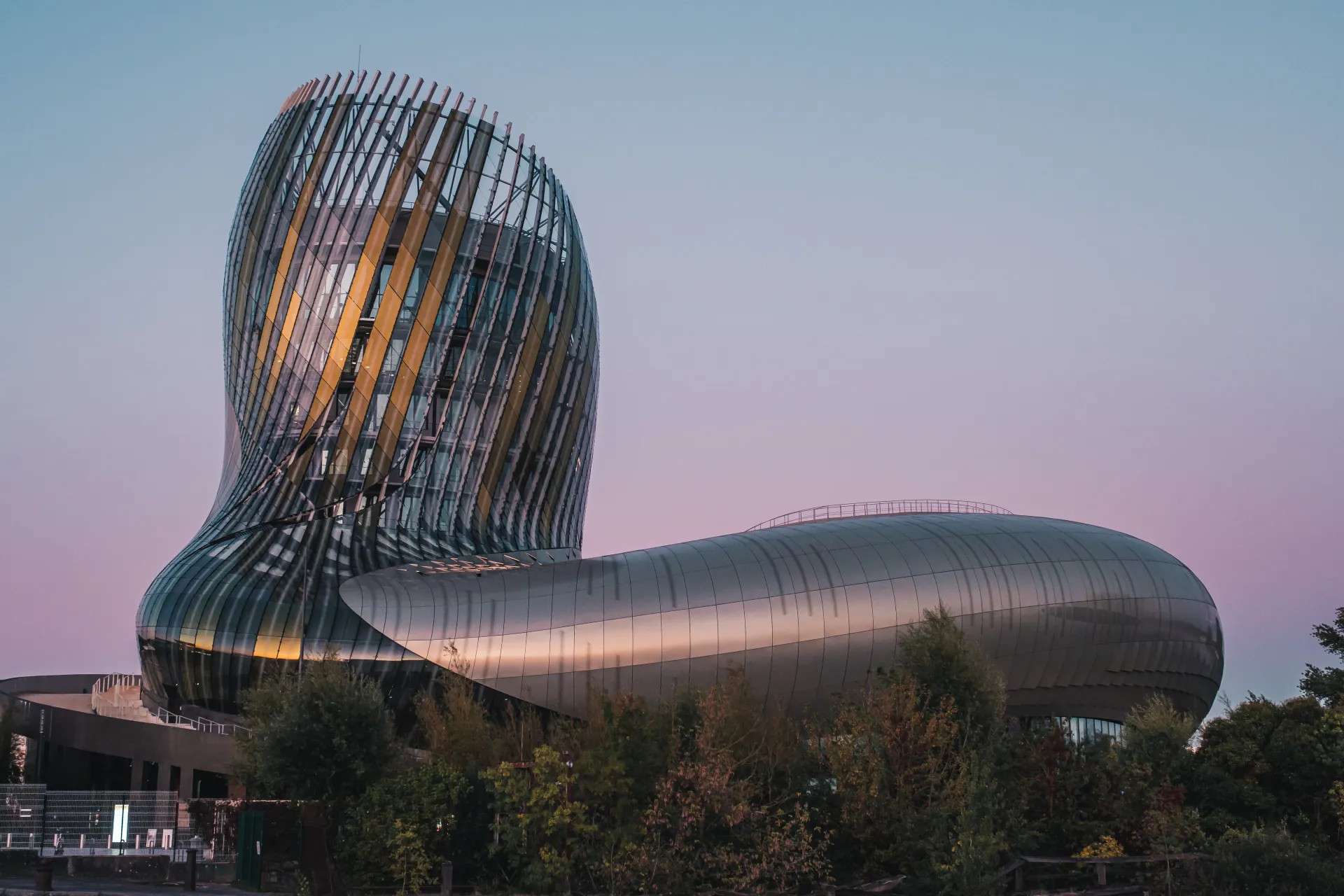
By the late twentieth century, the Bordeaux wine region faced a paradox. Its historical systems had delivered global recognition, yet those same systems risked rigidity in a rapidly changing wine world. Consumer tastes evolved. New regions challenged old hierarchies. Critics questioned whether Bordeaux could remain relevant without compromising its identity.
What followed was not revolution, but recalibration.
Viticulture improved steadily rather than dramatically. Parcel-level understanding deepened. Harvest decisions became more precise. Oak usage evolved. Extraction softened. Yet the underlying philosophy remained intact: Bordeaux wine would continue to prioritise balance, age-worthiness, and recognisable structure.
This capacity to adjust without dismantling is one of Bordeaux’s defining historical traits. The region rarely moves first, but it moves deliberately — and once it does, change tends to endure.
Criticism, Globalisation, and the Pressure to Perform
As wine tasting in France became increasingly international, Bordeaux found itself under constant scrutiny. Critics gained influence. Scores affected markets. Styles converged temporarily under external pressure.
This period exposed both the strengths and vulnerabilities of Bordeaux’s system. On one hand, the region’s scale and organisation allowed it to respond cohesively. On the other hand, its visibility made it a target for criticism whenever excess or conformity appeared.
Over time, Bordeaux absorbed these lessons. Winemaking approaches diversified again. Precision replaced exaggeration. The region’s historical preference for restraint quietly reasserted itself.
This episode reinforces an important lesson from the history of Bordeaux wine: external influence shapes Bordeaux, but rarely defines it.
The Role of History in Today’s Tasting Experience
To taste Bordeaux without understanding its past is to miss half the conversation. Every glass carries assumptions shaped by history: expectations of structure, longevity, and balance. These are not stylistic accidents; they are the result of centuries of decision-making.
When wine lovers taste Bordeaux today, they are engaging with a system refined over time. Blends reflect not only terroir, but commercial logic. Ageing potential reflects historical trade requirements. Even classification echoes through perception, whether consciously or not.
This is why Bordeaux remains such a powerful educational region. It teaches wine drinkers how history informs style — and how continuity can be as expressive as innovation.
Bordeaux in the Context of Wine Routes in France
Within the broader landscape of wine routes in France, Bordeaux occupies a unique position. Other regions may express terroir more transparently or innovate more freely, but Bordeaux offers coherence at scale.
Its routes are not designed for discovery alone, but for understanding. Travelling in Bordeaux as a wine lover is less about surprise and more about calibration — learning how a system maintains identity while accommodating variation.
This makes Bordeaux an essential reference point. Whether one ultimately prefers Burgundy, the Rhône, or the Loire, Bordeaux provides a framework against which other regions are often understood.
Why Bordeaux Continues to Matter
The endurance of Bordeaux wine is not accidental. It rests on a willingness to think in decades rather than vintages, and in systems rather than individuals. While this approach has drawn criticism, it has also delivered resilience.
Bordeaux has survived political change, agricultural disaster, shifting tastes, and global competition without losing coherence. Few wine regions can claim the same.
For wine lovers seeking to engage with this depth through informed, structured experiences, exploring the region with guidance rooted in context — such as Wine Tours in the Bordeaux region — allows the historical layers to become tangible rather than abstract.
Returning to Bordeaux With Historical Awareness
One of the most revealing moments in a wine journey is returning to Bordeaux after exploring other regions. Wines once perceived as traditional often appear more intentional. Structure feels purposeful rather than restrictive. Familiarity transforms into understanding.
History provides this clarity. It allows wine lovers to read Bordeaux not as static, but as cumulative — each era leaving traces that remain active today.
Those who revisit the region with this perspective often find their tasting experiences sharpened, comparisons more precise, and preferences more clearly articulated.
For travellers looking to revisit Bordeaux with this lens, Bordeaux Wine Tours offer an opportunity to connect historical context directly to the glass.
A Closing Reflection on Time and Wine
The history of Bordeaux wine is ultimately a study in patience. It shows how regions can succeed not by constant reinvention, but by refining what already works. Bordeaux does not chase relevance; it maintains it through continuity.
For wine lovers, engaging with Bordeaux is an exercise in long-term thinking. It invites reflection on how wine evolves not only in barrels and bottles, but within systems shaped by geography, commerce, and culture.
Understanding this history does not make Bordeaux simpler. It makes it clearer. And in that clarity lies its enduring power — not just as a wine region, but as a benchmark against which wine itself is often measured.
