Why Bordeaux Is One of the Best Places in the World to Learn Wine
There are many places in the world where wine is made well.
Fewer places explain wine clearly.
And then there is Bordeaux — a region where wine is not only produced at a high level, but structured in a way that makes it possible to understand.
In the Bordeaux wine region, wine is not random. It is organised. Defined. Built on systems that connect vineyard, grape, soil, and time into something coherent.
That is what makes Bordeaux one of the best places in the world to learn wine.
Not because it is simple — but because its complexity is structured.
If you’ve explored How to Read Bordeaux Wine Labels , you’ll already see that even a label contains layers of information about origin, classification, and identity. Bordeaux teaches you how to decode wine.
But that learning becomes far clearer when you move beyond the label and into the vineyard itself. Walking through parcels, observing soils, and understanding how wines are constructed during a structured Saint Emilion Wine Tour transforms theory into something immediate and tangible.
A Region Built on Structure
Bordeaux is not just a wine region. It is a system.
It is organised around:
- appellations
- classifications
- terroir distinctions
- blending practices
Each layer adds clarity.
Instead of asking “what grape is this?”, Bordeaux asks:
- where is it from?
- what soil is it grown on?
- how is it structured?
This approach forces you to think differently.
And in doing so, it teaches you more.
The Importance of Appellations
One of the first lessons Bordeaux offers is the role of place.
Wine here is defined by appellation.
Within Bordeaux, you move from one area to another and see:
- changes in soil
- differences in grape dominance
- variations in structure
Each appellation has its own identity.
Learning Bordeaux means learning how geography shapes wine.
Left Bank vs Right Bank: A Natural Comparison
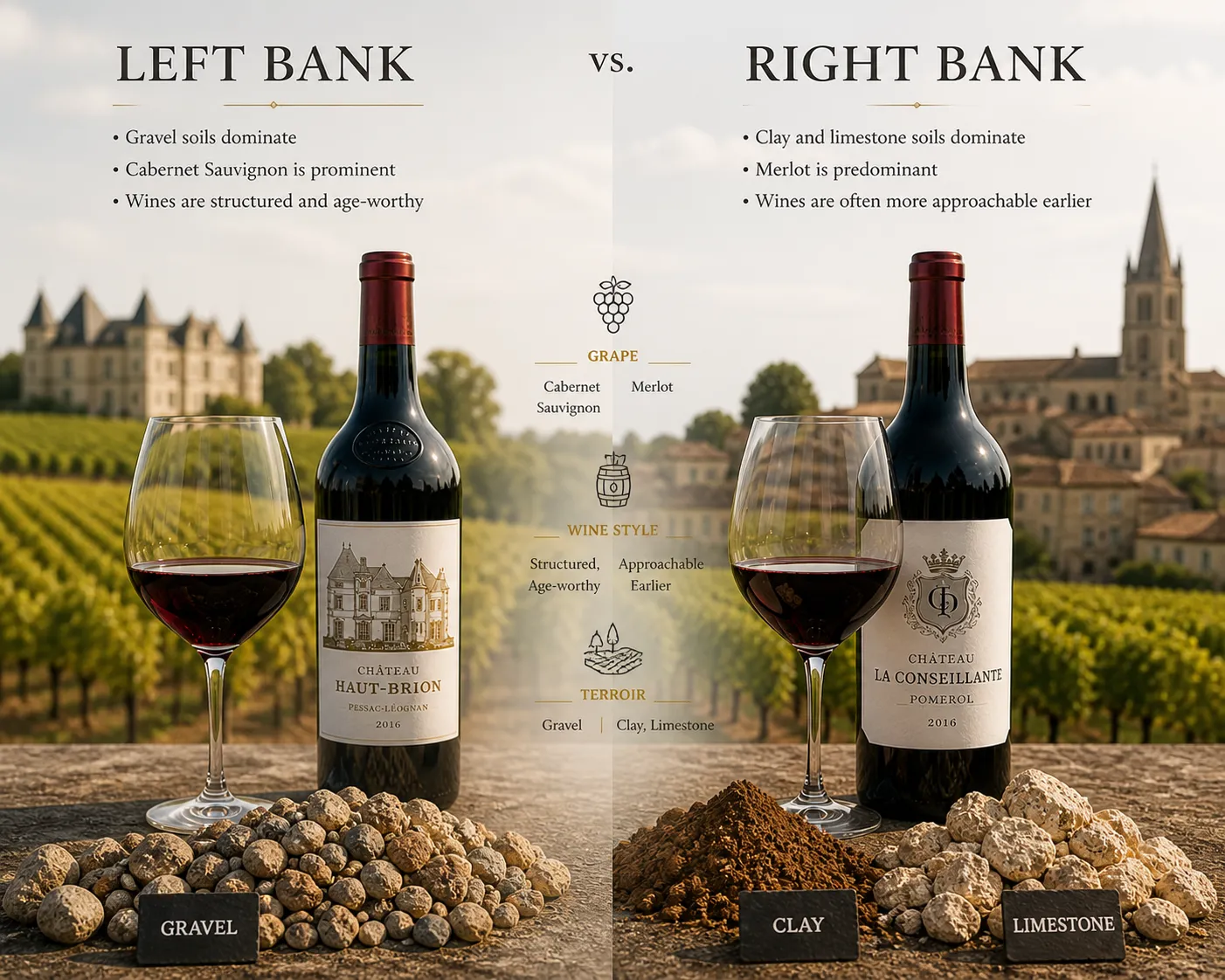
Few regions offer such a clear structural contrast as Bordeaux.
On the Left Bank:
- gravel soils dominate
- Cabernet Sauvignon is prominent
- wines are structured and age-worthy
On the Right Bank, particularly around Saint-Émilion:
- clay and limestone soils are common
- Merlot plays a leading role
- wines are often more approachable earlier
This contrast is not theoretical. It is immediate.
By tasting wines from both sides, you begin to understand how soil and grape interact.
Terroir Becomes Visible
In many wine regions, terroir is discussed but difficult to see.
In Bordeaux, it becomes visible.
Walk across different vineyard parcels and you notice:
- changes in soil colour
- variations in drainage
- differences in vine growth
These factors are not abstract. They are physical.
This is why Bordeaux is such a powerful teaching environment — it allows you to connect what you taste with what you see.
The Role of Blending
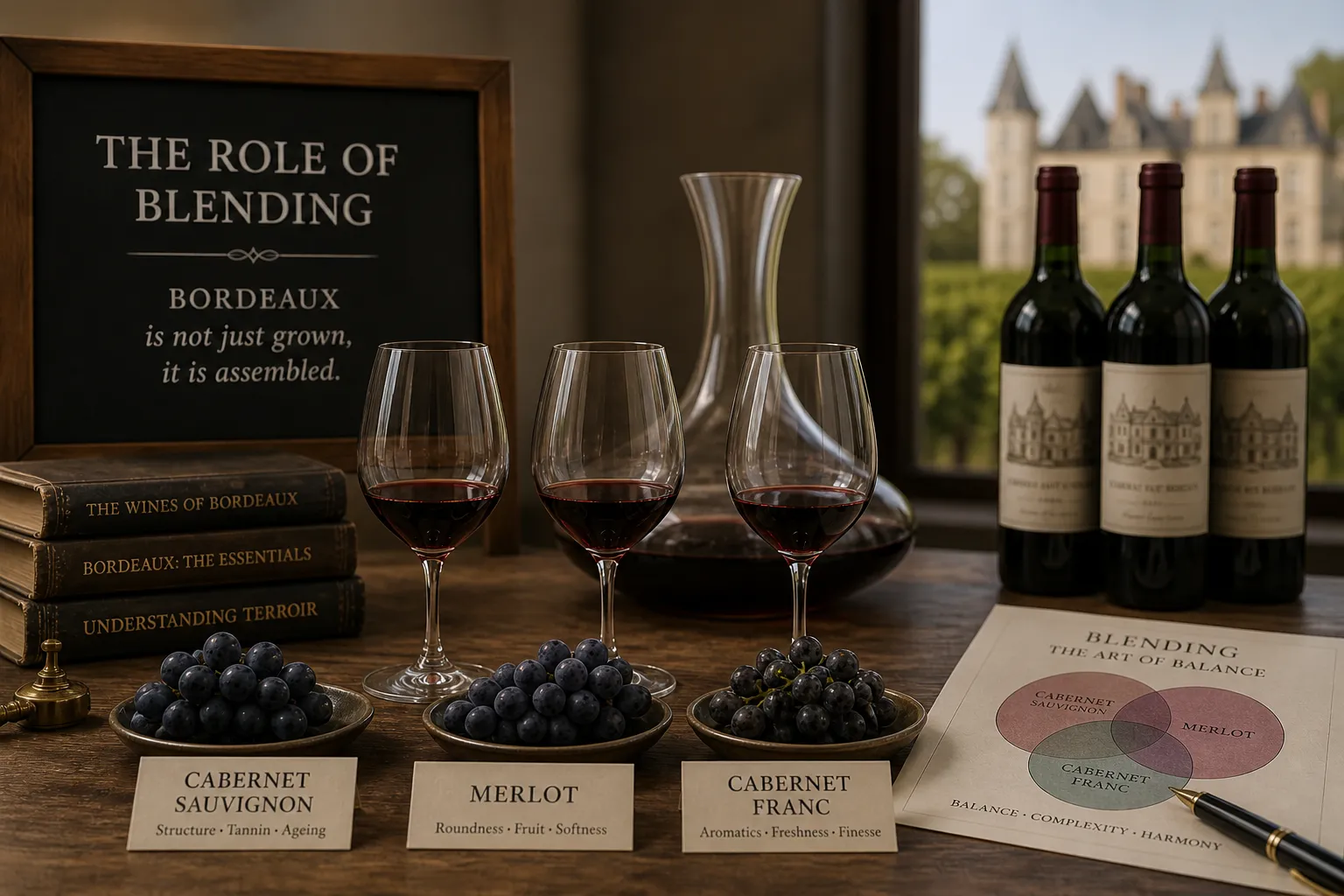
Bordeaux is one of the best places to understand blending.
Unlike single-varietal regions, Bordeaux wines are constructed.
They combine:
- Cabernet Sauvignon
- Merlot
- Cabernet Franc
Each grape contributes something different.
This approach is explained in How Bordeaux Blends Are Created , where blending is used to build balance rather than highlight a single element.
Learning this teaches an important lesson:
Wine is not just grown — it is assembled.
Understanding Structure
Bordeaux wines are structured.
They are built around:
- tannin
- acidity
- alcohol
These elements define how a wine feels and how it evolves.
By tasting Bordeaux wines at different stages, you begin to recognise:
- how tannins soften
- how acidity maintains balance
- how structure supports ageing
This makes Bordeaux an ideal place to learn not just taste, but evolution.
Vintage Variation as a Lesson
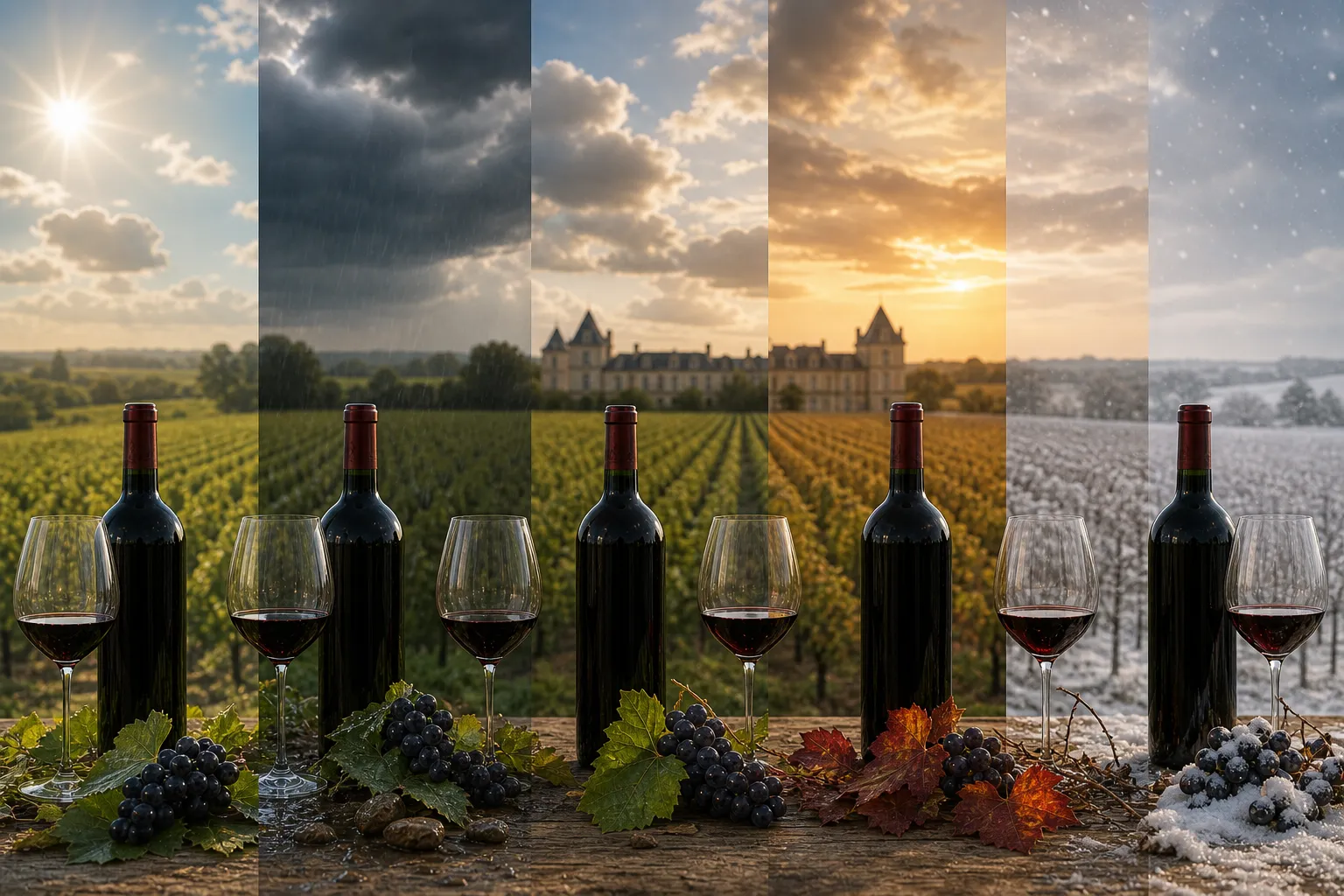
In Bordeaux, vintage matters.
Each year brings:
- different weather conditions
- different ripening patterns
- different structural outcomes
This teaches an essential lesson:
Wine is not fixed.
It changes with time and conditions.
Understanding vintage variation helps you move beyond static thinking and see wine as something dynamic.
Classification Systems
Bordeaux’s classification systems add another layer of learning.
They connect:
- reputation
- history
- consistency
While complex, they teach you how quality is perceived and maintained over time.
They also show that wine is not only about taste — it is about context.
Seeing Wine as a System
One of the most important lessons Bordeaux offers is that wine is a system.
It connects:
- vineyard
- grape
- climate
- winemaking
- ageing
Each element influences the final result.
Understanding this system changes how you approach wine entirely.
Learning Through Experience
While Bordeaux can be studied through books and tasting, it becomes far clearer when experienced directly.
Walking through vineyards, seeing how parcels differ, and understanding how decisions are made connects theory to reality.
Experiencing these elements across real vineyard landscapes — particularly on the Right Bank — allows you to see how structure develops from the ground up. A structured Saint Emilion Wine Tour makes it possible to understand wine not as an abstract concept, but as a process shaped by place.
A Closing Reflection
Bordeaux is not the simplest place to learn wine.
But it may be the most complete.
It teaches:
- structure
- terroir
- blending
- ageing
- variation
It shows how all of these elements connect.
And once you understand Bordeaux, you begin to understand wine as a whole.
Not as isolated flavours — but as a system shaped by land, time, and decision.
