Why Bordeaux Vineyards Follow the Rivers
When looking at a map of the Bordeaux wine region, one pattern becomes immediately visible: vineyards appear to follow the rivers. From the gravel banks of the Médoc along the Gironde estuary to the limestone hills overlooking the Dordogne valley, Bordeaux’s most famous vineyards are rarely far from water.
This geographical alignment is not accidental. The rivers of Bordeaux have shaped the landscape for thousands of years, influencing the soils, climate, and agricultural practices that allow vineyards to thrive. Without these waterways, the region would not possess the same geological diversity that makes Bordeaux wines so distinctive.
Visitors often begin to notice this relationship while exploring vineyards around Saint-Émilion, where the Dordogne River flows quietly below limestone hills planted with vines. Walking through these landscapes during a Saint Emilion Wine Tour reveals how closely the vineyards follow the natural contours of the river valley.
Understanding why Bordeaux vineyards follow the rivers therefore offers insight into the deeper geography behind the wines themselves.
The Three Rivers That Define Bordeaux
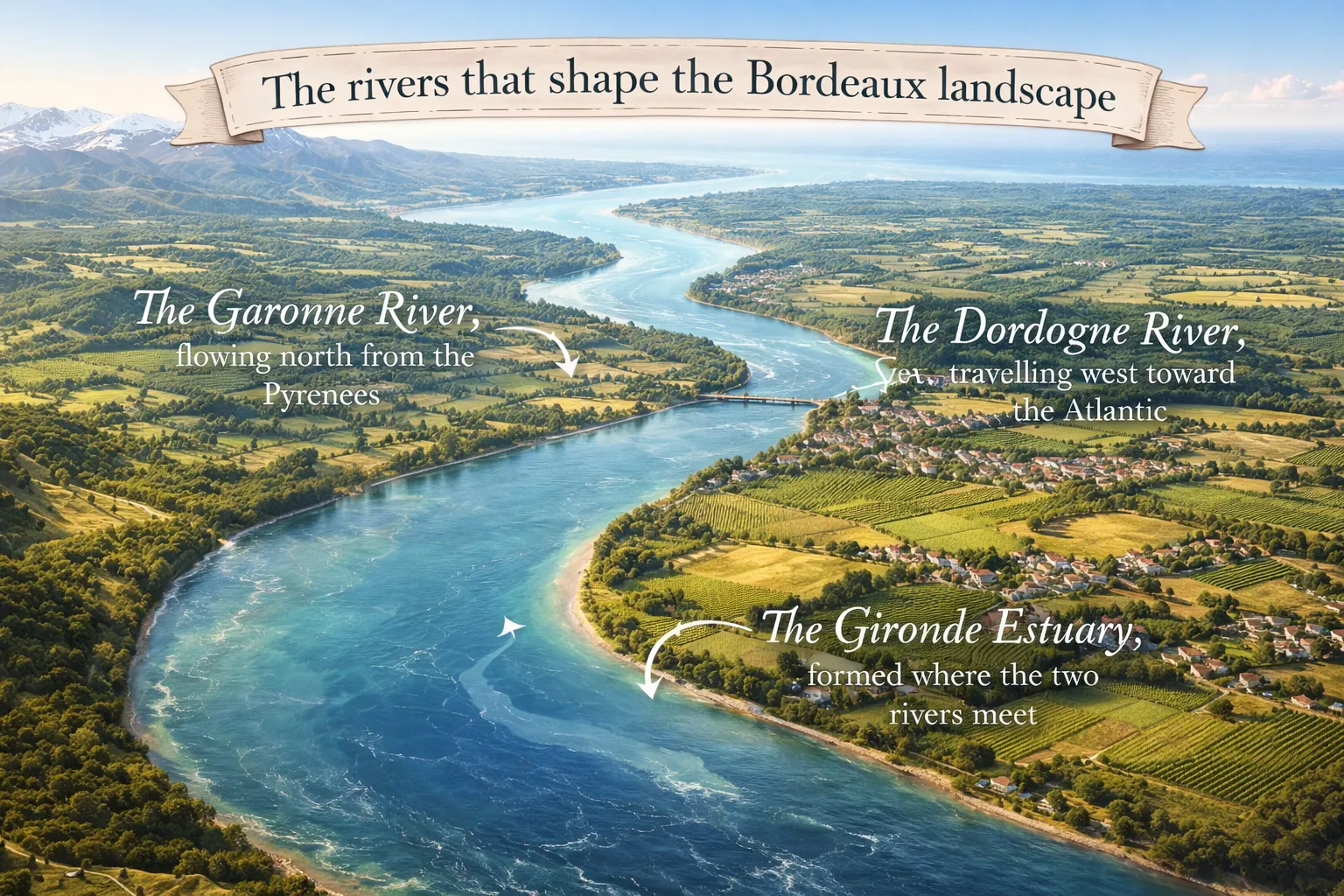
The structure of the Bordeaux wine region is shaped by three major waterways that divide the region into distinct vineyard areas.
These rivers not only guide the layout of vineyards but also determine the famous Left Bank and Right Bank division that defines Bordeaux wine styles.
The rivers that shape the Bordeaux landscape
- The Garonne River, flowing north from the Pyrenees
- The Dordogne River, travelling west toward the Atlantic
- The Gironde Estuary, formed where the two rivers meet
Together these waterways create the triangular geography that defines Bordeaux.
The Garonne flows past vineyards in regions such as Graves and Sauternes, while the Dordogne passes through Saint-Émilion, Pomerol, and Fronsac. When these rivers join north of Bordeaux city, they form the Gironde estuary, which borders the gravel vineyards of the Médoc.
Rather than separating vineyards, these rivers have historically guided where they developed.
How Rivers Created Bordeaux’s Vineyard Soils
One of the most important reasons vineyards follow the rivers is the formation of soils.
Over thousands of years, the rivers deposited different layers of sediment across the region. As ancient riverbeds shifted and floodplains formed, gravel, clay, sand, and limestone accumulated along the banks.
These natural deposits created ideal conditions for growing grapes.
How river deposits shaped Bordeaux terroir
- Gravel terraces formed along the Gironde estuary
- Clay and limestone accumulated across Right Bank hills
- Sand and gravel developed near the Garonne valley
- Alluvial soils improved natural drainage for vines
These soil differences explain why Bordeaux produces such diverse wines.
For example, the gravel soils of the Médoc favour Cabernet Sauvignon, while the clay-limestone plateaus of the Right Bank support Merlot-dominated blends.
For readers interested in understanding how these geological differences influence wine style across the region, the subject is explored further in The Bordeaux Wine Regions Explained: How the Region Really Works, which examines how geography divides Bordeaux into distinct wine areas.
Rivers Moderate the Bordeaux Climate
Water plays an important role in regulating the climate of vineyard regions.
In Bordeaux, the rivers help stabilise temperatures and protect vines from extreme conditions. Because water warms and cools more slowly than land, the presence of rivers reduces sudden temperature changes.
Climate benefits created by Bordeaux rivers
- Reduced risk of spring frost
- More stable temperatures during the growing season
- Increased air circulation across vineyards
- Improved ripening conditions for grapes
These effects are particularly noticeable in vineyards located close to riverbanks, where vines benefit from the moderating influence of water.
Natural Drainage and Vine Health
Grapevines require well-drained soils. Excess moisture can damage vine roots and reduce fruit quality.
River terraces and slopes provide the natural drainage that vines require.
Why river slopes are ideal for vineyards
- Water drains quickly through gravel soils
- Slopes prevent standing water around roots
- Vine roots grow deeper in well-drained soils
- Balanced moisture improves grape concentration
These conditions are especially favourable for varieties such as Cabernet Sauvignon, which thrives in gravel soils commonly found along the Gironde estuary.
Rivers and the History of Bordeaux Wine Trade
The rivers of Bordeaux did not only shape vineyard soils. They also shaped the history of wine trade.
For centuries, barrels of wine travelled down these waterways toward the port of Bordeaux. From there, ships carried the wines to England, the Netherlands, and eventually markets across the world.
Why rivers were vital for Bordeaux trade
- Wine could be transported easily by boat
- River routes connected inland vineyards to Bordeaux city
- The port provided access to international markets
- Trade expanded the global reputation of Bordeaux wines
Because of this, vineyards developed along the riverbanks where transport was easiest.
The Famous Right Bank and Left Bank
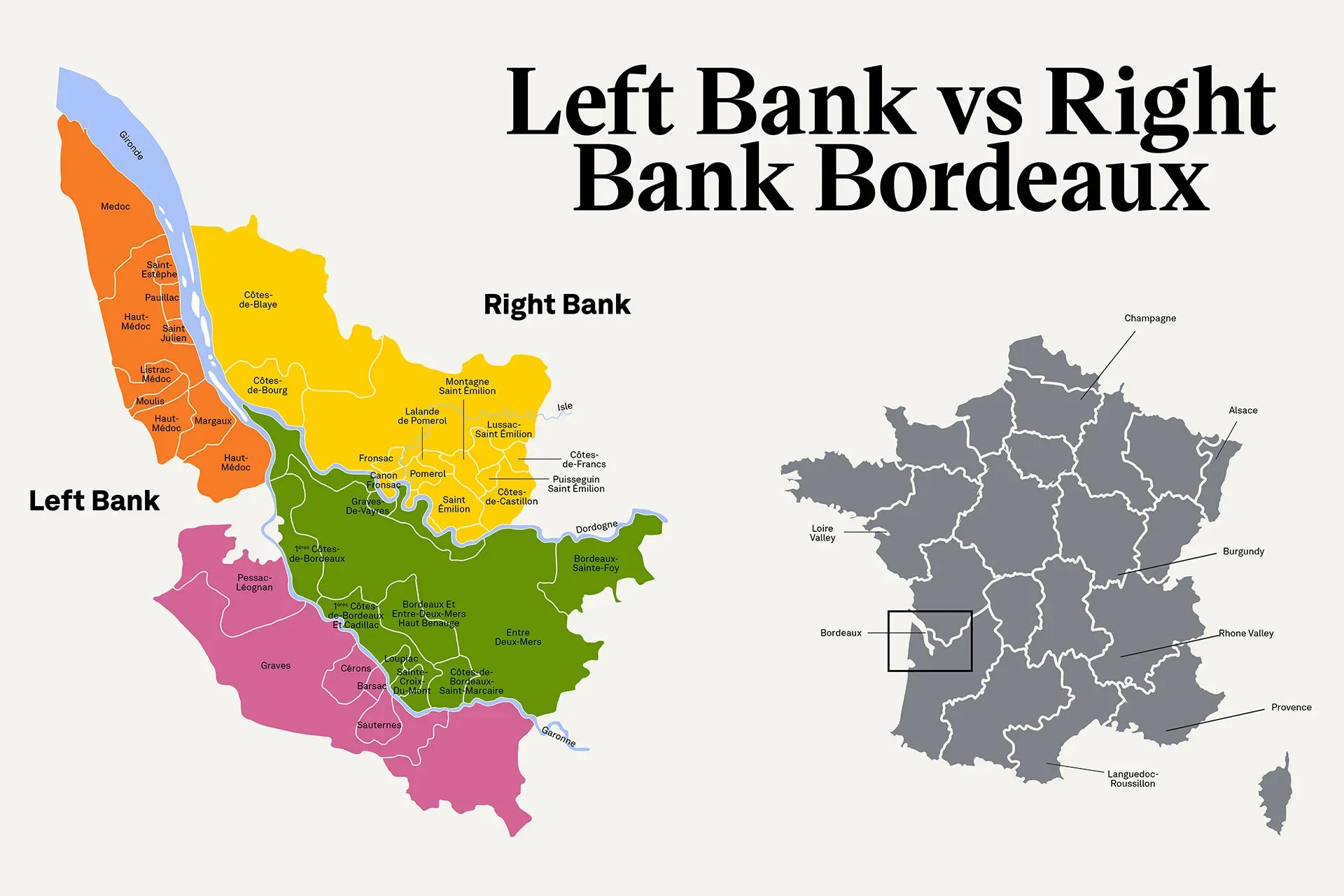
One of the most famous distinctions in Bordeaux wine comes from the region’s rivers.
The Gironde estuary, formed by the Garonne and Dordogne rivers, divides the region into two major wine areas.
The Left Bank
Located west of the Gironde and Garonne rivers, the Left Bank includes regions such as:
- Médoc
- Margaux
- Pauillac
- Saint-Julien
- Graves
These areas are dominated by gravel soils where Cabernet Sauvignon thrives.
The Right Bank
Located east of the Dordogne River, the Right Bank includes:
- Saint-Émilion
- Pomerol
- Fronsac
- Canon-Fronsac
Here, clay and limestone soils favour Merlot-based wines.
This division exists entirely because of the rivers.
The Dordogne Valley Landscape
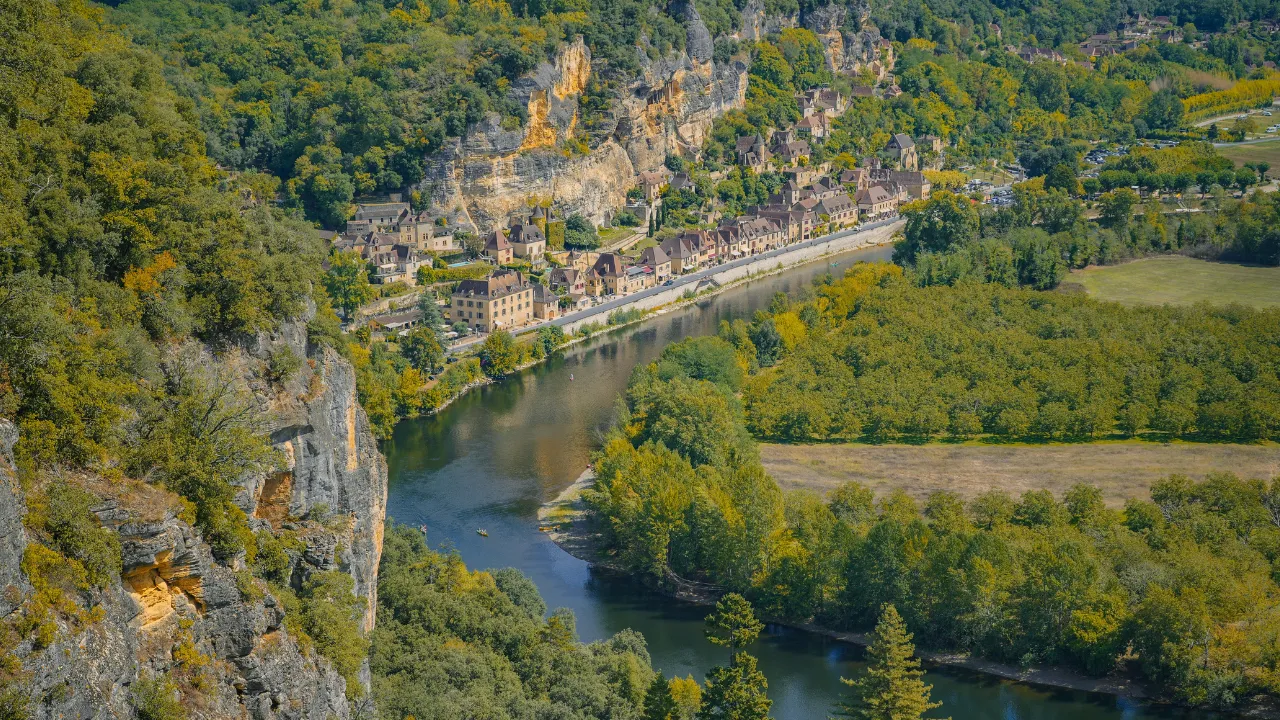
The valley of the Dordogne River is one of the most picturesque vineyard landscapes in Bordeaux.
Limestone hills rise above the river, with vineyards following the slopes where vines receive maximum sunlight and natural drainage.
The medieval village of Saint-Émilion sits atop one of these limestone plateaus overlooking the valley.
Travellers exploring the vineyards quickly see how the landscape shapes the placement of vines. Many visitors gain a deeper understanding of this geography while walking through the hills during a Saint Emilion Wine Tour, where guides explain how the Dordogne River helped shape the surrounding vineyards.
Why Rivers Still Matter Today
Even with modern viticulture techniques, Bordeaux rivers remain essential to the region’s wine production.
They continue to influence:
- soil composition
- vineyard microclimates
- natural drainage
- regional geography
The vineyards planted centuries ago continue to follow the same river valleys because the natural conditions created by these waterways remain ideal for growing grapes.
Rivers as the Hidden Framework of Bordeaux Wine
Looking closely at the geography of Bordeaux reveals a simple truth: the vineyards follow the rivers.
The Gironde, Garonne, and Dordogne have shaped the soils, climate, and trade routes that allowed Bordeaux to become one of the world’s great wine regions.
Gravel terraces along the estuary support powerful Left Bank wines, while limestone plateaus above the Dordogne produce the elegant Merlot blends of the Right Bank.
For travellers exploring the region today, the connection between rivers and vineyards becomes clear when standing among the hills during a Saint Emilion Wine Tour, where the landscape reveals how geography continues to shape the wines of Bordeaux.
In Bordeaux, the rivers are more than scenery — they are the natural framework on which the entire wine region was built.
