Why Do Some Bordeaux Wines Feel Tight and Unexpressive Early On?
There is a moment many wine drinkers experience with Bordeaux.
You open a bottle — perhaps from a respected château — expecting depth, complexity, and expression. Instead, the wine feels quiet. Tight. Almost reluctant to reveal itself.
This is often described as a wine being “closed.”
In the Bordeaux wine region, this is not a flaw. It is a stage.
Many Bordeaux wines are not designed to show everything immediately. They are structured to evolve, and that evolution takes time. What feels restrained in youth is often a sign of potential rather than limitation.
To understand why this happens, it helps to look at how Bordeaux wines are built. If you’ve explored How Bordeaux Blends Are Created , you’ll already know that these wines are constructed from multiple components — each contributing structure, balance, and longevity.
But structure has a consequence.
It delays expression.
To see how this structure originates, observing vineyard conditions — from soil variation to ripening patterns — provides important context. Walking through vineyard parcels during a Saint Emilion Wine Tour makes it easier to understand why some wines require time before they begin to open.
What Does “Closed” Actually Mean?
When a wine feels closed, it is not empty.
It still contains:
- fruit
- tannin
- acidity
- aromatic compounds
But these elements are not fully expressive.
A closed wine may feel:
- muted on the nose
- tight on the palate
- short or restrained in its finish
This is not because the wine lacks complexity. It is because that complexity has not yet emerged.
The Role of Tannins
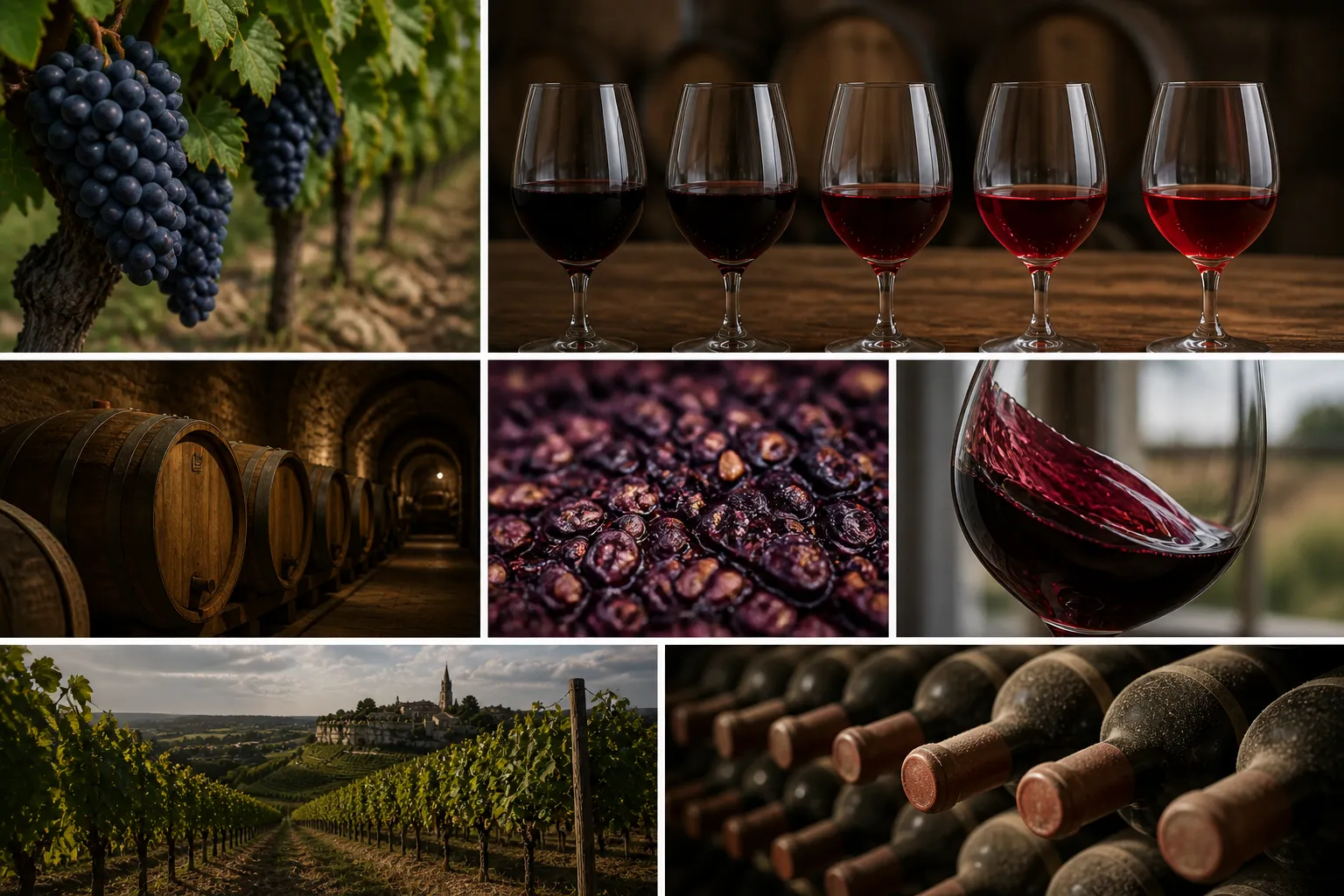
One of the primary reasons Bordeaux wines feel closed when young is tannin.
Tannins provide:
- structure
- grip
- ageing potential
In youth, tannins can dominate the wine’s profile, creating a sense of tightness.
Over time, tannins evolve:
- they soften
- they integrate
- they become less prominent
As this happens, other elements — fruit, aroma, texture — begin to emerge more clearly.
This transformation is central to Bordeaux, and it connects directly to The Science of Tannins: Why Some Bordeaux Wines Feel Velvety , where structure gradually shifts into balance.
Acidity and Tension
Acidity also contributes to this closed character.
In young wines, acidity provides:
- freshness
- tension
- structure
But before integration, it can reinforce the sense of tightness.
As explored in The Role of Acidity in Wine Balance, acidity works alongside tannin to shape how a wine evolves. In youth, this combination can make a wine feel restrained rather than expressive.
The Influence of Grape Variety
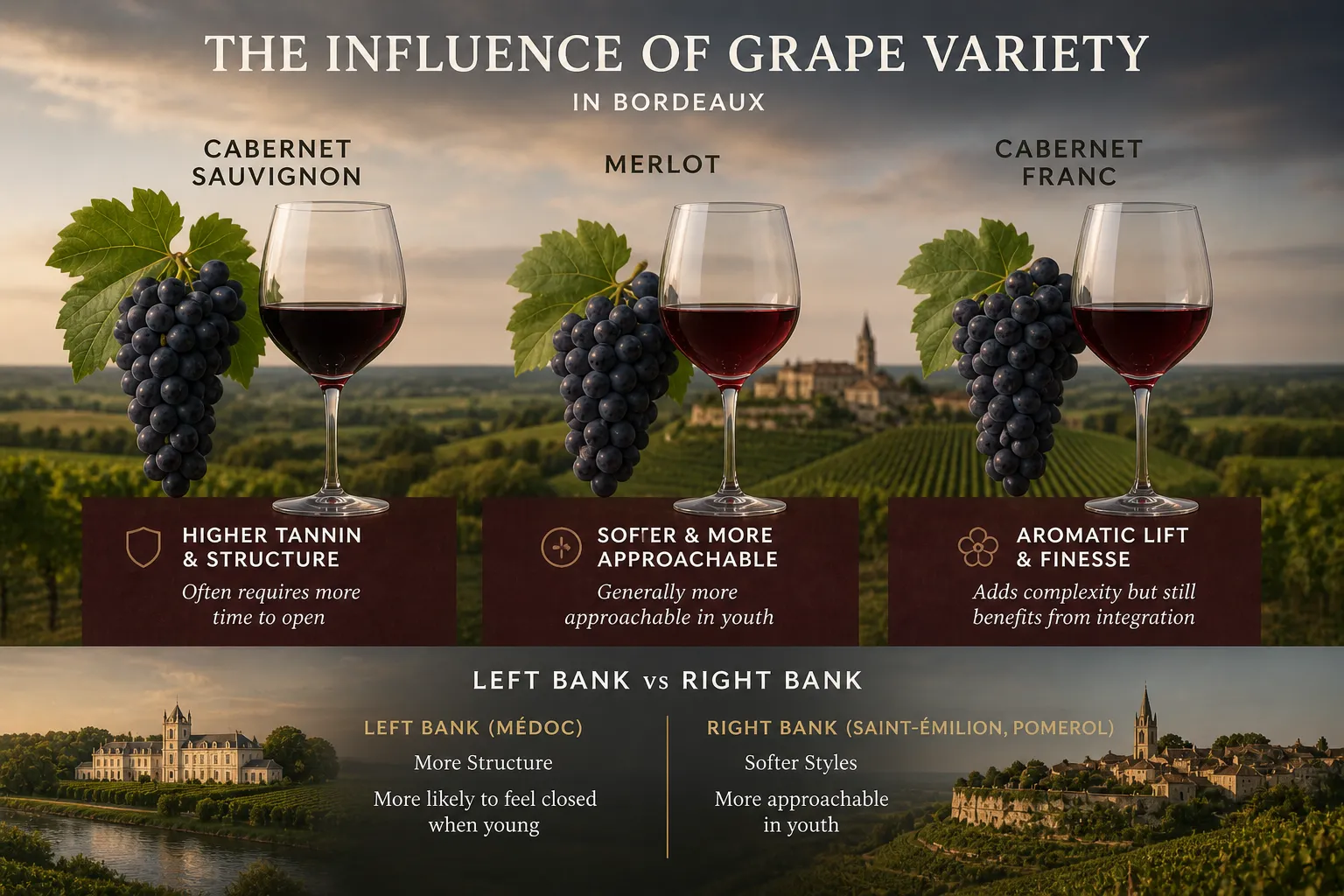
Different grape varieties contribute differently to this phenomenon.
In Bordeaux:
- Cabernet Sauvignon tends to produce wines with higher tannin and structure, often requiring more time to open
- Merlot generally produces softer, more approachable wines in youth
- Cabernet Franc adds aromatic lift but still benefits from integration
This is why wines from structured Left Bank regions such as Médoc are more likely to feel closed when young compared to softer Right Bank styles.
Terroir and Structure
Terroir plays a crucial role in how a wine develops.
Soils influence:
- drainage
- ripening
- concentration
For example, limestone-rich areas such as Saint-Émilion often produce wines with both structure and freshness — a combination that can feel restrained in youth but evolves beautifully over time.
These differences are not immediately obvious in a young wine, but they shape how it opens with age.
The Role of Oak Ageing
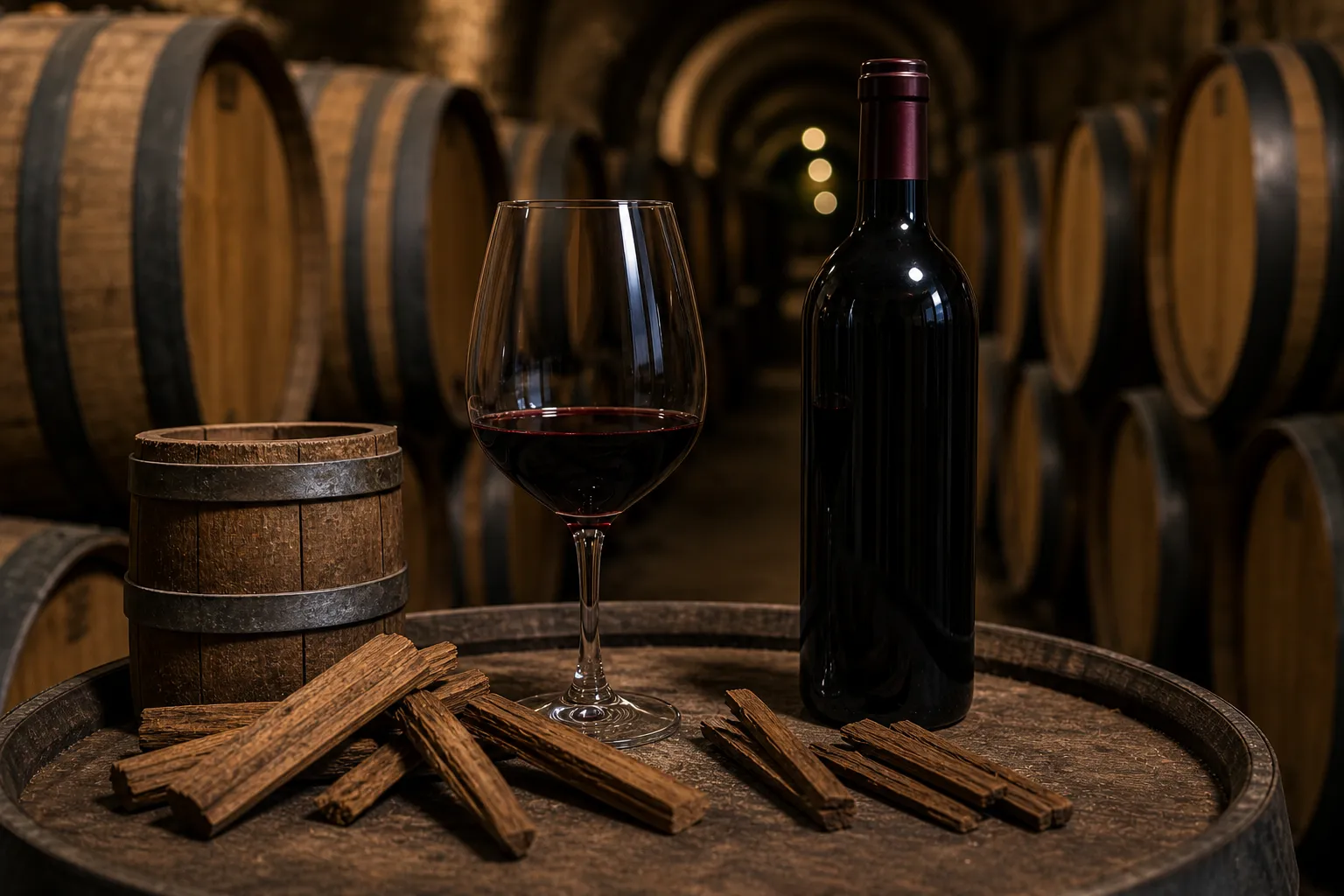
Many Bordeaux wines are aged in oak barrels.
This contributes:
- additional tannin
- subtle flavour compounds
- structure
In youth, oak can add to the sense of tightness.
Over time, these elements integrate, allowing the wine to feel more balanced and expressive.
Time as a Structural Element
Time is not optional in Bordeaux.
It is part of the design.
Young Bordeaux wines are often built with:
- high tannin
- balanced acidity
- concentrated fruit
These elements require time to align.
As the wine ages:
- tannins soften
- acidity integrates
- aromas develop
The wine moves from closed to open.
This transformation is gradual — sometimes subtle, sometimes dramatic.
Why Some Wines Open Faster Than Others
Not all Bordeaux wines behave the same way.
Some open relatively quickly. Others take years.
This depends on:
- vintage conditions
- grape composition
- terroir
- winemaking decisions
Warmer vintages, for example, may produce wines that are more accessible early, while cooler vintages may produce tighter, more structured wines.
Can Decanting Help?
Decanting can accelerate the process.
By exposing wine to oxygen, it allows:
- aromas to develop
- tannins to soften slightly
- structure to relax
However, decanting does not replace ageing.
It provides a temporary opening — not a complete transformation.
Understanding when decanting is effective depends on recognising whether a wine is simply closed or structurally undeveloped.
The Experience of a Closed Wine
For many drinkers, encountering a closed wine can be frustrating.
But it can also be revealing.
It shows that the wine is not designed for immediate consumption.
It reflects a different philosophy — one that prioritises evolution over instant expression.
Once understood, this changes how you approach Bordeaux.
Understanding This in Context
To fully understand why wines feel closed, it helps to connect vineyard conditions, grape structure, and ageing.
Seeing how grapes develop, how soils influence structure, and how blending decisions are made provides clarity that tasting alone cannot.
Experiencing these factors in real vineyard environments — particularly across the varied terroirs of the Right Bank — brings this understanding into focus. A structured Saint Emilion Wine Tour allows you to see how the elements that create tension in youth become balance over time.
A Closing Reflection
A closed wine is not a failed wine.
It is a wine in transition.
In Bordeaux, this is often intentional.
Structure delays expression so that complexity can develop over time.
What feels restrained today may become layered, expressive, and complete in the future.
Understanding this requires patience.
But once you recognise it, the experience of wine changes — from immediate judgement to long-term observation.
