Why Younger Drinkers Are Moving Away from Traditional Bordeaux Wines
For generations, Bordeaux wines have defined the structure of fine wine.
They are built on balance, ageing potential, and a system that prioritises long-term evolution over immediate expression. This approach has shaped Bordeaux’s reputation globally — positioning it as a benchmark for quality and consistency.
But that position is changing.
Younger drinkers are not abandoning wine. They are simply approaching it differently. And in many cases, they are moving away from traditional Bordeaux wines in favour of styles that feel more aligned with how they drink today.
This shift is gradual, but it is significant.
To understand it, you need to look beyond simple preference and consider structure — how Bordeaux wines are built, and why that structure does not always match contemporary expectations. If you’ve explored how composition works in How Bordeaux Blends Are Created , you’ll already see that Bordeaux is designed around balance over time, not instant accessibility.
To see how this plays out in real vineyard conditions — across soils, grape varieties, and styles — experiencing wines in their natural context provides clarity that theory alone cannot. Walking through Right Bank vineyards during a structured Saint Emilion Wine Tour reveals why Bordeaux was built for longevity, and why that approach can feel distant from modern drinking habits.
A Shift in Drinking Culture
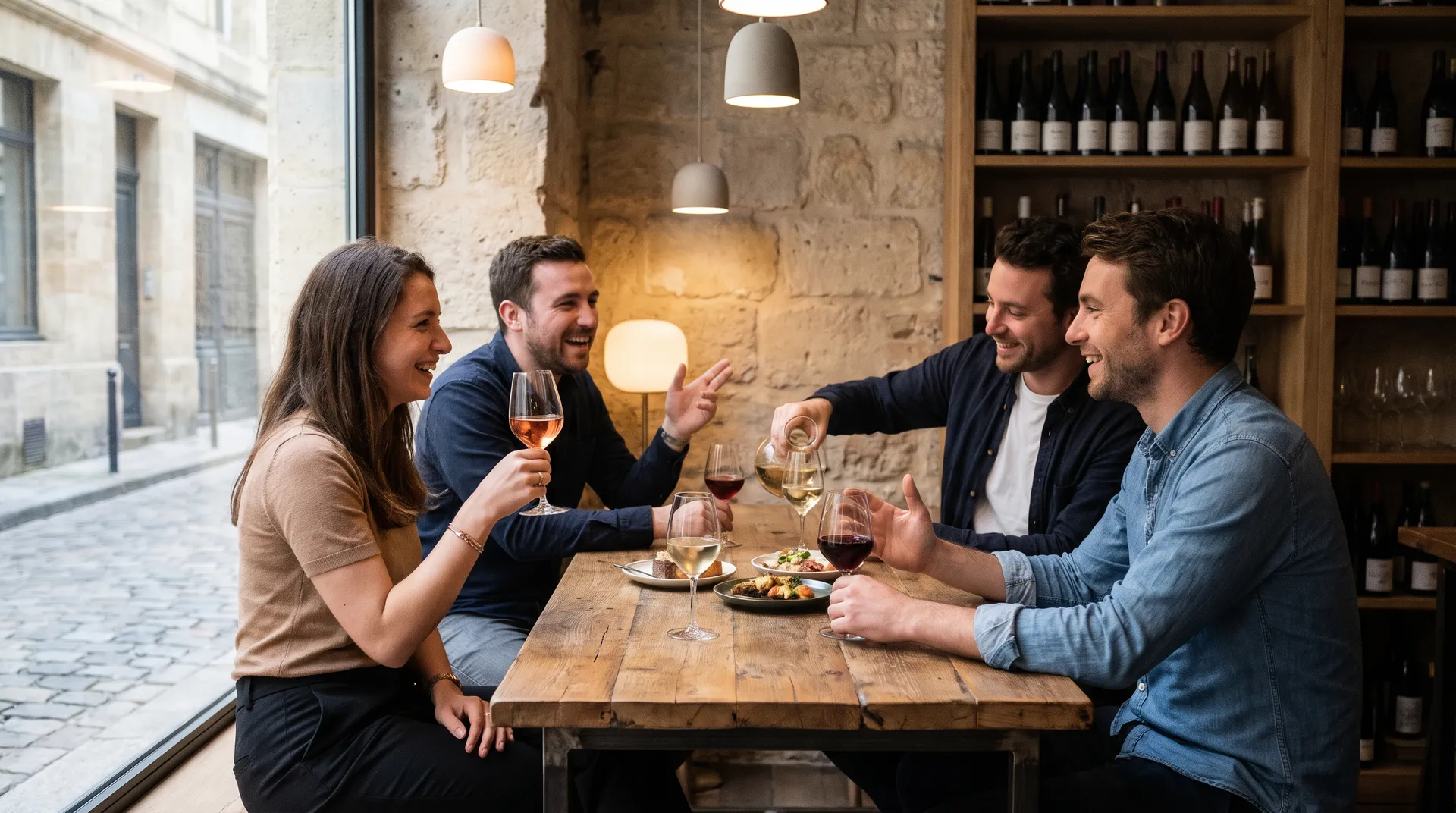
Wine consumption has changed.
Younger drinkers tend to prioritise:
immediacy
accessibility
ease of understanding
Wine is no longer something reserved for formal occasions or long-term cellaring. It is part of a more casual, experience-driven culture.
This shift does not reduce interest in quality — but it changes how quality is perceived.
Bordeaux, by contrast, still reflects a system built on patience and progression.
The Problem of Time
Traditional Bordeaux wines are designed to evolve.
Many require:
several years of ageing
careful storage
time to reach balance
For younger drinkers, this creates a disconnect.
Wine today is often purchased to be opened soon after buying. A wine that feels closed or structured in its youth can feel unapproachable, even if it has long-term potential.
The concept of waiting ten or twenty years no longer fits easily into modern consumption patterns.
Taste Preferences Are Changing

Preferences have shifted toward wines that are:
fruit-forward
softer in tannin
expressive early
In contrast, traditional Bordeaux wines — particularly those from structured Left Bank regions such as Médoc — often feel:
firm
restrained
slow to open
This difference is not stylistic preference alone. It is structural.
As explored in The Role of Acidity in Wine Balance , Bordeaux wines rely on the interaction between tannin, acidity, and alcohol. That balance develops over time, rather than presenting itself immediately.
For drinkers seeking instant expression, this can feel like a barrier.
Complexity as a Barrier
Bordeaux is one of the most complex wine systems in the world.
Understanding it requires navigating:
appellations
classifications
château structures
vintage variation
For experienced collectors, this complexity adds depth.
For younger drinkers, it can feel inaccessible.
In contrast, many modern wine regions simplify communication:
grape-first labelling
clearer stylistic expectations
fewer hierarchical layers
Ease of understanding plays a major role in engagement.
Price Perception and Value
Bordeaux is strongly associated with high-value wines.
Even when affordable options exist, the perception remains:
Bordeaux equals investment
Bordeaux equals premium pricing
This perception influences behaviour.
Younger drinkers often explore:
emerging regions
smaller producers
wines that feel more accessible financially
The decision is not always about cost alone — it is about perceived value and flexibility.
Style Diversity Within Bordeaux
Bordeaux itself is not uniform.
Different regions produce different styles.
For example, wines from the Right Bank, particularly around Saint-Émilion, tend to be:
softer
more fruit-driven
more approachable earlier
This contrasts with Left Bank structure and highlights that Bordeaux already contains styles that align more closely with modern preferences.
The challenge is not the absence of these wines — it is how they are perceived and communicated.
The Influence of Alternative Styles
Younger drinkers are also exposed to a wider range of wine styles than previous generations.
They encounter:
lighter reds
fresher whites
more experimental approaches
Within Bordeaux itself, regions such as Sauternes demonstrate a completely different expression of balance, where sweetness is structured by acidity.
These variations show that Bordeaux is capable of diversity — but this diversity is not always the first thing presented to new drinkers.
The Experience Factor

Wine is no longer only about the bottle.
It is also about:
experience
connection
understanding
Younger drinkers often engage through:
vineyard visits
tastings
direct interaction with production
Bordeaux offers this depth — but it becomes clearer when experienced directly.
Seeing how wines are built, how soils vary, and how decisions are made connects structure to experience. Exploring these elements across vineyard landscapes through a structured Saint Emilion Wine Tour allows Bordeaux to be understood not as an abstract system, but as a living process.
Tradition vs Modern Expectations
At its core, the shift reflects a difference in priorities.
Bordeaux is built on:
structure
ageing
continuity
Younger drinkers often prioritise:
immediacy
accessibility
flexibility
These are not opposing values — but they require different approaches.
Understanding Bordeaux in Context
When viewed without context, Bordeaux can feel distant.
Structured, complex, and slow to reveal itself.
When understood properly, it becomes clear that these characteristics are intentional.
Bordeaux wines are not designed for immediate impact. They are designed to evolve.
To fully understand this, it helps to connect vineyard conditions, blending decisions, and ageing potential. Seeing these elements together — particularly in real vineyard environments — reveals why Bordeaux remains uniqueYounger drinkers are not moving away from Bordeaux because it lacks quality.
They are moving away because their expectations have changed.
They seek wines that fit into a different rhythm — one that prioritises immediacy and accessibility.
Bordeaux, by contrast, operates on a longer timeline.
But once understood, that timeline becomes its greatest strength.
Because Bordeaux is not just about how a wine tastes today.
It is about how it evolves — and how that evolution reflects time, place, and decision in a way few other regions can match.
