How the Hills of Saint-Émilion Shape the Wines You Taste
At first glance, vineyards can look uniform — rows of vines stretching in quiet repetition.
But in Saint-Émilion, that illusion disappears the moment you begin to notice the land.
The hills are not decorative. They define everything.
In this part of the Bordeaux wine region, elevation, slope, and soil variation combine to create one of the most complex vineyard landscapes in France. Wines here are not simply shaped by grape variety or climate. They are shaped by movement — the rise and fall of the land itself.
To understand how Bordeaux wines develop structure, you need to understand how land shapes ripening, drainage, and balance. If you’ve explored The Bordeaux Wine Regions Explained: How the Region Really Works , you’ll already know that the Right Bank differs fundamentally from the Left Bank in both soil and style.
But in Saint-Émilion, the story becomes even more precise.
And it only fully makes sense when you stand on the hills themselves — where small changes in elevation create entirely different wines. Walking these slopes during a structured Saint Emilion Wine Tour reveals how dramatically the terrain influences what eventually reaches the glass.
The Geography of Saint-Émilion
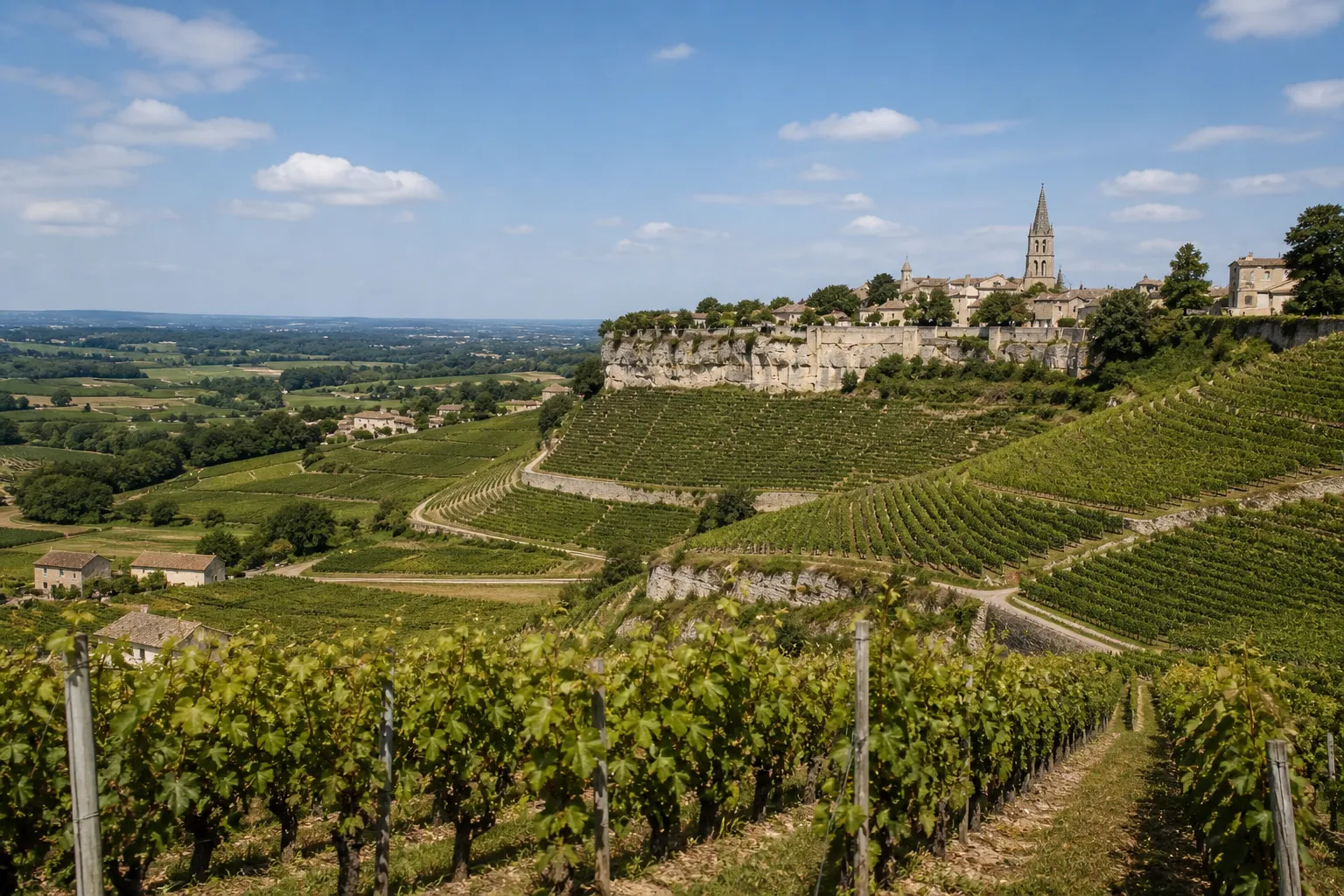
The appellation of Saint-Émilion is defined by variation.
It is not a flat vineyard region. Instead, it consists of:
- a limestone plateau
- sloping hillsides
- lower-lying clay and sandy areas
Each of these zones produces wines with different characteristics.
Understanding the hills means understanding how these zones interact.
The Limestone Plateau: Structure and Precision
At the top of Saint-Émilion sits the limestone plateau.
This is one of the most prized areas in the region.
Limestone soils:
- drain efficiently
- force vines to root deeply
- retain enough moisture to support steady growth
The result is wines that often show:
- tension
- freshness
- refined structure
These wines can feel tight when young but develop complexity over time.
This relationship between soil and structure is explored further in Gravel vs Clay vs Limestone: How Bordeaux Soils Shape Wine Styles , where limestone is closely linked to precision and ageing potential.
The Slopes: Balance and Ripening
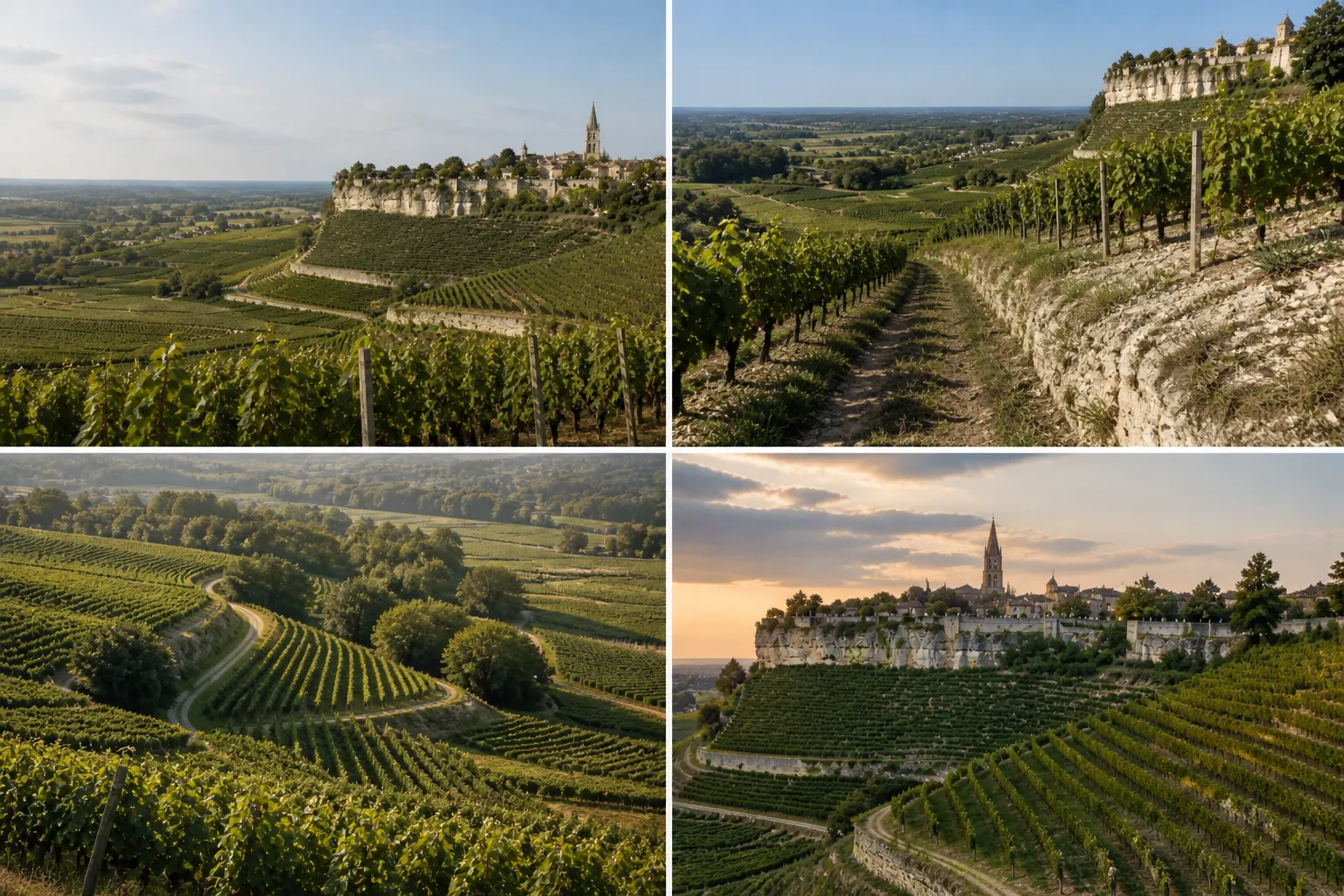
Moving down from the plateau, the slopes introduce variation.
Here, the angle of the land affects:
- sun exposure
- drainage
- ripening speed
Slopes allow:
- better sunlight interception
- more controlled water flow
- improved balance between ripeness and acidity
Wines from these areas often combine:
- structure from higher ground
- approachability from lower sections
They can feel more balanced earlier in their life.
The Lower Lands: Power and Softness
At the base of the hills, soils shift again.
Clay becomes more dominant.
Clay soils:
- retain water
- produce fuller-bodied wines
- encourage rounder textures
These wines tend to be:
- richer
- softer
- more approachable in youth
But they may lack the same tension found on the plateau.
Why Elevation Matters
Elevation influences more than just temperature.
It affects:
- airflow
- drainage
- vine stress
- ripening patterns
Higher elevations often produce:
- fresher wines
- more acidity
- tighter structure
Lower elevations produce:
- fuller wines
- softer tannins
- earlier accessibility
This vertical variation is one of the defining characteristics of Saint-Émilion.
The Interaction of Soil and Slope
The hills of Saint-Émilion are not defined by slope alone.
They are defined by the interaction between:
- soil composition
- elevation
- exposure
A vineyard on a limestone slope behaves differently from one on clay at the same elevation.
This complexity is why Saint-Émilion wines can vary so much, even within short distances.
How This Shapes Blending Decisions
Because vineyard parcels vary so much, Bordeaux relies on blending.
In Saint-Émilion, this often means combining:
- structured wines from the plateau
- balanced wines from the slopes
- richer wines from lower areas
Each component contributes something different.
This approach is explained in How Bordeaux Blends Are Created , where blending is used to create balance rather than uniformity.
Without the hills, this diversity would not exist.
The Role of Merlot
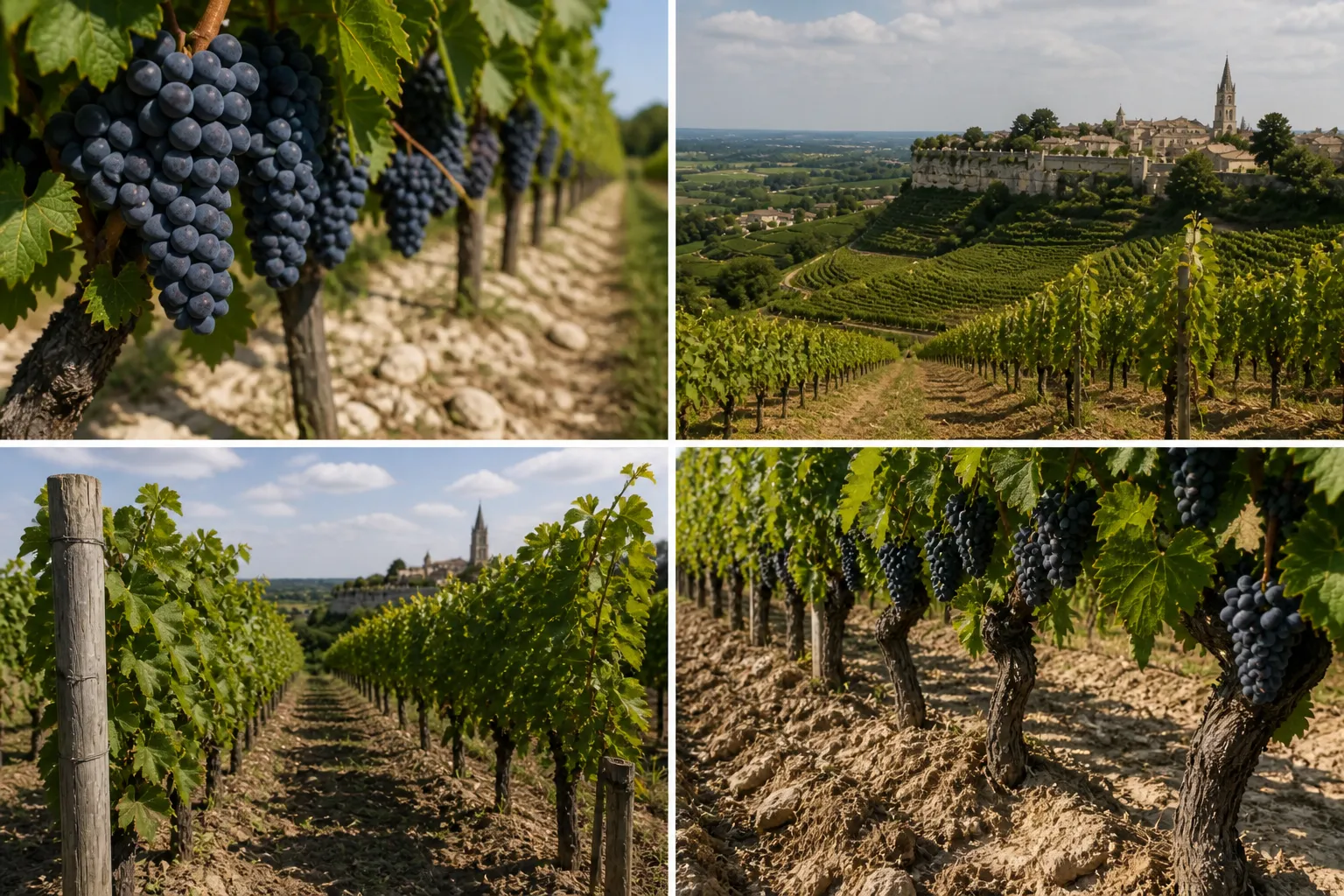
Saint-Émilion is dominated by Merlot.
Merlot responds strongly to soil and water availability.
On clay:
- it becomes richer and rounder
On limestone:
- it gains freshness and structure
The hills allow Merlot to express multiple styles within the same appellation.
This is one of the reasons Saint-Émilion wines can feel both powerful and refined.
Ageing Potential and Elevation
Wines from higher elevations often:
- age longer
- develop more slowly
- retain structure over time
Wines from lower elevations may:
- open earlier
- feel more accessible in youth
This does not make one better than the other.
It reflects different expressions of the same landscape.
Experiencing the Hills Directly
The influence of the hills is difficult to fully understand through tasting alone.
You can recognise structure, balance, and variation — but without seeing the land, the reasons remain abstract.
Walking from the plateau down through the slopes and into the lower vineyards reveals:
- how quickly soils change
- how exposure shifts
- how vines respond
This is where the connection becomes clear.
To understand how these variations translate into wine, experiencing the terrain directly provides clarity that theory cannot. Exploring these differences across vineyard parcels through a structured Saint Emilion Wine Tour makes it possible to see how elevation, soil, and structure combine in the final wine.
A Closing Reflection
The hills of Saint-Émilion are not just part of the landscape.
They are the reason the wines taste the way they do.
They create variation where uniformity might exist. They introduce balance where extremes could dominate.
In Bordeaux, wine is often described in terms of grape and structure.
But in Saint-Émilion, it begins with the land.
And once you understand how the hills shape the vineyard, you begin to understand how they shape the wine.
