What You Understand About Wine Only After Visiting a Vineyard
There is a point where wine stops being something you learn and starts becoming something you recognise.
Before that point, wine exists as information. You understand grape varieties, you recognise flavour profiles, you learn how Bordeaux blends are constructed. You can describe tannins, acidity, structure. You can compare Left Bank and Right Bank wines.
But all of that understanding remains slightly detached — until you step into a vineyard.
In the Bordeaux wine region, wine is not created in the cellar alone. It is shaped long before fermentation, long before barrels, long before labels. It begins in the ground — in parcels that behave differently, in soils that respond to climate in unique ways.
To understand this properly, you first need a structural foundation. If you haven’t already, The Bordeaux Wine Regions Explained: How the Region Really Works provides a clear framework of how geography, rivers, and appellations shape wine across Bordeaux.
But even that is only the beginning.
Because there are things you only understand once you stand among the vines.
And once you do, wine never feels abstract again.
To truly connect these ideas to reality, experiencing the Right Bank through a structured Saint Emilion Wine Tour reveals how dramatically vineyards can change within a few metres — and why those differences matter so much in the final wine.
You Understand That Terroir Is Physical, Not Conceptual
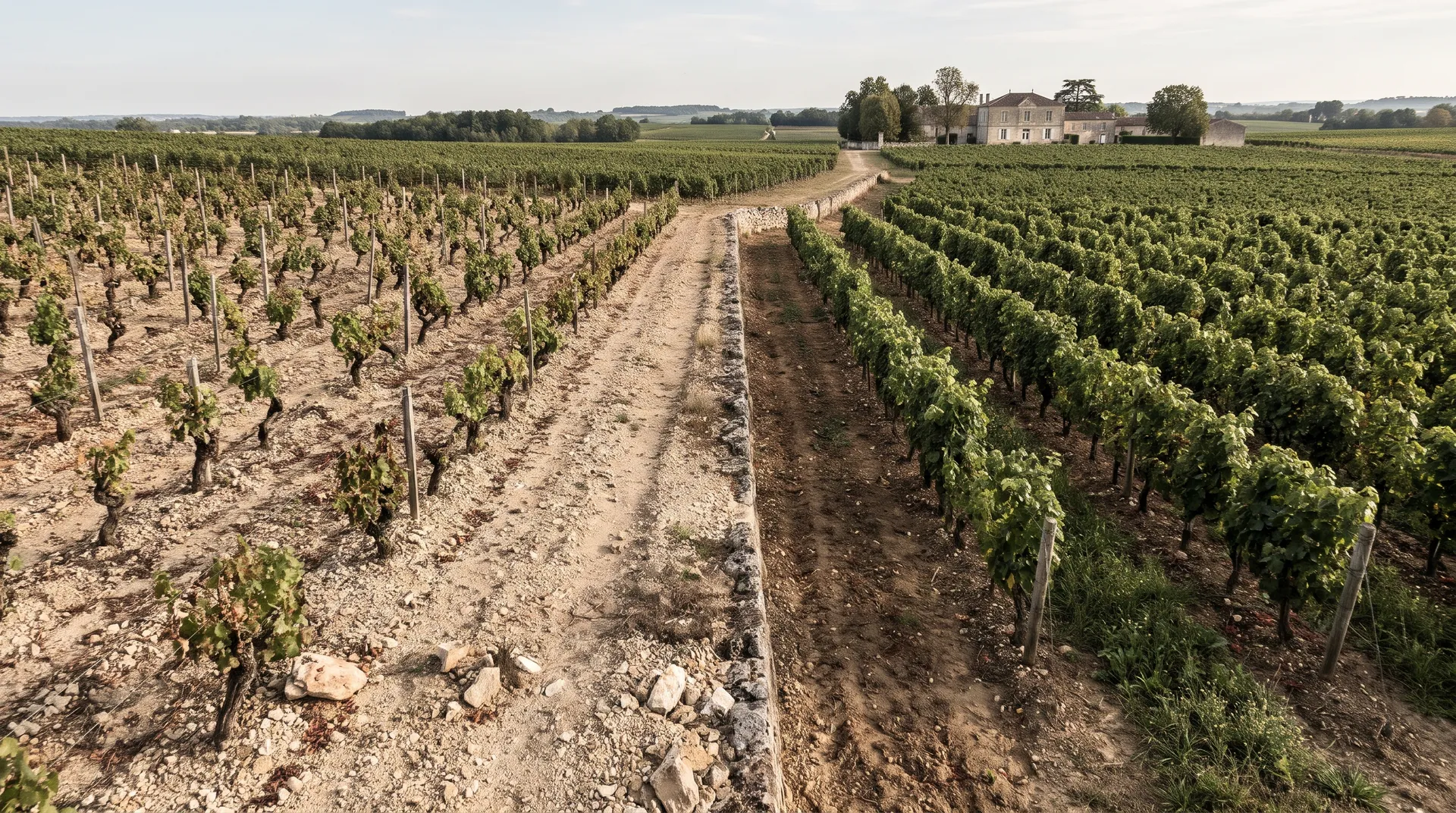
The word terroir is often explained as a combination of:
soil
climate
topography
On paper, it sounds simple.
In a vineyard, it becomes undeniable.
Walk across the limestone plateau of Saint-Émilion, and the ground feels dry, almost rigid. The vines root deep into fractured stone. The air moves differently.
Move just a short distance onto clay, and the entire environment shifts. The soil is heavier. Water retention changes. The vines behave differently.
These differences are not subtle — they are immediate.
This is why wines from the same appellation can taste completely different. As explored in Gravel vs Clay vs Limestone: How Bordeaux Soils Shape Wine Styles , soil is not just a background detail — it defines structure, texture, and ageing potential.
Until you see it, terroir is an idea.
Afterwards, it becomes obvious.
You Understand That a Vineyard Is Not One Place
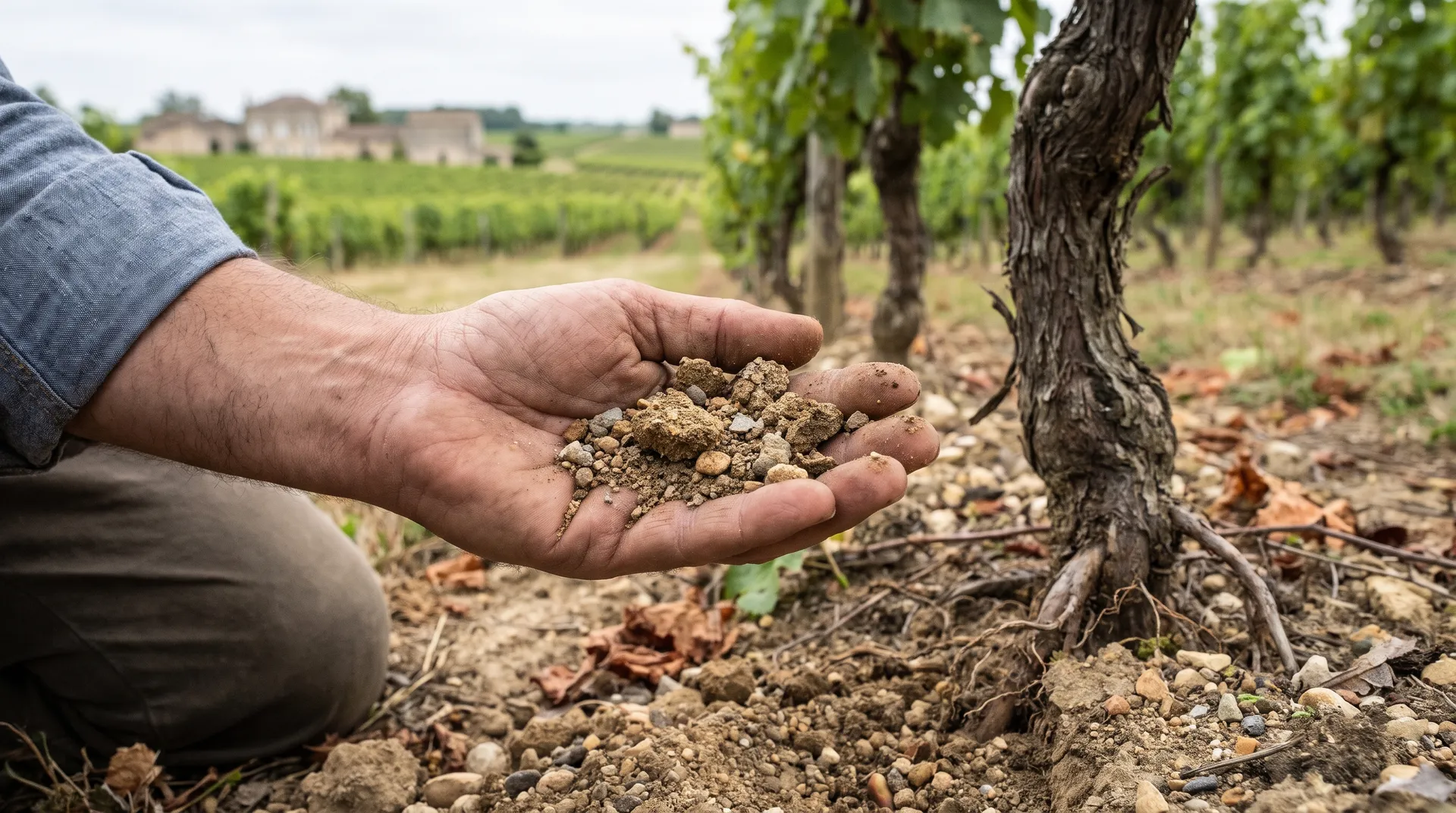
From a distance, vineyards look uniform — rows of vines stretching with perfect order.
Step inside, and that illusion disappears.
A single estate is divided into multiple parcels:
slight changes in elevation
variations in soil composition
differences in sun exposure
vines of different ages
Each of these parcels produces fruit with a different character.
This is why Bordeaux never treats a vineyard as a single entity. Instead, it treats it as a collection of expressions.
This approach is essential to the way Bordeaux wines are made, as detailed in From Vineyard to Glass: The Journey of Bordeaux Wine , where each parcel is preserved separately before blending.
Once you see this, it becomes clear why uniform winemaking is impossible here.
You Understand Why Blending Is Not a Choice
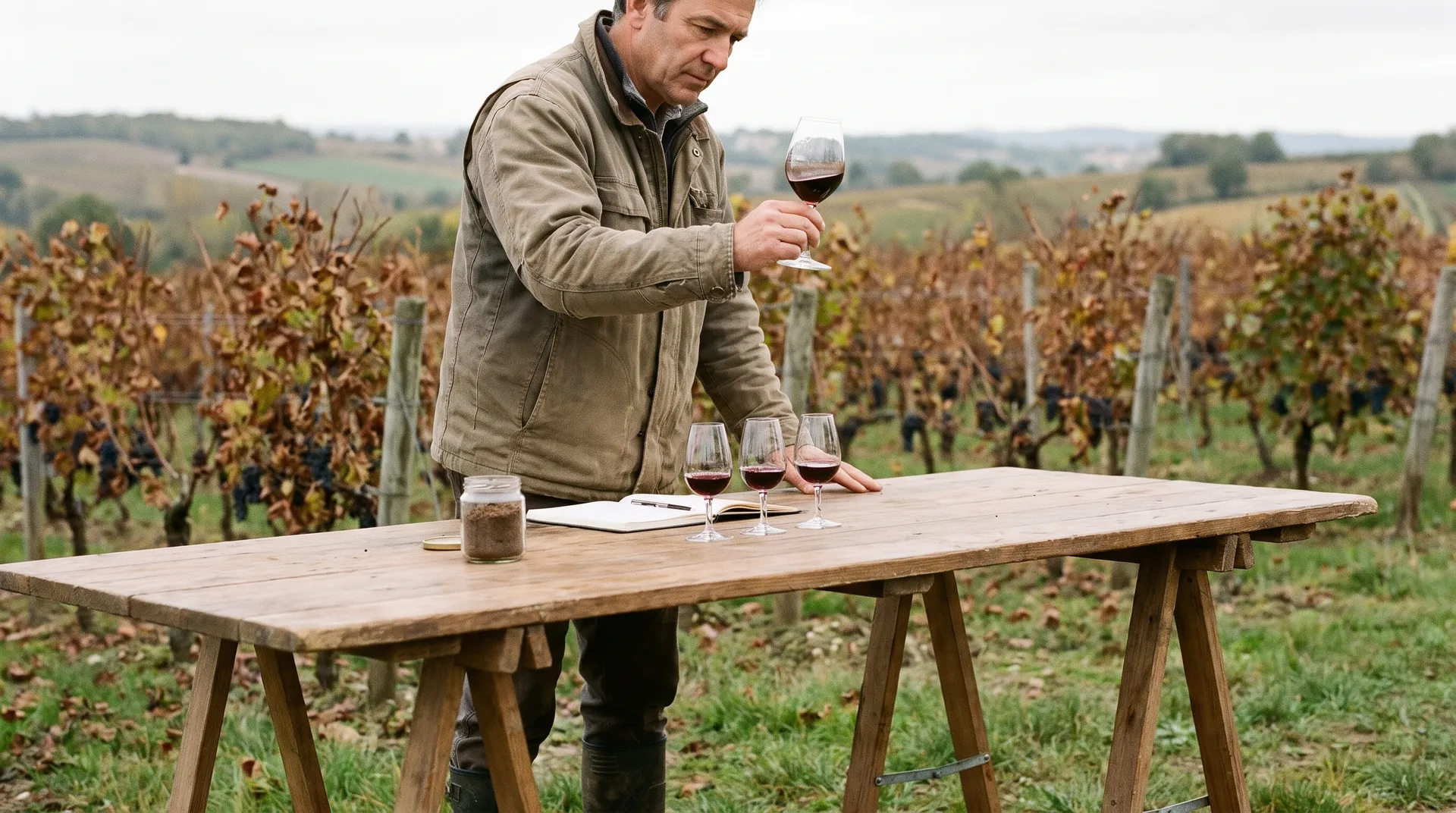
Before visiting a vineyard, blending can feel like tradition.
Afterwards, it becomes necessity.
No single parcel provides everything a complete Bordeaux wine requires.
One parcel might give:
structure
tannin
ageing potential
Another might contribute:
fruit
softness
aromatic lift
Another might bring freshness or balance.
Only when these elements are combined does the wine feel complete.
This is the logic behind Bordeaux blends — not stylistic preference, but structural need.
To understand how this works technically, How Bordeaux Blends Are Created explains the process in detail.
But the reason blending exists becomes clear only when you see how fragmented the vineyard truly is.
You Understand Selection — Why Not All Grapes Become the Same Wine
One of the most important realisations comes when you understand selection.
Before visiting a vineyard, it is easy to assume that all grapes from a prestigious estate contribute to its main wine.
In reality, they do not.
Some parcels produce fruit with:
depth
structure
ageing capacity
Others produce wines that are:
softer
more immediate
less structured
This is the foundation of the distinction between Grand Vin and second wine.
Selection is not about removing inferior fruit. It is about recognising difference.
Once you see how varied vineyard parcels are, the idea of producing a single wine from all of them no longer makes sense.
You Understand Time Differently
Time behaves differently in a vineyard.
It is not measured in days or weeks. It is measured in:
seasons
vintages
decades
A decision made today — pruning, planting, harvest timing — may influence wines that will only reach maturity twenty years later.
This long-term thinking defines Bordeaux.
Wine is not created in a moment. It is built over time.
And that perspective is almost impossible to grasp without seeing it in context.
You Understand Climate as a Living Force
Climate is often discussed in abstract terms — temperature averages, rainfall, seasonal variation.
In the vineyard, it becomes immediate.
You see:
how water drains across different soils
how heat affects ripening
how exposure changes vine behaviour
These factors shape:
tannin structure
acidity levels
overall balance
As explored in How Climate Change Is Changing the Taste of Bordeaux Wine , even small changes in climate can alter wine style significantly.
In the vineyard, these changes feel real — not theoretical.
You Understand That Wine Cannot Be Standardised
Modern production aims for consistency.
Wine resists it.
Standing in a vineyard, you realise:
no two parcels are identical
no two vintages behave the same
no two wines can be perfectly replicated
Bordeaux does not eliminate this variation. It works with it.
The goal is not uniformity. It is balance.
You Understand That Wine Is a Series of Decisions
Every wine is shaped by decisions:
when to harvest
how to ferment
how to blend
how long to age
But these decisions only make sense in relation to the vineyard.
The vineyard sets the limits. The winemaker responds.
Wine is not just grown — it is interpreted.
Experiencing the Shift
There is a moment — often subtle — when your understanding changes.
You stop seeing wine as something finished.
You begin to see it as something constructed.
The glass becomes the final expression of a long chain of decisions that began in the soil.
To fully understand this transformation — from vineyard variation to final blend — experiencing it in real vineyards makes all the difference. Walking through the slopes and soils of the Right Bank through a structured Saint Emilion Wine Tour connects these ideas in a way that no written explanation can fully replicate.
A Closing Reflection
Wine can be studied, analysed, and described.
But it cannot be fully understood without context.
A vineyard provides that context.
It reveals that wine is not just flavour — it is structure shaped by soil, climate, and time.
And once you understand that, every glass changes.
Not because the wine is different.
But because you are.
