Left Bank vs Right Bank Bordeaux Wines: What It Means for Taste, Style and Ageing
Why Understanding Bordeaux’s Two Banks Changes Everything
Travellers arriving in Bordeaux quickly notice something locals take for granted: the region is divided by the Gironde estuary into two distinct halves — the Left Bank and the Right Bank. Though separated only by water, the two sides produce wines with dramatically different personalities.
For visitors wanting to explore both sides with structured comparison and expert context, Bordeaux wine tasting tours provide guided access to estates on each bank, helping clarify the stylistic contrasts in the glass.
For visitors, this difference transforms the experience. Tasting a Pauillac on the Left Bank, then a Saint-Émilion on the Right Bank, feels like travelling between two worlds. Structure versus softness, power versus plushness, graphite versus velvet — these contrasts have shaped Bordeaux’s identity for centuries.
Yet these differences are not accidents. They come from soil, climate, grape varieties, and tradition, all of which evolved side by side but in different directions. This guide explores what separates the two banks, how they shape wine flavour, and which styles travellers should explore depending on their preferences.
If you want another layer of context when tasting, vine age also plays a role across both sides of Bordeaux. This guide explains the difference: Old Vines vs Young Vines.
The Geography: The Simple Division That Changes Everything
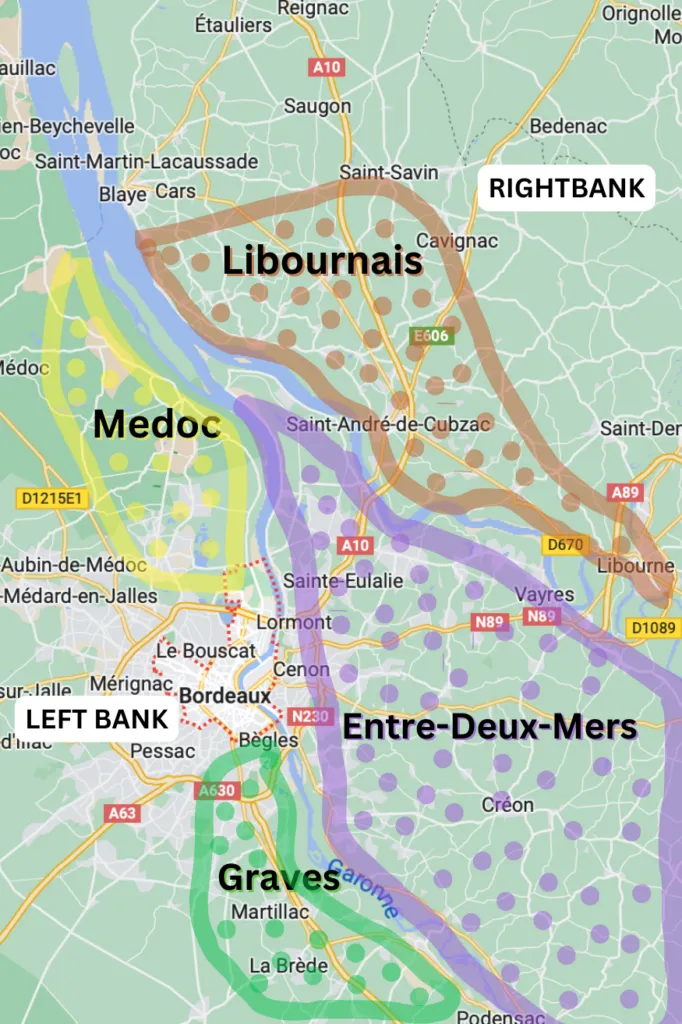
Bordeaux’s geography is the foundation of the Left Bank–Right Bank divide.
The Left Bank is located west and south of the Gironde and the Garonne.
The Right Bank lies east and north of the Dordogne and the Gironde.
These rivers bring not only separation but also cooling effects, drainage influences, and historical trade routes that shaped vineyard distribution.
The Key Appellations
Understanding the major appellations helps travellers navigate wine lists and vineyard tours.
Left Bank
Includes:
Médoc
Haut-Médoc
Margaux
Pauillac
Saint-Estèphe
Saint-Julien
Pessac-Léognan
Graves
Sauternes
Known for powerful Cabernet Sauvignon-based blends.
Right Bank
Includes:
Saint-Émilion
Pomerol
Fronsac
Canon-Fronsac
Blaye
Bourg
Known for velvety Merlot-based blends.
Right Bank Experience
Medieval villages
Narrow vineyard lanes
Family-owned estates
Rolling slopes
Emphasis on soils and micro-parcels
The Right Bank offers intimacy and charm, especially around Saint-Émilion. For a deeper understanding of this historic appellation, this detailed guide to Saint-Émilion explores its terroir, classification system, and tasting profile.
Soil: The Most Influential Difference Between the Two Banks
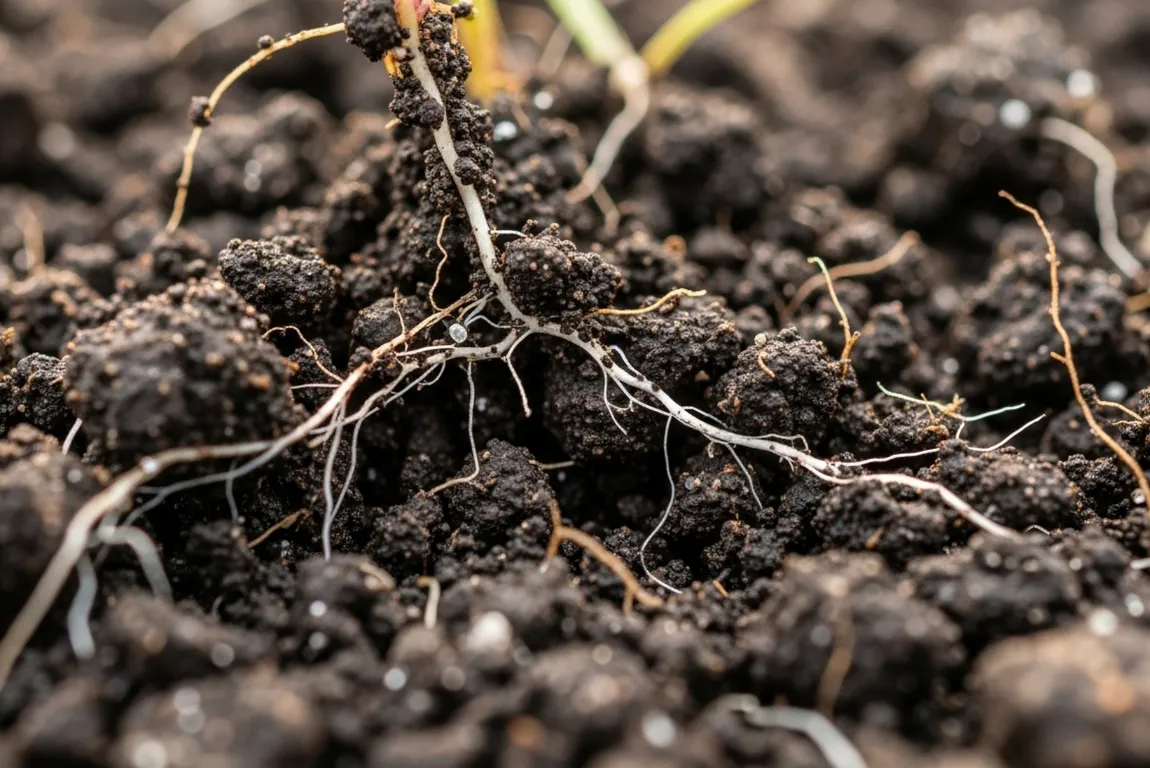
Soil is the real architect of flavour in Bordeaux.
Left Bank: Gravel Dominance
The Left Bank is defined by deep gravel beds left behind by ancient river movements. Gravel provides:
Excellent drainage
Heat retention
Root depth
Low fertility (ideal for vine stress)
These properties favour Cabernet Sauvignon, a grape that needs warmth and poor soils to achieve full ripeness.
The Resulting Wine Style:
Firm structure
High tannin
Deep colour
Notes of blackcurrant, graphite, cedar
Long ageing potential
Gravel amplifies Cabernet’s power and backbone.
Right Bank: Clay and Limestone Richness
The Right Bank’s soils are dominated by:
Cool, water-retentive clay
Mineral-driven limestone
Pockets of sand and gravel
This environment suits Merlot perfectly.
Clay slows ripening, retains water, and produces grapes with plush tannins. Limestone adds freshness, tension, and lift.
The Resulting Wine Style:
Plush texture
Silky tannins
Red and black plum
Liquorice, cocoa, violets
Immediate charm plus age-worthiness
Clay and limestone create wines that are smooth, seductive, and deeply aromatic.
The Grapes: How Varieties Differ Between the Banks
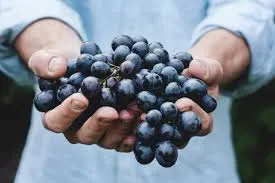
Left Bank = Cabernet Sauvignon First
Left Bank wines typically blend:
Cabernet Sauvignon (dominant)
Merlot
Cabernet Franc
Petit Verdot
Cabernet thrives on gravel because gravel reflects heat and encourages full ripeness in the grape’s thick skins. This leads to:
Higher tannin
Stronger structure
Long ageing curves
Dark, concentrated fruit
Left Bank wines need time to reveal their full personality.
Right Bank = Merlot First
Right Bank blends rely primarily on:
Merlot
Cabernet Franc
Small amounts of Cabernet Sauvignon
Merlot ripens earlier, has a rounder mouthfeel, and produces wines with:
Softer tannins
Richer fruit
Plush mid-palates
Cabernet Franc adds elegance, fragrance, and complexity.
Taste Differences: What You Experience in the Glass
Understanding the flavour profile of each bank helps travellers choose the styles they prefer.
Left Bank Flavour Profile
Expect:
Blackcurrant
Cassis
Blackberry
Cedar
Graphite
Tobacco
Leather (with age)
Texture:
Firm
Structured
Bold
Long-lasting
This is where you find some of the most age-worthy wines in the world.
Right Bank Flavour Profile
Expect:
Plum
Black cherry
Raspberry
Cocoa
Spice
Floral notes
Texture:
Velvety
Plush
Creamy mid-palate
Soft yet deep
Right Bank wines are often more approachable young but still capable of great longevity.
Ageing Potential: Which Wines Last Longer?
Left Bank
Cabernet Sauvignon’s structure makes it exceptionally age-worthy.
10–40+ years for top estates
Slow evolution
Gradual softening of tannins
Left Bank wines reward patience.
Right Bank
Merlot ages beautifully, too, but differently.
8–25+ years for high-quality estates
Develops truffle, cocoa, and floral notes
Softer structure but excellent depth
Right Bank wines often enter their ideal drinking window earlier.
If you want a deeper look at how bottle choice affects development over time, this guide explains the main options used in Bordeaux: wine closures and aging in Bordeaux.
Body, Texture, and Weight
Left Bank
Medium to full body
Firm backbone
Linear and architectural texture
Right Bank
Full or medium-plus body
Round, lush texture
Voluminous mouthfeel
Right Bank wines simply feel more generous on the palate.
Food Pairings That Highlight the Differences
Pairings allow travellers to taste contrasts even more clearly.
Left Bank Pairings
Roast lamb
Rib-eye steak
Duck breast
Hard cheeses (Comté, aged Gouda)
Mushrooms and truffle dishes
The structure pairs beautifully with rich, savoury foods.
Right Bank Pairings
Roast chicken
Pork tenderloin
Foie gras
Soft cheeses
Beef bourguignon
Merlot’s softness complements sweeter or more delicate flavours.
How Climate Change Is Changing Both Banks
Warming temperatures are affecting Bordeaux unevenly.
Left Bank Impact
Cabernet benefits from warmth — up to a point.
Higher alcohol, softer tannins, and earlier harvests are increasingly common.
Right Bank Impact
Merlot ripens too quickly in hot years, risking over-ripeness.
As a response, some estates are planting more Cabernet Franc and Cabernet Sauvignon.
For a broader look at how Bordeaux is adapting in vineyards and cellars, this guide explores what that future can look like: the future in a bottle.
Travelling Between the Banks: What to Expect
Visitors often underestimate how different the two sides feel.
If you are travelling from the UK, this guide to high-speed rail London to Bordeaux can help you plan your arrival before exploring vineyard routes on both sides of the Gironde.
Left Bank Experience
Large, noble estates
Long gravel driveways
Classical architecture
Broad, flat vineyard landscapes
Strong emphasis on barrel ageing and structure
This is where travellers feel the grandeur and prestige of Bordeaux.
Right Bank Experience
Medieval villages
Narrow vineyard lanes
Family-owned estates
Rolling slopes
Emphasis on soils and micro-parcels
The Right Bank offers intimacy and charm, especially around Saint-Émilion.
How to Taste Both Banks Like a Wine Professional
Travellers can deepen their understanding through comparative tastings:
Pick the same vintage from both banks
Taste Left Bank wines first (structure)
Taste Right Bank wines second (softness)
Compare tannin shape, acidity, and finish
Repeat with older vintages
This side-by-side contrast reveals the true signature of each bank.
Guided experiences, such as Bordeaux wine tasting tours, help travellers explore these differences with expert insight.
Why Both Banks Matter in Bordeaux’s Identity
The Left Bank and Right Bank are not rivals — they are two expressions of the same region. Each offers something distinct:
Left Bank: structure, longevity, power
Right Bank: softness, charm, depth
Together, they form the full picture of what makes Bordeaux wine world-renowned.
Travellers who want to explore this contrast in person often choose immersive vineyard experiences such as Wine Tours Bordeaux region, where local experts guide you through each bank’s unique terroir, history, and flavour.
Final Reflections: Two Banks, One Extraordinary Region
Understanding the Left Bank versus Right Bank divide transforms how you explore Bordeaux. It shapes your tasting experiences, the estates you visit, the wines you choose to bring home, and the stories you share afterwards.
Each bank offers something different — and equally rewarding. Whether you prefer the power of Pauillac or the velvet of Saint-Émilion, Bordeaux invites you to taste both identities and discover which resonates most with your palate.
With each sip, each vineyard visit, and each conversation with a winemaker, the distinction becomes clearer — not as a division, but as a dialogue between two sides of a historic region, shaped by soil, tradition, and time.
To experience both banks with structure and expert guidance, Bordeaux wine tasting tours allow travellers to compare terroirs side by side while deepening their understanding of Bordeaux’s two distinct identities.
